


- Home
- A-Z Catalogue
- Products
- Valves
- Cetop
- Manual Directional Valves
- Proportional Valves
- Poppet Valves
- High-Speed Linear Servo Valves
- All High-Speed Linear Servo Valves
- Cetop 10 (NG32) Two Stage Type High Speed Linear Servo Valves – LSVHG-10
- Cetop 10 (NG32) Two Stage Type High Speed Linear Servo Valves – LSVHG-10 (With Fail-Safe)
- Cetop 8 (NG25) Two Stage Type High Speed Linear Servo Valves – LSVHG-06
- Cetop 8 (NG25) Two Stage Type High Speed Linear Servo Valves – LSVHG-06 (With Fail-Safe)
- Cetop 7 (NG16) Two Stage Type High Speed Linear Servo Valves – LSVHG-04
- Cetop 7 (NG16) Two Stage Type High Speed Linear Servo Valves – LSVHG-04 (With Fail-Safe)
- Cetop 5 (NG10) Direct Type High Speed Linear Servo Valves – LSVG-03
- Cetop 5 (NG10) OBE Type Direct Operated Linear Servo Valves – LSVG-03-EH
- Cetop 3 (NG6) OBE Type Direct Operated Linear Servo Valves – LSVG-01-EH
- Pumps
- Pressure control
- Flow Control Valves
- Pressure Control Valves
- All Pressure Control Valves
- Brake Valves
- Direct Relief Valve
- Low Noise Solenoid Controlled Relief Valves
- Low Noise Pilot Operated Relief Valves
- Pilot Operated Relief Valves
- Pressure reducing and relieving valves
- Pressure reducing and check valves
- Pressure control valves
- Remote Control Relief Valves
- Solenoid Controlled Relief Valves – BSG
- Solenoid Controlled Relief Valves – BST
- Unloading relief valves
- Check valves
- Environmental
- Valves
- Hydraulic Systems
- Power pack
- About Us
- Contact
- Blog

How to Choose a Hydraulic System in 2026?
Choosing a hydraulic system in 2026 starts with the work it must perform, not a catalog’s largest pressure rating. A compact press, a mobile excavator, and a factory test rig place different demands on pumps, valves, actuators, and controls. The right choice must match load, speed, duty cycle, available space, and operating environment. Small details matter. A hose routed too close to a hot surface can shorten service life; an undersized reservoir can contribute to overheating and erratic operation.
Fluid-power author Anthony Esposito’s work emphasizes matching hydraulic components to the application. A useful principle for buyers is simple: “Select the system around the machine’s real duty cycle, not its peak rating.” Treat that as a selection guideline, not a substitute for engineering review. Compare energy use, noise, filtration needs, maintenance access, and compatibility with existing equipment. Also ask how the system behaves during cold starts and repeated high-load cycles. These checks can expose problems a price sheet will not show.
There is no perfect setup. Trade-offs remain. A variable-speed electric drive may reduce wasted energy in some applications, while adding controls and commissioning requirements. A conventional arrangement may be easier to maintain where technicians already know it. Before specifying equipment, document actual loads and cycle times, then confirm assumptions with a qualified hydraulic engineer. The sections ahead explain how to evaluate these factors and choose a hydraulic system that performs reliably in real operating conditions.
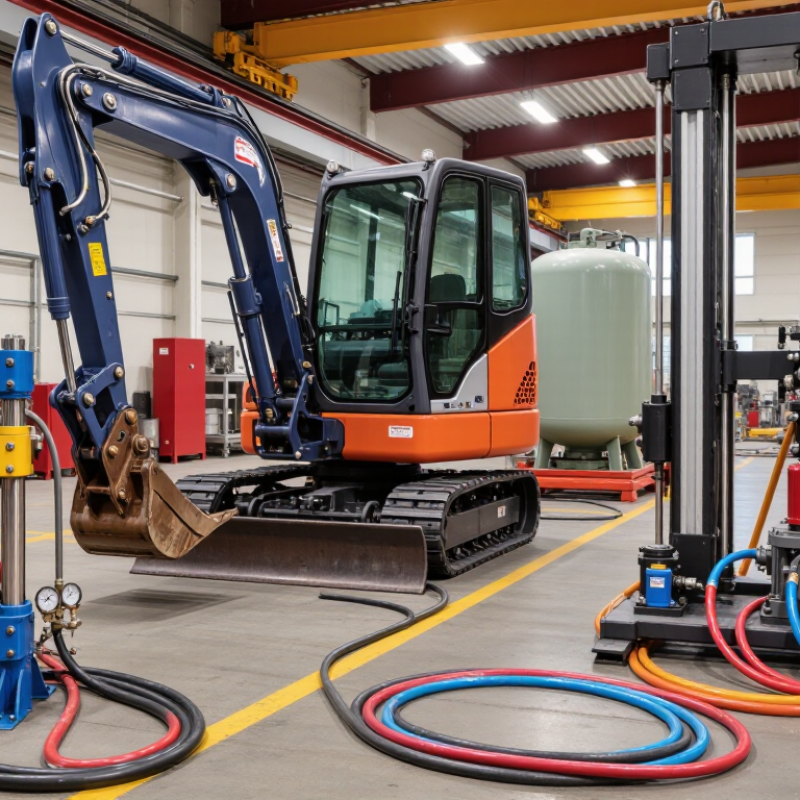
Table of Contents
[Hide]
Define the Application and Its Operating Requirements
Before selecting a hydraulic system, describe the work it must perform in practical terms. Will it lift a steady load, drive a rotating tool, or move a cylinder through repeated cycles? Record the required force, travel distance, speed, and duty cycle. A machine that runs for ten minutes each hour has different cooling needs from one that operates continuously. Small details matter. Note where the equipment will work, too: a dusty workshop, a cold loading bay, or a washdown area can change fluid, sealing, and filtration requirements.
Measure the load at its heaviest point, not just during a typical cycle. Include shock loads, starts and stops, and any side force on the actuator. These conditions can reveal problems that a simple capacity estimate misses. Specify the available power source and space for the pump, reservoir, hoses, and service access. Check expected operating pressure and flow against the component ratings, with a qualified engineer reviewing uncertain or high-risk cases. A little margin is useful, but oversized equipment can waste energy and create excess heat.
Be honest about what is not yet known. Maybe the cycle time varies, or the load data came from an estimate. That is a reason to measure again, not to guess confidently. Use the operating requirements to compare system options, then verify them under realistic conditions before finalizing the design. The first draft may be wrong. That is normal.
Related Posts
-
How to Choose the Right Hydraulic Power Pack for Your Needs?
-
What Is the Best Hydraulic Power Pack from China?
-
How to Choose Hydraulic Components in 2026?
-
How to Choose the Right Hydraulic Unit?
-
What Are the Best Hydraulic Components from China?
-

10 Essential Tips for Maintaining an Efficient Hydraulic System





