


- Home
- A-Z Catalogue
- Products
- Valves
- Cetop
- Manual Directional Valves
- Proportional Valves
- Poppet Valves
- High-Speed Linear Servo Valves
- All High-Speed Linear Servo Valves
- Cetop 10 (NG32) Two Stage Type High Speed Linear Servo Valves – LSVHG-10
- Cetop 10 (NG32) Two Stage Type High Speed Linear Servo Valves – LSVHG-10 (With Fail-Safe)
- Cetop 8 (NG25) Two Stage Type High Speed Linear Servo Valves – LSVHG-06
- Cetop 8 (NG25) Two Stage Type High Speed Linear Servo Valves – LSVHG-06 (With Fail-Safe)
- Cetop 7 (NG16) Two Stage Type High Speed Linear Servo Valves – LSVHG-04
- Cetop 7 (NG16) Two Stage Type High Speed Linear Servo Valves – LSVHG-04 (With Fail-Safe)
- Cetop 5 (NG10) Direct Type High Speed Linear Servo Valves – LSVG-03
- Cetop 5 (NG10) OBE Type Direct Operated Linear Servo Valves – LSVG-03-EH
- Cetop 3 (NG6) OBE Type Direct Operated Linear Servo Valves – LSVG-01-EH
- Pumps
- Pressure control
- Flow Control Valves
- Pressure Control Valves
- All Pressure Control Valves
- Brake Valves
- Direct Relief Valve
- Low Noise Solenoid Controlled Relief Valves
- Low Noise Pilot Operated Relief Valves
- Pilot Operated Relief Valves
- Pressure reducing and relieving valves
- Pressure reducing and check valves
- Pressure control valves
- Remote Control Relief Valves
- Solenoid Controlled Relief Valves – BSG
- Solenoid Controlled Relief Valves – BST
- Unloading relief valves
- Check valves
- Environmental
- Valves
- Hydraulic Systems
- Power pack
- About Us
- Contact
- Blog

How to Choose the Right Hydraulic Unit?
Choosing the right hydraulic unit begins with the machine’s real working conditions, not a catalogue picture. A hydraulic unit must deliver suitable pressure, flow, and control for the intended task. In practical work, measure the cylinder speed, load weight, duty cycle, and available installation space. The wrong choice may cause slow movement, overheated oil, or repeated seal failure.
Start with the numbers.
Record pressure and flow during demanding operations. Then examine the pump type, motor power, reservoir capacity, valve arrangement, and filtration system. A unit rated for 250 bar may still perform poorly if its flow is insufficient. Real conditions matter. Dust, heat, vibration, and long operating hours can change the selection. Small details matter. Check port sizes, hose routing, noise limits, and maintenance access before approving a design. Manufacturer datasheets, technical manuals, and guidance from qualified hydraulic engineers provide stronger evidence than sales claims alone.
A dependable selection balances performance, reliability, energy use, and serviceability. A compact hydraulic unit may suit a mobile machine, while a larger reservoir may better support continuous factory operation. Ask how easily technicians can replace filters, inspect oil, and access the motor. These questions often reveal hidden ownership costs. Past project experience is valuable, but it is not perfect. I have seen suitable-looking units fail because the oil temperature was never measured. That mistake is avoidable. Compare verified specifications with field requirements, confirm compatibility with the full hydraulic circuit, and leave reasonable capacity for changing conditions. Careful selection protects equipment, operators, and production time.
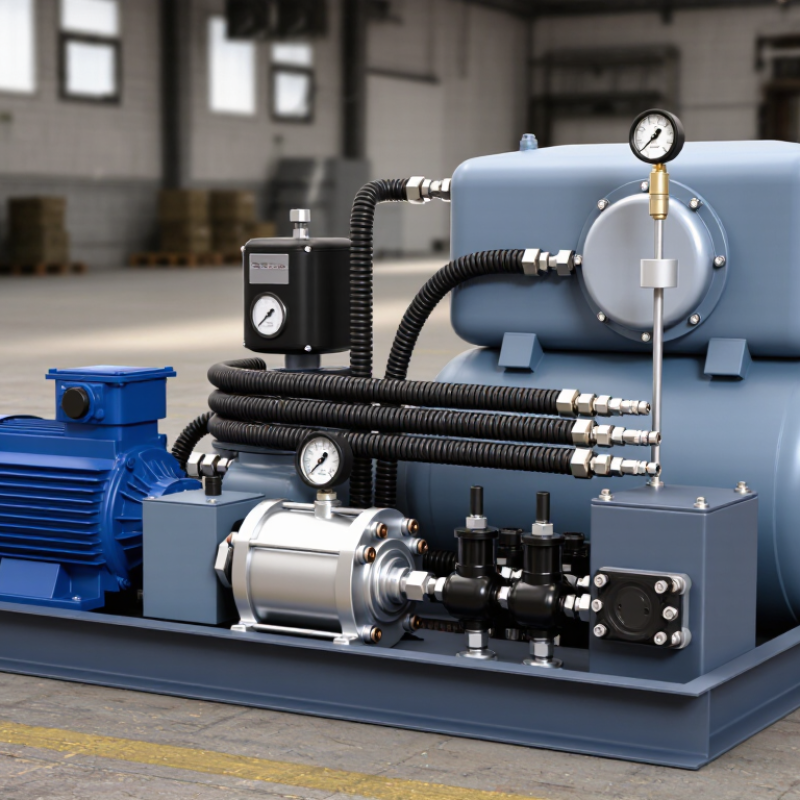
Table of Contents
[Hide]
Define the Hydraulic Unit’s Role in Your System
How to Choose the Right Hydraulic Unit?
Define the hydraulic unit’s role before comparing flow rates, tank sizes, or motor power. Is it driving a cylinder, holding pressure, controlling speed, or supplying intermittent clamping force? Each role creates a different duty cycle. A unit for short strokes may tolerate a smaller reservoir. Continuous motion needs better cooling, filtration, and heat management. The machine’s real demand matters more than its maximum rating.
A technical assessment from the National Science Foundation’s Center for Compact and Efficient Fluid Power reported roughly 21% system efficiency for conventional mobile hydraulic systems. That figure is not universal. It shows why pressure losses, throttling, and oversized components deserve early attention. The U.S. Department of Energy also identifies leakage, excessive pressure, and heat rejection as common hydraulic energy losses. Watch the return line. A hot reservoir often tells the truth.
Define operating conditions in writing. Record required flow, working pressure, peak pressure, cycle frequency, ambient temperature, fluid viscosity, and actuator speed. ISO 4413 stresses risk control, cleanliness, and safe system design. These are selection requirements, not paperwork. A smaller unit can fail when demand peaks. An oversized unit can waste energy every minute. I have seen both assumptions survive the design review. That should make engineers pause. The best choice matches the unit to the job, including the moments when the job changes.
How to Choose the Right Hydraulic Unit? - Define the Hydraulic Unit’s Role in Your System
| Hydraulic Unit Role | Typical System Function | Typical Pressure Range | Typical Flow Range | Common Pump Configuration | Recommended Reservoir Guideline | Control and Protection Features | Primary Selection Priorities |
|---|---|---|---|---|---|---|---|
| Intermittent Actuation | Moves cylinders or hydraulic motors for short operating cycles with idle periods between actions. | 70–210 bar (1,015–3,045 psi) |
5–30 L/min (1.3–7.9 US gal/min) |
Fixed-displacement gear pump driven by an electric motor. | Approximately 2–4 times the pump flow in litres per minute, subject to heat and duty-cycle analysis. | Relief valve, pressure switch, motor starter, suction strainer, and return-line filter. | Compact size, low purchase cost, adequate cooling, and correct actuator speed. |
| Continuous Hydraulic Power | Supplies a steady flow for machinery operating for extended periods without frequent unloading. | 70–250 bar (1,015–3,625 psi) |
30–500 L/min (7.9–132 US gal/min) |
Vane, screw, or variable-displacement piston pump selected for continuous duty. | Usually 1–3 times the pump flow, with a cooler often required for continuous operation. | Pressure and temperature monitoring, filtration, oil cooler, unloading circuit, and overload protection. | Heat rejection, efficiency, noise level, filtration quality, and continuous-duty motor rating. |
| Clamping and Holding | Generates and maintains force for fixtures, workholding, presses, or locking mechanisms. | 100–250 bar (1,450–3,625 psi) |
1–20 L/min (0.3–5.3 US gal/min) |
Small gear pump or compact piston pump with a pressure-compensated circuit. | Approximately 2–3 times the pump flow, adjusted for heat generation and accumulator use. | Pressure relief valve, check valve, pressure switch, pilot-operated check valve, and optional accumulator. | Pressure stability, leakage control, holding reliability, response time, and safe pressure release. |
| Lifting and Lowering | Raises, supports, and lowers loads using one or more hydraulic cylinders. | 140–250 bar (2,030–3,625 psi) |
10–100 L/min (2.6–26.4 US gal/min) |
Gear or piston pump with load-holding and controlled-descent functions. | Typically 2–4 times the pump flow; final sizing depends on cylinder volume and lowering cycles. | Counterbalance valve, pilot-operated check valve, relief valve, emergency lowering, and level switch. | Load control, fail-safe lowering, cylinder speed, structural load rating, and emergency operation. |
| High-Speed Motion | Provides rapid cylinder or motor movement where cycle time is a key performance requirement. | 100–210 bar (1,450–3,045 psi) |
30–250 L/min (7.9–66 US gal/min) |
High-efficiency fixed or variable-displacement pump, sometimes combined with an accumulator. | Approximately 1–3 times the pump flow, provided that aeration and heat limits are maintained. | Flow control, proportional valves, accumulator safety block, pressure relief, and temperature monitoring. | Required flow, acceleration control, pressure drop, valve response, and hydraulic shock reduction. |
| Mobile or Battery-Powered Auxiliary | Operates hydraulic functions where available electrical power, space, or battery energy is limited. | 100–280 bar (1,450–4,060 psi) |
5–120 L/min (1.3–31.7 US gal/min) |
Compact gear pump or efficient variable-displacement pump matched to the prime mover. | Commonly 1–3 times the pump flow, balanced against weight, heat, and available installation space. | DC motor controller, battery protection, thermal switch, pressure relief, return filtration, and low-level sensor. | Energy efficiency, duty cycle, battery capacity, weight, vibration resistance, and environmental sealing. |
| Servo or Proportional Control | Controls force, position, or speed accurately through electronically commanded hydraulic valves. | 70–210 bar (1,015–3,045 psi) |
5–150 L/min (1.3–39.6 US gal/min) |
Variable-displacement piston pump or fixed pump with proportional flow-control valves. | Approximately 2–4 times the pump flow, with careful attention to fluid cleanliness and heat. | Electronic pressure and temperature sensors, high-efficiency filtration, flushing provisions, and control feedback. | Controllability, pressure ripple, response time, oil cleanliness, sensor accuracy, and software integration. |
| Compact Low-Duty Power Pack | Performs occasional small movements in access equipment, material handling, automation, or service machinery. | 70–160 bar (1,015–2,320 psi) |
0.5–10 L/min (0.13–2.6 US gal/min) |
Miniature gear pump or integrated pump-and-motor assembly. | Approximately 2–4 times the pump flow, unless the duty cycle is very short. | Relief valve, check valve, pressure switch, compact manifold, and motor thermal protection. | Footprint, noise, starting torque, duty cycle, service access, and total installed cost. |
Engineering note: The ranges shown are typical design values rather than universal limits. Final hydraulic-unit selection should be based on required force or torque, actuator speed, operating pressure, flow demand, duty cycle, ambient temperature, oil viscosity, heat dissipation, filtration, safety requirements, and available power.
Related Posts
-
China Top 10 Hydraulic Unit Manufacturers?
-

How to Choose the Right Hydraulic Power Unit for Your Needs in 2026?
-
How to Choose the Right Hydraulic Power Unit for Your Needs?
-
The Essential Guide to Understanding Hydraulic Power Packs in Industrial Applications
-
What Is the Best Hydraulic Power Pack from China?
-

How to Choose the Right Hydraulic Unit for Your Needs?





