China Top 10 Hydraulic Unit Manufacturers?

China’s hydraulic unit industry is expanding alongside construction machinery, agricultural equipment, factory automation, and renewable-energy projects. Grand View Research estimates that the global hydraulic equipment market will continue growing through 2030, supported by rising industrial automation and heavy-equipment demand. MarketsandMarkets also identifies Asia-Pacific as a major growth region, with China remaining a central manufacturing and consumption base.

The phrase “top 10” needs careful handling. A perfect ranking is impossible. Different buyers value different evidence. Production scale matters, but so do valve quality, pump efficiency, filtration, testing, export experience, and after-sales support. This guide evaluates Chinese manufacturers through these practical criteria. It also considers certifications, application history, customization capability, and documented customer service.

Reliability starts with clean fluid and stable pressure. Brendan Casey, a hydraulic consultant and author, has stated, “Contamination is the enemy of hydraulic systems.” His warning remains highly practical. A small particle can damage a precision valve, increase heat, and stop a production line. ISO 4413 provides widely recognized principles for hydraulic fluid power systems and safety. Manufacturers should therefore explain their cleanliness controls, pressure testing, sealing materials, and maintenance guidance.

The manufacturers discussed here are not ranked by advertising claims alone. Their capabilities should be checked against current catalogs, factory documentation, independent certifications, and project references. Some companies may appear strong on price but weaker on lifecycle support. Others may cost more initially and reduce downtime later. This distinction matters when selecting a hydraulic unit for demanding industrial work.
China Top 10 Hydraulic Unit Manufacturers?

What Is a Hydraulic Unit and How Does It Work?

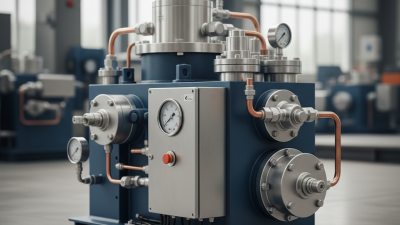
A hydraulic unit, or HPU, is the power center behind many industrial machines. It stores hydraulic fluid, drives a pump, controls pressure, and sends flow to an actuator. Typical parts include a reservoir, electric motor, pump, relief valve, filter, pressure gauge, and sometimes an accumulator. The motor turns the pump. The pump moves oil through narrow passages. Valves then direct that flow to create controlled movement.

The operating principle is simple: fluid pressure transfers force through a confined liquid. A small piston can therefore control a much larger cylinder. Pressure determines force, while flow rate affects movement speed. A 10 MPa system acting on a 0.01-square-meter piston can produce about 100,000 newtons of force. That is roughly equivalent to lifting a ten-ton load under ideal conditions. Real systems lose energy through leakage, heat, friction, and poor valve adjustment.

Grand View Research valued the global hydraulic equipment market at about USD 49.8 billion in 2023 and projected a 4.5% compound annual growth rate through 2030. This growth increases attention on reliable hydraulic unit design. For evaluating Chinese manufacturers, buyers should inspect pump efficiency, filtration accuracy, noise levels, sealing quality, and test records. A pressure gauge alone can mislead. ISO 4413 guidance supports safer fluid-power design, but factory testing still matters. I would also question oversized motors, because they may increase heat and operating costs without improving machine performance.

Key Factors for Comparing Hydraulic Unit Manufacturers in China

China Top 10 Hydraulic Unit Manufacturers?

Key Factors for Comparing Hydraulic Unit Manufacturers in China

Comparing hydraulic unit manufacturers requires more than checking catalog prices. Start with application experience. A supplier serving injection molding may not understand mobile equipment demands. Ask for drawings, pressure ranges, flow rates, and operating temperatures from similar projects. Request case evidence, not polished promises.

Technical capability should be visible in the details. Review pump selection, valve quality, filtration design, tank capacity, and heat management. Ask whether engineers perform circuit calculations and prototype testing. A reliable manufacturer should provide pressure-test records, inspection procedures, material certificates, and clear warranty terms. Factory audits can reveal assembly cleanliness, calibration tools, and spare-parts storage.

Production scale matters, but it is not everything. Some large facilities still provide weak technical support. Smaller teams may respond faster, yet struggle with consistent documentation. That trade-off deserves careful checking. Compare lead times using a real sample order, not an optimistic quotation. Confirm packaging, export experience, communication, and after-sales response hours. I would also test one unit before placing a larger order. It costs more initially. It may prevent expensive field failures later. Even experienced buyers can overlook noise levels, oil contamination, or changing component sources. Ask how these risks are recorded and controlled.

China Top 10 Hydraulic Unit Manufacturers: Key Comparison Factors

This chart presents a neutral procurement-weighting model for comparing hydraulic unit manufacturers in China. Product quality, customization capability, hydraulic performance, delivery reliability, technical service, total cost, and regulatory compliance are commonly assessed when selecting a supplier. The percentages represent the relative importance of each factor in a structured supplier evaluation and do not represent data from any individual company or brand.

China’s Top 10 Hydraulic Unit Manufacturers

China’s Top 10 Hydraulic Unit Manufacturers are best judged by engineering consistency, not factory size alone. The leading suppliers usually provide compact power packs, custom manifolds, and integrated control systems for construction, logistics, agriculture, and industrial equipment. Their workshops often combine CNC machining, pressure testing, and contamination control. These details matter when a unit works beside dust, vibration, and changing temperatures.

Experienced buyers should examine working pressure, flow stability, motor efficiency, and response time. A reliable manufacturer can explain valve selection, reservoir capacity, sealing materials, and heat management clearly. Ask for test records, dimensional drawings, material certificates, and traceable inspection data. Sample testing is valuable. A unit may pass a short pressure test but still show noise, leakage, or overheating during continuous operation. On-site service also deserves attention, especially for export projects requiring spare parts and technical communication.

The top ten list should remain flexible. Market rankings change with delivery performance, product development, and after-sales support. A supplier may offer excellent custom engineering but weaker documentation. Another may deliver quickly but provide limited troubleshooting. I have found that honest limitations often reveal more than polished claims. Buyers should compare several samples under identical conditions, including start-up temperature, cycle frequency, and load variation. Factory visits can help, although one visit cannot prove long-term reliability. Procurement decisions should combine verified records, practical testing, and the actual demands of the hydraulic system.

Products, Technologies, and Industries Served by Leading Brands

China’s top 10 hydraulic unit manufacturers serve very different production needs. Their product ranges commonly include compact power packs, hydraulic pumps, valves, cylinders, manifolds, and complete control units. Some focus on standard units for lifting platforms and agricultural equipment. Others build high-flow systems for excavators, presses, injection machines, and material-handling vehicles.

Technology separates these manufacturers more clearly than product names. Leading factories use CNC machining, automated assembly, pressure testing, and contamination control. Proportional valves improve movement accuracy. Servo-hydraulic systems reduce vibration during repeated operations. Variable-displacement pumps can lower energy use when demand changes. Several manufacturers also provide CAD-based manifold design, simulation support, remote diagnostics, and customized reservoirs. These services matter when a machine has limited installation space.

Industrial experience remains important. Construction equipment needs shock resistance and stable performance under dust. Machine tools require precise control and low leakage. Agricultural machinery often values simple maintenance and dependable cold-start operation. Renewable-energy equipment may need compact units with long duty cycles. Food and packaging machinery usually demands cleaner designs and easier inspection. Specifications can look impressive on paper. Field performance is less predictable without load testing and service records. No supplier is perfect. Buyers should compare pressure ratings, duty cycles, seal materials, spare-part access, and documented test results before selecting a manufacturer. Some product data also needs independent verification.

China Top 10 Hydraulic Unit Manufacturers? - Products, Technologies, and Industries Served by Leading Brands

Rank Manufacturer Profile Core Hydraulic Products Key Technologies and Engineering Capabilities Typical Industries Served Common System Features
1 Profile A
Established industrial hydraulic producer
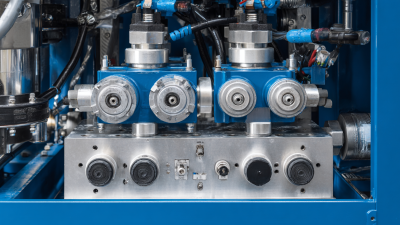
Hydraulic power units, gear pumps, piston pumps, valves, cylinders, and compact power packs Load-sensing circuits Electro-hydraulic control Custom manifold blocks Filtration integration Construction machinery, material handling, industrial automation, agricultural equipment, and energy infrastructure Modular assemblies, configurable reservoir sizes, pressure monitoring, return-line filtration, and oil-temperature control
2 Profile B
Large-scale fluid power systems supplier
Hydraulic pumps, directional valves, proportional valves, cylinders, and complete hydraulic units Proportional control Servo hydraulics PLC interfacing Pressure compensation Metal forming, machine tools, rubber and plastics machinery, marine equipment, and general manufacturing High repeatability, closed-loop control options, compact valve blocks, integrated sensors, and automated diagnostics
3 Profile C
Heavy-duty mobile hydraulics specialist
Mobile hydraulic power units, piston pumps, motors, valves, steering units, and hydraulic cylinders Open-center systems Closed-center systems Anti-shock protection High-load design Excavators, loaders, cranes, concrete equipment, road machinery, mining vehicles, and forestry machinery Shock-resistant construction, compact installation, high power density, contamination protection, and field-serviceable layouts
4 Profile D
Industrial power-unit engineering manufacturer
AC and DC hydraulic power packs, hydraulic motors, valves, accumulators, and control manifolds Multi-stage pressure control Accumulator circuits Synchronous motion Remote monitoring Factory automation, lifting platforms, packaging equipment, logistics systems, steel processing, and production lines Low-noise pump options, compact tank arrangements, emergency lowering, cycle-time optimization, and electrical control cabinets
5 Profile E
Hydraulic transmission and control specialist
Hydraulic pumps, orbital motors, planetary drives, valves, steering systems, and integrated power units Hydrostatic drive Variable displacement Flow sharing Travel control Self-propelled machinery, agricultural vehicles, municipal equipment, warehouse vehicles, and compact construction machines Precise speed control, reversible operation, overload relief, energy-efficient displacement control, and compact packaging
6 Profile F
Custom hydraulic cylinder and unit manufacturer
Hydraulic cylinders, hydraulic stations, cylinder control blocks, jacks, and custom actuators Welded cylinders Tie-rod cylinders Position sensing Special sealing Presses, lifting systems, engineering vehicles, port machinery, shipbuilding, mining equipment, and structural projects Corrosion-resistant options, high side-load capability, custom stroke lengths, synchronized actuation, and harsh-environment seals
7 Profile G
Compact electro-hydraulic unit producer
Mini power packs, cartridge valves, micro hydraulic pumps, electric motors, and compact cylinders Cartridge technology 12/24 V DC systems Integrated motor-pump design Wireless control options Access equipment, tail lifts, wheelchair lifts, medical equipment, recreational vehicles, and light-duty automation Small footprint, battery operation, intermittent-duty design, low installation complexity, and integrated relief valves
8 Profile H
Hydraulic filtration and conditioning systems manufacturer
Hydraulic power units, offline filtration systems, filters, coolers, reservoirs, and contamination-control assemblies Offline filtration Oil cooling Particle monitoring Condition monitoring Steel mills, injection molding, mining, wind power, marine systems, paper machinery, and heavy industrial plants High contamination-control performance, water-removal options, visual indicators, temperature regulation, and service-friendly layouts
9 Profile I
Marine and offshore hydraulic systems supplier
Marine hydraulic power units, winch systems, steering units, deck machinery controls, and offshore actuators Saltwater protection Redundant circuits Load-holding valves Remote operation Shipbuilding, offshore platforms, port machinery, dredging, subsea support, fishing vessels, and marine logistics Corrosion-resistant materials, fail-safe braking, emergency backup circuits, weatherproof enclosures, and controlled lowering functions
10 Profile J
Energy-efficient hydraulic system integrator
Variable-speed hydraulic units, servo pumps, proportional manifolds, accumulators, and complete turnkey systems Variable-speed drives Energy recovery Digital hydraulics System simulation Renewable energy equipment, injection molding, battery manufacturing, automated production, testing systems, and transportation equipment Reduced idle power, adaptive flow control, heat-load reduction, data logging, predictive maintenance, and application-specific programming

Note: The profiles are organized by product scope, technology coverage, and commonly served application sectors. Actual specifications, certifications, and customization options should be verified with the relevant manufacturer for each project.

How to Select the Right Chinese Hydraulic Unit Manufacturer

How to Select the Right Chinese Hydraulic Unit Manufacturer

China’s hydraulic market is broad, but a top-ten ranking proves little. Grand View Research valued the global hydraulic equipment market at about US$49 billion in 2023. This growth attracts capable factories and inexperienced assemblers. Your selection process must go beyond catalog photos.

Request pressure and flow test records for the exact unit. Check operating pressure, displacement, response time, noise, and leakage. Ask how technicians control oil cleanliness during assembly. ISO 4413 provides useful safety and system-design guidance. ISO 9001 certification can support process control, but it cannot replace an on-site audit. Inspect machining areas, calibration labels, spare-part storage, and final testing benches. Small details matter.

Demand traceable material certificates and drawings with revision numbers. Confirm whether seals, valves, and connectors match your fluid and working temperature. Clarify warranty limits, failure analysis, delivery capacity, and technical response times. A pilot order is safer than a large first shipment. Test units under realistic loads, not only factory conditions. I have seen attractive quotations hide weak documentation and inconsistent testing. That is uncomfortable, but it deserves attention. The cheapest unit may create higher downtime costs later. Compare total ownership cost, energy use, maintenance access, and replacement speed. Supplier references should come from similar pressure ranges and applications, not merely large export volumes.