


- Home
- A-Z Catalogue
- Products
- Valves
- Cetop
- Manual Directional Valves
- Proportional Valves
- Poppet Valves
- High-Speed Linear Servo Valves
- All High-Speed Linear Servo Valves
- Cetop 10 (NG32) Two Stage Type High Speed Linear Servo Valves – LSVHG-10
- Cetop 10 (NG32) Two Stage Type High Speed Linear Servo Valves – LSVHG-10 (With Fail-Safe)
- Cetop 8 (NG25) Two Stage Type High Speed Linear Servo Valves – LSVHG-06
- Cetop 8 (NG25) Two Stage Type High Speed Linear Servo Valves – LSVHG-06 (With Fail-Safe)
- Cetop 7 (NG16) Two Stage Type High Speed Linear Servo Valves – LSVHG-04
- Cetop 7 (NG16) Two Stage Type High Speed Linear Servo Valves – LSVHG-04 (With Fail-Safe)
- Cetop 5 (NG10) Direct Type High Speed Linear Servo Valves – LSVG-03
- Cetop 5 (NG10) OBE Type Direct Operated Linear Servo Valves – LSVG-03-EH
- Cetop 3 (NG6) OBE Type Direct Operated Linear Servo Valves – LSVG-01-EH
- Pumps
- Pressure control
- Flow Control Valves
- Pressure Control Valves
- All Pressure Control Valves
- Brake Valves
- Direct Relief Valve
- Low Noise Solenoid Controlled Relief Valves
- Low Noise Pilot Operated Relief Valves
- Pilot Operated Relief Valves
- Pressure reducing and relieving valves
- Pressure reducing and check valves
- Pressure control valves
- Remote Control Relief Valves
- Solenoid Controlled Relief Valves – BSG
- Solenoid Controlled Relief Valves – BST
- Unloading relief valves
- Check valves
- Environmental
- Valves
- Hydraulic Systems
- Power pack
- About Us
- Contact
- Blog

How to Choose the Right Hydraulic Control Valve for Your Needs
Choosing the right hydraulic control valve is crucial for system efficiency and performance. In recent reports by the Fluid Power Industry Association, nearly 40% of hydraulic system failures are attributed to valve selection errors. This highlights the importance of making informed choices.
Industry expert Dr. Sarah Whitman emphasizes, "A hydraulic control valve should match the specific requirements of your application." Her insights remind us that not all valves are created equal. Selecting an inappropriate valve can lead to inefficiencies and increased maintenance costs, underscoring the need for careful consideration.
When assessing hydraulic control valves, factors like flow rate, pressure rating, and application type are essential. Neglecting any of these aspects could result in suboptimal system performance. Many professionals rush this decision, yet the implications can be costly. It’s vital to take the time to evaluate all variables, ensuring the selected valve aligns with operational demands.
Table of Contents
[Hide]
Understanding Hydraulic Control Valve Basics
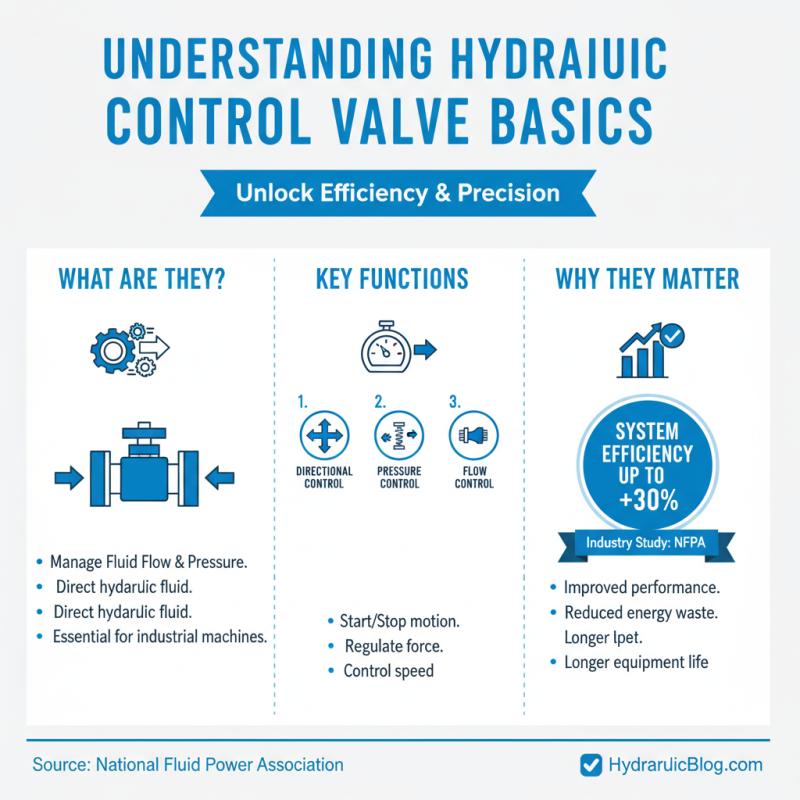
Hydraulic control valves are essential in various industrial applications. They manage fluid flow and pressure within hydraulic systems. Understanding their types and functions can help you make informed decisions. Reportedly, proper valve selection can improve system efficiency by up to 30%, according to an industry study conducted by the National Fluid Power Association.
When choosing a valve, consider the flow requirements. Valves must handle the system's maximum flow rate. Underestimating these needs can result in reduced performance. Additionally, pay attention to the pressure ratings. Selecting a valve with inadequate pressure ratings can lead to frequent failures and maintenance issues.
Tips: Always consult your system specifications. Check the needed pressure and flow rates before purchasing. Performance may vary based on environmental factors. An unsuitable valve might hinder your overall operations. Keep in mind, not every valve is suitable for every application. A mismatched component can lead to inefficiencies and increased costs. It's vital to choose wisely and seek expert guidance when necessary.
Related Posts
-

Exploring the Benefits of Advanced Hydraulic Directional Valves for Efficient Fluid Control
-
Understanding the Role of Hydraulic Valves in Modern Industrial Applications
-
Understanding the Importance of Hydraulic Pressure Control Valves in Modern Industrial Applications
-
2026 Best Hydraulic Valve Innovations for Enhanced Performance?
-
10 Essential Tips for Choosing the Right Hydraulic Relief Valve
-
How to Choose the Right Hydraulic Pressure Control Valve?