


- Home
- A-Z Catalogue
- Products
- Valves
- Cetop
- Manual Directional Valves
- Proportional Valves
- Poppet Valves
- High-Speed Linear Servo Valves
- All High-Speed Linear Servo Valves
- Cetop 10 (NG32) Two Stage Type High Speed Linear Servo Valves – LSVHG-10
- Cetop 10 (NG32) Two Stage Type High Speed Linear Servo Valves – LSVHG-10 (With Fail-Safe)
- Cetop 8 (NG25) Two Stage Type High Speed Linear Servo Valves – LSVHG-06
- Cetop 8 (NG25) Two Stage Type High Speed Linear Servo Valves – LSVHG-06 (With Fail-Safe)
- Cetop 7 (NG16) Two Stage Type High Speed Linear Servo Valves – LSVHG-04
- Cetop 7 (NG16) Two Stage Type High Speed Linear Servo Valves – LSVHG-04 (With Fail-Safe)
- Cetop 5 (NG10) Direct Type High Speed Linear Servo Valves – LSVG-03
- Cetop 5 (NG10) OBE Type Direct Operated Linear Servo Valves – LSVG-03-EH
- Cetop 3 (NG6) OBE Type Direct Operated Linear Servo Valves – LSVG-01-EH
- Pumps
- Pressure control
- Flow Control Valves
- Pressure Control Valves
- All Pressure Control Valves
- Brake Valves
- Direct Relief Valve
- Low Noise Solenoid Controlled Relief Valves
- Low Noise Pilot Operated Relief Valves
- Pilot Operated Relief Valves
- Pressure reducing and relieving valves
- Pressure reducing and check valves
- Pressure control valves
- Remote Control Relief Valves
- Solenoid Controlled Relief Valves – BSG
- Solenoid Controlled Relief Valves – BST
- Unloading relief valves
- Check valves
- Environmental
- Valves
- Hydraulic Systems
- Power pack
- About Us
- Contact
- Blog

China Best Hydraulic Components Suppliers for Global Buyers
Choosing hydraulic components from China can widen sourcing options, but price alone rarely predicts dependable performance. Buyers need to compare materials, pressure ratings, operating temperatures, sealing methods, and documented test results. A valve may look identical in a catalog, yet respond differently under repeated cycles or contaminated oil. Details matter.
Hydraulic control engineer Herbert E. Merritt’s systems-level approach offers a useful reminder. A fair paraphrase of that principle is: “Assess each component within the complete circuit, not in isolation.” That perspective helps buyers evaluate pumps, valves, cylinders, filters, and fittings against actual machine requirements. It also makes supplier discussions more precise. Ask for dimensional drawings, traceable material information, inspection records, and clear answers about production tolerances. Then confirm that samples match the documents. A polished brochure is not evidence by itself.
This guide examines China-based suppliers through practical criteria: product range, manufacturing capability, quality controls, customization, communication, and export experience. It also considers where independent inspection or sample testing may reduce uncertainty. No supplier is ideal for every application. Even a capable factory can be the wrong fit when lead times, documentation, or technical support fall short. Buyers should verify claims directly and compare like with like. Sometimes the simplest specification reveals the most. A careful review cannot remove every risk, but it can help global buyers make better-informed sourcing decisions.
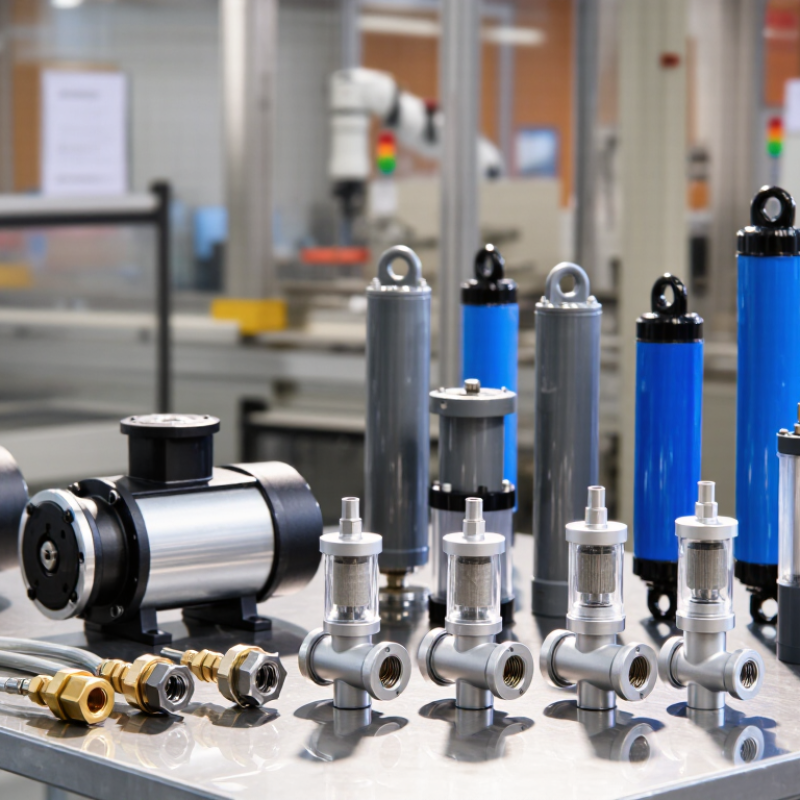
Table of Contents
[Hide]
What Hydraulic Components Do Global Buyers Source from China?
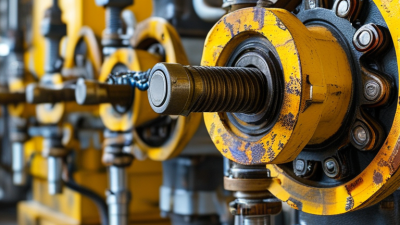
Global buyers source a wide range of hydraulic components from China, including gear pumps, piston pumps, hydraulic motors, cylinders, and control valves. These parts serve equipment such as presses, agricultural machines, and construction vehicles. Buyers also purchase hoses, fittings, filters, manifolds, seals, and quick couplings for complete hydraulic assemblies. Small parts matter. A mismatched seal can cause leaks, even when the main pump performs well.
Selection should start with operating pressure, flow rate, fluid type, temperature range, and mounting dimensions. Ask suppliers for dimensional drawings, material details, and test records that match the order. For example, a cylinder used outdoors may need corrosion-resistant surfaces and seals suited to its hydraulic fluid. Valve response and pump noise should also be checked under realistic operating conditions, not only in a product description. Supplier quality varies, and a polished catalog is not proof of consistent production. I have seen buyers focus heavily on unit price, then spend more time resolving thread differences or unclear tolerances. That trade-off deserves a second look. Share the application, duty cycle, and connection standards before requesting a quotation.
Related Posts
-
Why is Hydraulic Equipment Essential in Modern Industries?
-

7 Essential Tips for Mastering Hydraulic Controls in Your Projects
-

Why Is Hydraulic Equipment Essential in Modern Industry?
-
China Top Hydraulic Equipment Suppliers for Global Buyers?
-
Top Hydraulic Equipment Trends and Innovations for 2026?
-
Hydraulic System Tips for Efficient Performance and Maintenance?