


- Home
- A-Z Catalogue
- Products
- Valves
- Cetop
- Manual Directional Valves
- Proportional Valves
- Poppet Valves
- High-Speed Linear Servo Valves
- All High-Speed Linear Servo Valves
- Cetop 10 (NG32) Two Stage Type High Speed Linear Servo Valves – LSVHG-10
- Cetop 10 (NG32) Two Stage Type High Speed Linear Servo Valves – LSVHG-10 (With Fail-Safe)
- Cetop 8 (NG25) Two Stage Type High Speed Linear Servo Valves – LSVHG-06
- Cetop 8 (NG25) Two Stage Type High Speed Linear Servo Valves – LSVHG-06 (With Fail-Safe)
- Cetop 7 (NG16) Two Stage Type High Speed Linear Servo Valves – LSVHG-04
- Cetop 7 (NG16) Two Stage Type High Speed Linear Servo Valves – LSVHG-04 (With Fail-Safe)
- Cetop 5 (NG10) Direct Type High Speed Linear Servo Valves – LSVG-03
- Cetop 5 (NG10) OBE Type Direct Operated Linear Servo Valves – LSVG-03-EH
- Cetop 3 (NG6) OBE Type Direct Operated Linear Servo Valves – LSVG-01-EH
- Pumps
- Pressure control
- Flow Control Valves
- Pressure Control Valves
- All Pressure Control Valves
- Brake Valves
- Direct Relief Valve
- Low Noise Solenoid Controlled Relief Valves
- Low Noise Pilot Operated Relief Valves
- Pilot Operated Relief Valves
- Pressure reducing and relieving valves
- Pressure reducing and check valves
- Pressure control valves
- Remote Control Relief Valves
- Solenoid Controlled Relief Valves – BSG
- Solenoid Controlled Relief Valves – BST
- Unloading relief valves
- Check valves
- Environmental
- Valves
- Hydraulic Systems
- Power pack
- About Us
- Contact
- Blog

China Top Hydraulic Equipment Suppliers for Global Buyers?
China has become a major sourcing base for hydraulic equipment, serving construction, agriculture, mining, energy, and industrial automation markets. Yet a supplier’s catalog cannot prove its real capability. Buyers need stronger evidence.
A serious review should examine factory experience, engineering depth, quality controls, export records, and after-sales support. Request pressure-test reports, material certificates, dimensional drawings, and traceable serial numbers. Look closely at pumps, valves, cylinders, power units, seals, and control systems. Small details matter. A leaking fitting can stop an entire production line.
Dr. Monika Ivantysynova, a respected hydraulics researcher, emphasizes that “system efficiency depends on how components work together, not on one component alone.” This principle is especially important when comparing China’s top hydraulic equipment suppliers. A reliable manufacturer should understand complete circuits, not merely sell separate parts. It should explain flow rates, operating pressure, temperature limits, filtration needs, and expected service life in practical terms.
Supplier visits can reveal useful details. Observe assembly benches, cleanliness, testing equipment, warehouse labeling, and technician training. Ask how rejected components are isolated. Ask how design changes are documented. Some companies look impressive online but provide weak technical follow-up.
This guide evaluates leading Chinese suppliers through an international buyer’s perspective. It considers product range, customization, certifications, production capacity, communication, delivery consistency, and lifecycle support. The ranking cannot fit every project. That limitation matters. A compact agricultural cylinder supplier may not suit offshore equipment. Buyers should still conduct independent audits, sample testing, and contract reviews before placing significant orders.
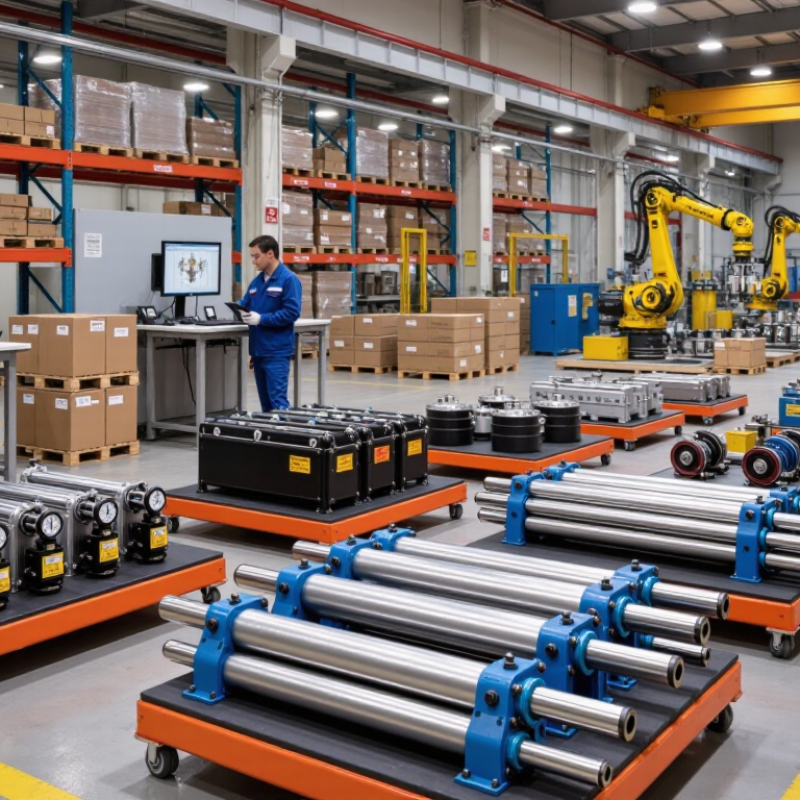
Table of Contents
[Hide]
What Hydraulic Equipment Suppliers in China Provide
China Top Hydraulic Equipment Suppliers for Global Buyers?
Hydraulic equipment suppliers in China commonly provide pumps, valves, cylinders, power units, hoses, fittings, and complete hydraulic systems. Many also offer engineering support for construction, agriculture, lifting, mining, and industrial machinery. Buyers can request custom pressure ranges, mounting dimensions, port sizes, and control methods. Some suppliers manufacture private-label products, while others focus on replacement parts or system integration.
A reliable supplier should provide material details, flow-rate data, pressure ratings, drawings, test records, and installation guidance. Clear documentation reduces mistakes during international sourcing. Factory inspections can reveal useful details, such as machining cleanliness, seal storage, assembly control, and final testing procedures. Small details matter. Ask how each batch is checked.
Suppliers may also support sample production, prototype adjustment, export packing, spare parts, and remote troubleshooting. However, a low quotation can hide weak testing or unclear warranty terms. Product descriptions are sometimes incomplete. That gap deserves direct questions. Confirm whether stated performance applies to continuous operation or short testing only. Check response times for technical issues, replacement policies, and delivery responsibilities. I would also compare drawings with the actual shipment, because small dimensional differences can stop installation. Good communication helps, but it does not replace inspection. A thoughtful buyer should review the entire supply process, not only the product price.
Related Posts
-

Why Is Hydraulic Equipment Essential in Modern Industry?
-
Why is Hydraulic Equipment Essential in Modern Industries?
-
Top Hydraulic Equipment Trends and Innovations for 2026?
-
7 Essential Tips for Mastering Hydraulic Controls in Your Projects
-

Top 10 Hydraulic System Innovations Transforming China Industries?
-
Hydraulic System Tips for Efficient Performance and Maintenance?