2026 Top 3 Check Valve Types for Global Buyers

Global buyers are entering 2026 with tighter maintenance budgets and higher expectations for fluid-control reliability. Grand View Research’s Industrial Valves Market Report identifies water treatment, energy, chemicals, and oil and gas as major demand sectors. MarketsandMarkets also projects continued valve-market growth through 2029, driven by infrastructure renewal and industrial automation. These reports cover the wider valve industry, not only check valves. That distinction matters.

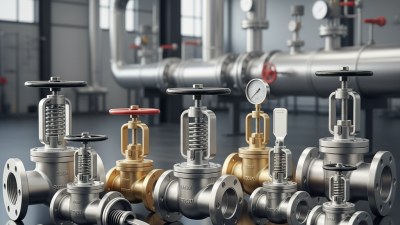
This guide examines three practical options: swing check valves, lift check valves, and dual-plate check valves. Each design reacts differently to flow speed, pressure changes, installation space, and maintenance access. A swing valve may suit large, steady pipelines. A lift valve can provide controlled closure in compact systems. A dual-plate model often reduces installation weight and space requirements. Small details matter. A noisy closure, visible vibration, or damaged seat can signal poor sizing.

Valve handbook author R. W. Zappe describes the core principle clearly: “Check valves are self-actuating, and flow pressure opens them.” The quote is simple, but selection is not. Material compatibility, cracking pressure, backflow risk, and water hammer must be reviewed together. ASME B16.34 and API 594 provide useful technical references, although neither standard replaces project-specific engineering judgment. That is where buyers sometimes make mistakes. They compare purchase prices first and operating consequences later. A cheaper valve may create costly downtime.

This 3 check valve overview focuses on measurable selection factors, supplier documentation, and realistic service conditions. It also recognizes an uncomfortable truth: no single check valve type is best for every global application.
2026 Top 3 Check Valve Types for Global Buyers

Check Valve Basics: Purpose, Components, and Operating Principles

2026 Top 3 Check Valve Types for Global Buyers

Check valves permit one-way flow and stop reverse movement without an external actuator. Their purpose is simple, but selection errors can cause serious pressure shocks. The valve opens when upstream pressure exceeds downstream pressure. It closes when flow slows or reverses. No actuator is required.

Common components include the body, seat, disc, hinge or spring, and sealing surfaces. Swing check valves use a hinged disc and suit moderate flow with limited pressure loss. Lift check valves guide a disc vertically and perform well in cleaner, higher-pressure lines. Wafer check valves are compact, lightweight, and practical where installation space is restricted. Each type responds differently to flow velocity and pipe orientation.

The International Energy Agency reports that industry consumed about 37% of global final energy in 2022. Efficient flow control therefore has measurable operational value. The Business Research Company’s 2024 Valve Global Market Report also identifies industrial expansion as a major valve-market growth driver. These reports cover valves broadly, not check valves alone, so buyers should avoid overgeneralizing.

Field inspection experience shows that seat wear, debris, and incorrect installation often cause leakage. A valve can be correctly rated yet still fail in service. Water hammer remains a concern in fast-closing systems. Engineers should review pressure, temperature, fluid cleanliness, cracking pressure, and maintenance access. Pipe direction matters. So does gravity. My own view is that catalogue selection is only a starting point; operating data should challenge it.

Swing Check Valves: Design, Advantages, and Typical Applications

2026 Top 3 Check Valve Types for Global Buyers

Swing Check Valves: Design, Advantages, and Typical Applications

A swing check valve uses a hinged disc to control one-way flow through a pipeline. When fluid moves forward, the disc swings open with limited resistance. When flow stops or reverses, gravity and backpressure return the disc toward its seat. That movement prevents unwanted backflow into pumps, tanks, or process equipment. The design is simple. Its performance is not always simple.

During commissioning work, I have found that correct installation strongly affects service life. The hinge should remain properly aligned, and the valve body must match the pipeline direction. Poor sizing can make the disc slam shut, creating water hammer and damaging nearby equipment. A slower-closing design may reduce this risk, but it can also increase pressure loss. Buyers need to examine both conditions, not only the catalog flow rate.

Swing check valves suit water systems, wastewater lines, fire protection networks, and many industrial pipelines. They work especially well where flow remains steady and space allows a longer body pattern. Large diameters are often practical because the mechanism contains few moving parts. Inspection is also relatively direct, though access planning is still necessary. I have seen operators overlook suspended solids, which can prevent full seating. That small oversight caused leakage. Material selection, seat compatibility, pressure class, temperature, and maintenance access should be verified before purchase. No valve is perfect, and the cheapest option may create higher operating costs later.

Lift Check Valves: Flow Control, Installation, and Performance

2026 Top 3 Check Valve Types for Global Buyers

Lift check valves use line pressure to raise a disc, allowing forward flow and stopping reverse flow. Their simple structure suits pumps, water systems, process lines, and compressed-air networks. The U.S. Department of Energy reports that pumping systems can consume 25% to 50% of industrial electricity. Therefore, poor valve selection may increase pressure loss and operating costs. Small losses become expensive over long service periods.

Installation details strongly affect lift check valve performance. The valve should follow the marked flow direction. Its disc needs a stable vertical or horizontal position, depending on the design. Installers should keep sufficient straight pipe length near pumps and avoid placing the valve beside severe turbulence sources. A sudden pressure change can create water hammer. It can also damage seats and connected equipment. The valve may be correctly specified, but the installation can still be wrong.

Performance verification should include cracking pressure, leakage, pressure rating, and cycle behavior. ISO 5208 provides industrial valve leakage-testing methods, while ASME B16.34 addresses pressure-temperature ratings and construction requirements. Buyers should request test records, material certificates, and maintenance guidance. A lower cracking pressure is not automatically better; it may reduce resistance but increase sensitivity to vibration. In my view, many purchasing decisions still focus on price before lifecycle data. That deserves reconsideration. Selection should match fluid properties, flow velocity, temperature, installation position, and pump shutdown behavior.

Wafer Check Valves: Compact Construction and Space-Saving Benefits

2026 Top 3 Check Valve Types for Global Buyers

Wafer Check Valves: Compact Construction and Space-Saving Benefits

Wafer check valves fit between pipeline flanges, reducing face-to-face length and installation weight. Their slim profile helps engineers save room in pump rooms, utility skids, and crowded process lines. This matters when retrofit projects cannot move existing pipework. Grand View Research’s 2024 industrial valves analysis identifies water, energy, and process industries as major demand areas through 2030. Compact designs can support that demand, but space savings should never replace correct sizing.

A wafer valve usually needs less material than a longer flanged body. It can also simplify handling above narrow access platforms. However, installation experience shows a weakness: poor alignment may increase disc wear, noise, or leakage. The design is not automatically suitable for every medium. Pressure class, temperature, flow direction, seat material, and minimum closing flow require careful review. ASME B16.34 and API 594 provide useful technical references for pressure-containing and check-valve requirements. Standards help. Field conditions still decide performance.

Tips: Confirm flange compatibility before ordering. Check the manufacturer’s pressure-drop curve, not only the nominal size. Leave enough clearance for inspection and replacement. For pulsating pumps, review slam characteristics with the system designer. A smaller valve may save space, yet create higher losses. That trade-off deserves a second look.

How Global Buyers Compare the Top Three Check Valve Types

How Global Buyers Compare the Top Three Check Valve Types

Global buyers usually compare swing, lift, and dual-plate check valves through four practical points: pressure drop, installation space, maintenance, and surge control. A swing check valve suits larger pipelines with steady flow. Its hinged disc is simple, but reverse flow can slam the disc. Lift check valves offer reliable sealing in high-pressure service, although they need cleaner flow paths and more vertical space. Dual-plate valves are compact and lighter. They often fit tight pipeline layouts, but their springs and plates require careful inspection.

The choice also depends on the project sector. The International Energy Agency’s Electricity 2024 report expects global electricity demand to grow by about 4% annually through 2026. That expansion increases demand for compact valves in cooling and process systems. The World Bank’s 2024 water report also highlights continuing pressure on water infrastructure, where low maintenance and dependable backflow protection matter. These figures do not select a valve automatically. They show why buyers compare lifecycle performance, not only purchase price.

In procurement reviews, buyers should check API 594, API 6D, and ISO 5208 requirements against actual service conditions. Water hammer calculations matter. So do fluid temperature, particle content, and mounting direction. A mistake is treating “low pressure loss” as the only advantage. Another is trusting catalogue data without testing the complete assembly. The most defensible comparison uses certified test results, documented materials, and realistic maintenance intervals. Field conditions are rarely perfect. That deserves more attention.

2026 Top 3 Check Valve Types for Global Buyers - How Global Buyers Compare the Top Three Check Valve Types

Comparison Dimension Swing Check Valve Lift Check Valve Dual-Plate Wafer Check Valve
Operating principle A hinged disc swings open with forward flow and closes when flow reverses. A guided piston or disc moves vertically away from and back onto its seat. Two spring-loaded plates open independently and close toward the centerline.
Typical size range Approximately DN50–DN1200 (NPS 2–48), depending on design and service. Approximately DN15–DN300 (NPS ½–12), with larger sizes available for selected designs. Approximately DN50–DN1200 (NPS 2–48), commonly selected for compact piping systems.
Common pressure classes Commonly ASME Class 150–600; higher ratings are available in specialized designs. Commonly ASME Class 150–2500, making it suitable for high-pressure services. Commonly ASME Class 150–600; some designs are available for higher ratings.
Flow capacity High flow capacity with relatively low pressure drop when correctly sized. Moderate to high capacity, but pressure drop is generally higher than a swing design. High capacity with low pressure drop due to a short, streamlined body.
Closing speed and water hammer Moderate closing speed; may generate water hammer in high-velocity or rapidly reversing flow. Fast closing is possible; correct sizing and a suitable spring or damping arrangement are important. Fast, low-travel closure generally helps reduce reverse-flow surges and water hammer.
Installation orientation Usually installed horizontally; some designs permit vertical installation with upward flow. Typically installed in a horizontal line; installation requirements depend on the internal guide design. Often suitable for horizontal and vertical lines with upward flow; always verify the design instructions.
Face-to-face length and weight Longer and heavier than wafer-style valves, especially at large diameters. Generally compact, but the body can be heavy for high-pressure applications. Very short face-to-face length and low weight, reducing support and handling requirements.
Backpressure requirement Usually operates with low forward-flow resistance and does not require a high cracking pressure. Requires sufficient differential pressure to lift the disc and maintain stable operation. Spring-assisted closure helps provide reliable sealing at relatively low reverse-flow conditions.
Typical applications Water transmission, wastewater, general process piping, cooling-water systems and pump discharge lines. Steam, high-pressure process lines, boiler systems, chemical service and reciprocating equipment. Pumps, HVAC, water treatment, fire-protection systems, pipelines and space-constrained installations.
Media suitability Suitable for clean liquids and many gases; solids and pulsating flow can increase wear or disc movement. Best for clean fluids; suspended solids may interfere with the guided disc and seat. Suitable for clean liquids, gases and selected mildly contaminated services when properly specified.
Maintenance profile Simple construction and accessible components; the hinge, disc and seat require periodic inspection. Requires careful inspection of the guide, piston, spring and seat for wear or fouling. Few external components; spring, plate and seat condition should be checked during line maintenance.
Main advantages High capacity, broad size availability, simple design and economical selection for many pipelines. Strong pressure capability, positive guided closure and suitability for demanding process conditions. Compact, lightweight, fast closing and generally well suited to limited installation space.
Main limitations Potential for slam, large envelope dimensions and reduced suitability for strongly pulsating flow. Higher pressure drop, greater sensitivity to contamination and usually higher purchase cost. Spring and plate wear can affect sealing; gasket, flange and pipe alignment must be carefully controlled.
Best buyer priority Large-diameter flow capacity and a practical, broadly available pipeline solution. High-pressure service, guided closure and dependable performance in demanding process systems. Space saving, low weight, rapid closure and reduced installation material requirements.
Common design and testing references Buyers commonly verify applicable requirements under standards such as API 6D, API 594, API 598, ASME B16.34, ASME B16.5, ASME B16.10, EN 12334 and EN 12266. The correct reference depends on valve type, pressure class, size, material, end connection and service.

Note: Size ranges, pressure classes, materials and performance values are typical industry selections and vary by design. Final selection should be based on fluid properties, temperature, flow velocity, allowable pressure drop, installation orientation and applicable regional standards.