


- Home
- A-Z Catalogue
- Products
- Valves
- Cetop
- Manual Directional Valves
- Proportional Valves
- Poppet Valves
- High-Speed Linear Servo Valves
- All High-Speed Linear Servo Valves
- Cetop 10 (NG32) Two Stage Type High Speed Linear Servo Valves – LSVHG-10
- Cetop 10 (NG32) Two Stage Type High Speed Linear Servo Valves – LSVHG-10 (With Fail-Safe)
- Cetop 8 (NG25) Two Stage Type High Speed Linear Servo Valves – LSVHG-06
- Cetop 8 (NG25) Two Stage Type High Speed Linear Servo Valves – LSVHG-06 (With Fail-Safe)
- Cetop 7 (NG16) Two Stage Type High Speed Linear Servo Valves – LSVHG-04
- Cetop 7 (NG16) Two Stage Type High Speed Linear Servo Valves – LSVHG-04 (With Fail-Safe)
- Cetop 5 (NG10) Direct Type High Speed Linear Servo Valves – LSVG-03
- Cetop 5 (NG10) OBE Type Direct Operated Linear Servo Valves – LSVG-03-EH
- Cetop 3 (NG6) OBE Type Direct Operated Linear Servo Valves – LSVG-01-EH
- Pumps
- Pressure control
- Flow Control Valves
- Pressure Control Valves
- All Pressure Control Valves
- Brake Valves
- Direct Relief Valve
- Low Noise Solenoid Controlled Relief Valves
- Low Noise Pilot Operated Relief Valves
- Pilot Operated Relief Valves
- Pressure reducing and relieving valves
- Pressure reducing and check valves
- Pressure control valves
- Remote Control Relief Valves
- Solenoid Controlled Relief Valves – BSG
- Solenoid Controlled Relief Valves – BST
- Unloading relief valves
- Check valves
- Environmental
- Valves
- Hydraulic Systems
- Power pack
- About Us
- Contact
- Blog

Why Choose a Portable Electric Winch?
When a recovery job begins far from a workshop, carrying the right equipment matters. A Portable Electric Winch offers controlled pulling power without relying on a vehicle-mounted system. It can help move boats, trailers, ATVs, and heavy loads across uneven ground. Setup is usually straightforward. Yet convenience should never replace careful planning.
In practical field use, portability becomes valuable when access is limited. A compact winch can fit inside a utility vehicle or emergency equipment box. Its electric motor starts quickly from a suitable battery source. Many models include wired or wireless controls, steel cables, or synthetic ropes. These details affect handling, maintenance, and operating distance. Experienced users still inspect hooks, connectors, mounting points, and cable condition before pulling.
Safety depends on more than rated capacity. Load weight, slope, friction, anchor strength, and battery performance all influence the result. A winch rated for a certain load may not perform equally in every situation. That limitation is easy to overlook. I have found that rushed setups create more problems than weak equipment. Selecting a reputable brand, checking technical specifications, and following the manufacturer’s instructions can reduce avoidable risks. Gloves and eye protection also deserve attention.
The best choice is not always the most powerful model. It is the unit that matches the task, environment, and operator’s experience. A Portable Electric Winch can provide useful assistance, but it is not a substitute for sound judgment. Small details matter. Before purchasing, compare capacity, duty cycle, power requirements, weather resistance, warranty support, and replacement parts. This practical approach makes the equipment more dependable when conditions become difficult.
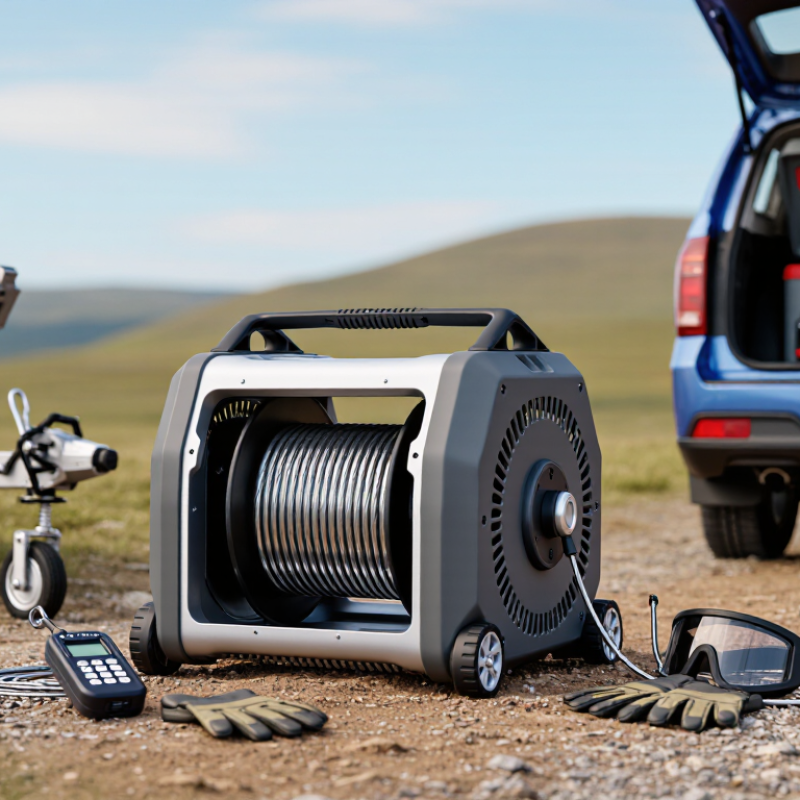
Table of Contents [Hide]
What Is a Portable Electric Winch?
A portable electric winch is a compact pulling device powered by a battery or another suitable electrical source. It uses a motor, drum, cable, and control system to move heavy objects over short distances. Unlike a permanently mounted winch, it can be carried and attached when needed. This flexibility suits recovery work, loading equipment, repositioning trailers, and handling materials on uneven ground.
In practical use, portability matters as much as pulling capacity. A reliable model should match the object’s weight, attachment points, cable length, and working environment. Check the rated line pull carefully, because advertised capacity may apply only to the first cable layer. The battery also affects performance, especially in cold weather or during repeated pulls. Keep the cable aligned. Poor alignment can cause uneven winding and sudden strain. I have seen people focus on motor power while ignoring secure anchoring. That is an easy mistake, and it deserves more attention.
Tips: Inspect the cable, hook, connections, and remote before every operation. Use gloves and keep bystanders away from the tensioned line. Place the winch on stable ground, then pull slowly and pause if anything shifts. Do not exceed the rated capacity or use damaged equipment. Portable does not mean effortless. A careful setup usually matters more than speed. I still question whether every “portable” design is truly convenient, because weight and battery access can make field use awkward.





