


- Home
- A-Z Catalogue
- Products
- Valves
- Cetop
- Manual Directional Valves
- Proportional Valves
- Poppet Valves
- High-Speed Linear Servo Valves
- All High-Speed Linear Servo Valves
- Cetop 10 (NG32) Two Stage Type High Speed Linear Servo Valves – LSVHG-10
- Cetop 10 (NG32) Two Stage Type High Speed Linear Servo Valves – LSVHG-10 (With Fail-Safe)
- Cetop 8 (NG25) Two Stage Type High Speed Linear Servo Valves – LSVHG-06
- Cetop 8 (NG25) Two Stage Type High Speed Linear Servo Valves – LSVHG-06 (With Fail-Safe)
- Cetop 7 (NG16) Two Stage Type High Speed Linear Servo Valves – LSVHG-04
- Cetop 7 (NG16) Two Stage Type High Speed Linear Servo Valves – LSVHG-04 (With Fail-Safe)
- Cetop 5 (NG10) Direct Type High Speed Linear Servo Valves – LSVG-03
- Cetop 5 (NG10) OBE Type Direct Operated Linear Servo Valves – LSVG-03-EH
- Cetop 3 (NG6) OBE Type Direct Operated Linear Servo Valves – LSVG-01-EH
- Pumps
- Pressure control
- Flow Control Valves
- Pressure Control Valves
- All Pressure Control Valves
- Brake Valves
- Direct Relief Valve
- Low Noise Solenoid Controlled Relief Valves
- Low Noise Pilot Operated Relief Valves
- Pilot Operated Relief Valves
- Pressure reducing and relieving valves
- Pressure reducing and check valves
- Pressure control valves
- Remote Control Relief Valves
- Solenoid Controlled Relief Valves – BSG
- Solenoid Controlled Relief Valves – BST
- Unloading relief valves
- Check valves
- Environmental
- Valves
- Hydraulic Systems
- Power pack
- About Us
- Contact
- Blog

Why Choose a Relay Voltage Stabilizer for Global Sourcing?
Global sourcing often brings unstable grid conditions, different voltage standards, and uncertain installation environments. A Relay Voltage Stabilizer can help protect equipment when supply voltage repeatedly rises or falls. It uses relay switching to select suitable voltage ranges, supporting refrigerators, office equipment, lighting systems, and small industrial devices. For importers, this practical design can offer a clear balance between cost, availability, and basic voltage protection.
The details matter. A sourcing team should confirm input range, output accuracy, rated capacity, response time, and compatible frequency before placing an order. Product labels should match technical documents. Factory inspection can include terminal checks, insulation testing, simulated low-voltage operation, and load testing with visible meters. These steps create useful evidence, rather than relying only on catalogue claims. A qualified supplier should also provide installation guidance, warranty terms, test records, and replacement support.
However, this equipment is not perfect. Relay contacts may wear over time, especially under frequent voltage changes or heavy loads. Switching can also cause a brief interruption, which sensitive electronics may not tolerate. That limitation deserves attention. It may be necessary to use additional protection, such as surge suppression or an uninterruptible power supply. Regional electrical requirements also vary, so buyers should consult competent technicians and verify local compliance before shipment.
For global sourcing, the best choice is not always the cheapest unit. It is the model with documented performance, suitable capacity, dependable components, and realistic after-sales support. A careful evaluation makes the Relay Voltage Stabilizer a more reliable part of an international purchasing plan.
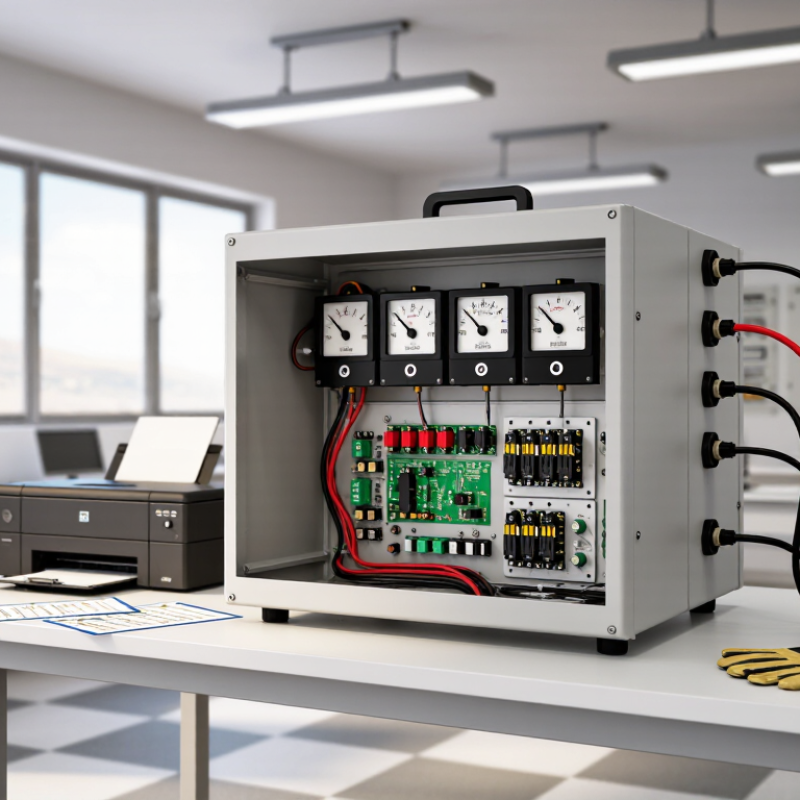
Table of Contents [Hide]
What Is a Relay Voltage Stabilizer?
Why Choose a Relay Voltage Stabilizer for Global Sourcing?
What Is a Relay Voltage Stabilizer?
A relay voltage stabilizer is an electrical device that corrects unstable input voltage before it reaches connected equipment. It uses sensing circuits, control logic, and electromagnetic relays to select suitable transformer taps. When the input voltage falls or rises, the stabilizer changes the tap and restores a safer output range.
The process is practical and easy to observe. A small display may show 180 volts at the input and 220 volts at the output. After a brief delay, the relay switches to another tap. This protects lighting, control panels, refrigeration units, and other sensitive loads from common voltage fluctuations. The switching is not completely silent. A soft click is normal.
For global sourcing, buyers should check rated capacity, input range, output accuracy, response time, and operating frequency. Compatibility with local wiring standards also matters. In humid warehouses, enclosure quality and ventilation deserve close attention. Ask for test reports, wiring diagrams, and clear installation instructions. These documents make supplier comparisons more reliable.
Relay stabilizers are often economical and simple to maintain. However, relay switching can create a short interruption and audible noise. They may not suit equipment requiring extremely fast correction or uninterrupted power. This limitation is easy to overlook. A careful assessment of load type, starting current, and local voltage conditions should guide the purchase, rather than price alone.