


- Home
- A-Z Catalogue
- Products
- Valves
- Cetop
- Manual Directional Valves
- Proportional Valves
- Poppet Valves
- High-Speed Linear Servo Valves
- All High-Speed Linear Servo Valves
- Cetop 10 (NG32) Two Stage Type High Speed Linear Servo Valves – LSVHG-10
- Cetop 10 (NG32) Two Stage Type High Speed Linear Servo Valves – LSVHG-10 (With Fail-Safe)
- Cetop 8 (NG25) Two Stage Type High Speed Linear Servo Valves – LSVHG-06
- Cetop 8 (NG25) Two Stage Type High Speed Linear Servo Valves – LSVHG-06 (With Fail-Safe)
- Cetop 7 (NG16) Two Stage Type High Speed Linear Servo Valves – LSVHG-04
- Cetop 7 (NG16) Two Stage Type High Speed Linear Servo Valves – LSVHG-04 (With Fail-Safe)
- Cetop 5 (NG10) Direct Type High Speed Linear Servo Valves – LSVG-03
- Cetop 5 (NG10) OBE Type Direct Operated Linear Servo Valves – LSVG-03-EH
- Cetop 3 (NG6) OBE Type Direct Operated Linear Servo Valves – LSVG-01-EH
- Pumps
- Pressure control
- Flow Control Valves
- Pressure Control Valves
- All Pressure Control Valves
- Brake Valves
- Direct Relief Valve
- Low Noise Solenoid Controlled Relief Valves
- Low Noise Pilot Operated Relief Valves
- Pilot Operated Relief Valves
- Pressure reducing and relieving valves
- Pressure reducing and check valves
- Pressure control valves
- Remote Control Relief Valves
- Solenoid Controlled Relief Valves – BSG
- Solenoid Controlled Relief Valves – BST
- Unloading relief valves
- Check valves
- Environmental
- Valves
- Hydraulic Systems
- Power pack
- About Us
- Contact
- Blog

Why Choose Horizontal Drilling Rigs for Your Project?
Horizontal Drilling Rigs can help projects reach beneath roads, railways, rivers, and built-up areas while limiting surface excavation. That matters when a trench would disrupt traffic, landscaping, or active facilities. The Federal Highway Administration’s horizontal directional drilling guidance describes the method as a way to install underground utilities with less surface disturbance than conventional open-cut construction. Less disturbance, however, does not mean no impact. Ground conditions, drilling-fluid management, and accurate bore planning still demand careful attention.
The method also has a strong record in energy development. The U.S. Energy Information Administration reported that horizontal wells produced 96% of U.S. shale-gas output in 2016. That figure concerns shale gas, not every utility or construction project, but it shows how widely horizontal drilling has been adopted in a demanding industry. For project teams, the practical case is more specific: a rig can steer a bore along a planned path, place pipe beneath an obstacle, and reduce the need for broad excavation. A rig is no magic answer. Soil variability, entry and exit space, required bore length, and operator experience can change the cost and risk substantially. Good planning begins with site data, not a sales promise. Teams should compare the proposed rig’s capacity with the ground conditions and installation requirements, then verify assumptions before work begins. That trade-off deserves honest review.
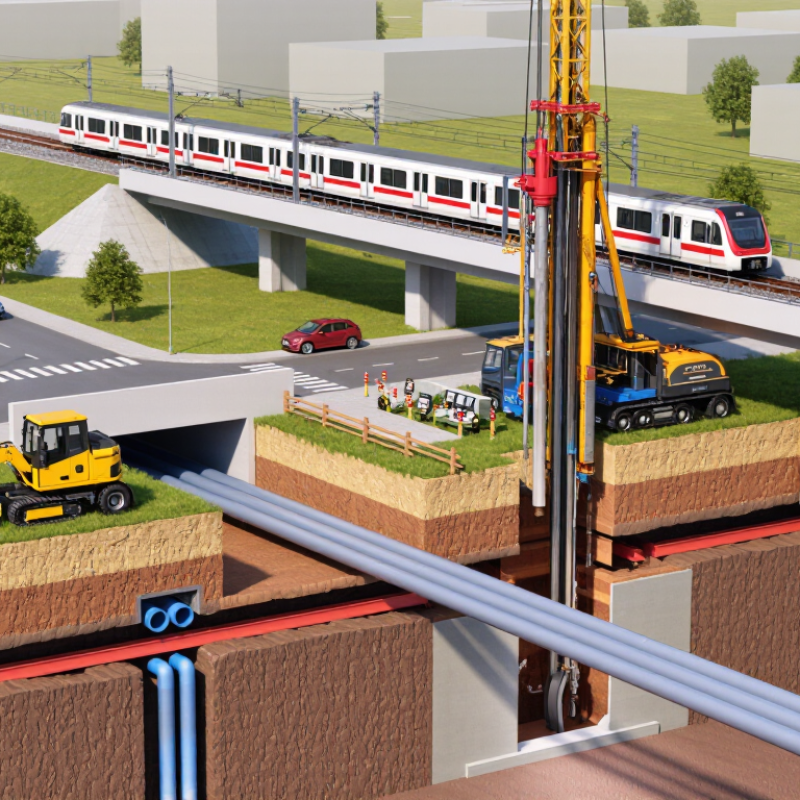
Table of Contents [Hide]
What Horizontal Drilling Rigs Are and How They Work
A horizontal drilling rig installs an underground path without opening a continuous trench across the surface. It typically starts from a compact entry pit. The drill head then advances along a planned route, gradually turning from a downward angle toward horizontal. That turn matters.
A steerable head helps the crew adjust direction as drilling progresses. Depending on the system, locating equipment can report the head’s position and orientation from above ground. Operators use those readings to correct the route and avoid obstacles identified during planning. The ground can still surprise them.
Drilling fluid circulates through the bore to carry cuttings back out and help stabilize the hole. After the pilot bore reaches its exit point, crews may enlarge it with a reaming tool. They then pull the product pipe or conduit through the prepared path. The required number of passes depends on bore size and ground conditions.
The method can limit disruption to pavement, landscaping, and access routes, but it is not automatically the best choice for every site. Dense rock, loose soil, buried utilities, and tight work areas can change the plan. A careful project assessment should consider soil data, entry and exit space, bore length, and the location of existing services. Even a well-planned route may need adjustment once drilling begins.
Why Choose Horizontal Drilling Rigs for Your Project? - What Horizontal Drilling Rigs Are and How They Work
| Project Dimension | What the Rig or Crew Does | How It Works | Potential Project Benefit | Important Planning Consideration |
|---|---|---|---|---|
| Definition | A horizontal directional drilling (HDD) rig installs an underground bore along a planned, steerable path. | The rig pushes and rotates a drill string while a steerable drill head advances through the ground. | Enables installation of utilities beneath obstacles without opening a continuous trench along the route. | HDD is a trenchless method, but entry and exit pits or other surface work may still be needed. |
| Pilot bore | The operator drills the initial guided path using a drill head and drill string. | Steering adjustments are made as the head advances; a locating system helps the crew track its position and direction. | The bore can be guided around suitable obstacles and aligned with the planned installation route. | Route accuracy depends on locating conditions, planning, operator control, and site constraints. |
| Drilling fluid | A fluid system supplies drilling fluid, commonly a bentonite-based mixture, to the bore. | Fluid travels through the drill string and exits near the drill head to help carry cuttings and support the bore. | Can assist with cuttings transport and reduce friction during drilling and product installation. | Fluid type, circulation, and returns must be managed for the ground conditions and environmental requirements. |
| Reaming | After the pilot bore is completed, the crew may enlarge it with a reamer. | The reamer is pulled through the pilot path, often with drilling fluid circulating through the bore. | Creates a larger bore suited to the planned product pipe or conduit. | Required bore size and reaming approach depend on the product, ground, and installation design. |
| Product installation | The product pipe or conduit is connected behind the reamer or another suitable pulling assembly. | The rig pulls the product through the prepared bore while the crew monitors the operation. | Can install a continuous product section beneath roads, waterways, or developed areas where conditions allow. | Pulling loads, bend limits, product handling, and the receiving area must be considered before work begins. |
| Surface disruption | Most drilling activity takes place underground from a work area at the entry point. | The bore follows a subsurface path rather than requiring an open trench over the full alignment. | May reduce surface excavation and interruption compared with conventional open-cut installation. | Work pads, access routes, pits, utility locating, and fluid management still require site planning. |
| Ground and route suitability | The project team selects rig capacity and methods based on the installation and site conditions. | Soil or rock conditions, bore length, product size, and alignment affect drilling and pulling requirements. | A suitable rig and plan can make trenchless installation practical where direct excavation is difficult. | HDD is not suitable for every site; subsurface investigation and utility checks help identify risks. |
| Typical applications | HDD rigs are used for underground installation of utilities such as water, sewer, gas, power, and telecommunications infrastructure. | The method is selected when a guided underground route is appropriate for the product and site. | Can help route services beneath roads, railways, landscaping, and other surface features. | Permits, separation from existing utilities, environmental controls, and local design requirements apply. |
Note: Actual rig selection, bore design, and installation feasibility depend on site-specific ground conditions, product requirements, route geometry, and applicable regulations.





