


- Home
- A-Z Catalogue
- Products
- Valves
- Cetop
- Manual Directional Valves
- Proportional Valves
- Poppet Valves
- High-Speed Linear Servo Valves
- All High-Speed Linear Servo Valves
- Cetop 10 (NG32) Two Stage Type High Speed Linear Servo Valves – LSVHG-10
- Cetop 10 (NG32) Two Stage Type High Speed Linear Servo Valves – LSVHG-10 (With Fail-Safe)
- Cetop 8 (NG25) Two Stage Type High Speed Linear Servo Valves – LSVHG-06
- Cetop 8 (NG25) Two Stage Type High Speed Linear Servo Valves – LSVHG-06 (With Fail-Safe)
- Cetop 7 (NG16) Two Stage Type High Speed Linear Servo Valves – LSVHG-04
- Cetop 7 (NG16) Two Stage Type High Speed Linear Servo Valves – LSVHG-04 (With Fail-Safe)
- Cetop 5 (NG10) Direct Type High Speed Linear Servo Valves – LSVG-03
- Cetop 5 (NG10) OBE Type Direct Operated Linear Servo Valves – LSVG-03-EH
- Cetop 3 (NG6) OBE Type Direct Operated Linear Servo Valves – LSVG-01-EH
- Pumps
- Pressure control
- Flow Control Valves
- Pressure Control Valves
- All Pressure Control Valves
- Brake Valves
- Direct Relief Valve
- Low Noise Solenoid Controlled Relief Valves
- Low Noise Pilot Operated Relief Valves
- Pilot Operated Relief Valves
- Pressure reducing and relieving valves
- Pressure reducing and check valves
- Pressure control valves
- Remote Control Relief Valves
- Solenoid Controlled Relief Valves – BSG
- Solenoid Controlled Relief Valves – BST
- Unloading relief valves
- Check valves
- Environmental
- Valves
- Hydraulic Systems
- Power pack
- About Us
- Contact
- Blog

Why Choose Drip Hose for Efficient Irrigation?
Water scarcity is no longer an abstract concern for farms, nurseries, or home gardens. FAO’s AQUASTAT data reports that agriculture accounts for roughly 70% of global freshwater withdrawals. Every lost drop matters. A conventional sprinkler can wet leaves, paths, and bare soil before roots receive enough moisture. Drip Hose delivers water through small emitters near the root zone. This simple placement can reduce evaporation and runoff when the system is designed correctly. The benefit is practical: fewer puddles beside a tomato row and steadier moisture beneath the mulch. Yet irrigation efficiency depends on maintenance, pressure, soil texture, and scheduling.
USDA Natural Resources Conservation Service guidance commonly places well-managed drip irrigation near 90% application efficiency. Sprinkler systems often achieve lower typical efficiencies. The exact result varies. That figure should not become a promise. A clogged filter, uneven pressure, or poorly spaced emitters can waste water quickly. Field experience shows a quiet failure: one blocked line may leave several plants stressed while others remain wet. Regular flushing, filtration, and pressure checks are essential.
The U.S. Environmental Protection Agency’s WaterSense guidance emphasizes matching irrigation schedules to plant needs and local weather. That principle makes Drip Hose systems more than simple plastic tubing. They become measured delivery tools. Still, drip systems are not magic. Installation costs, rodent damage, salt buildup, and difficult repairs can change the calculation. A thoughtful choice considers crop spacing, water quality, slope, and controller settings. This article examines why Drip Hose technology can support efficient irrigation, where it performs best, and which assumptions deserve a second look. Better results begin with evidence, not optimism.
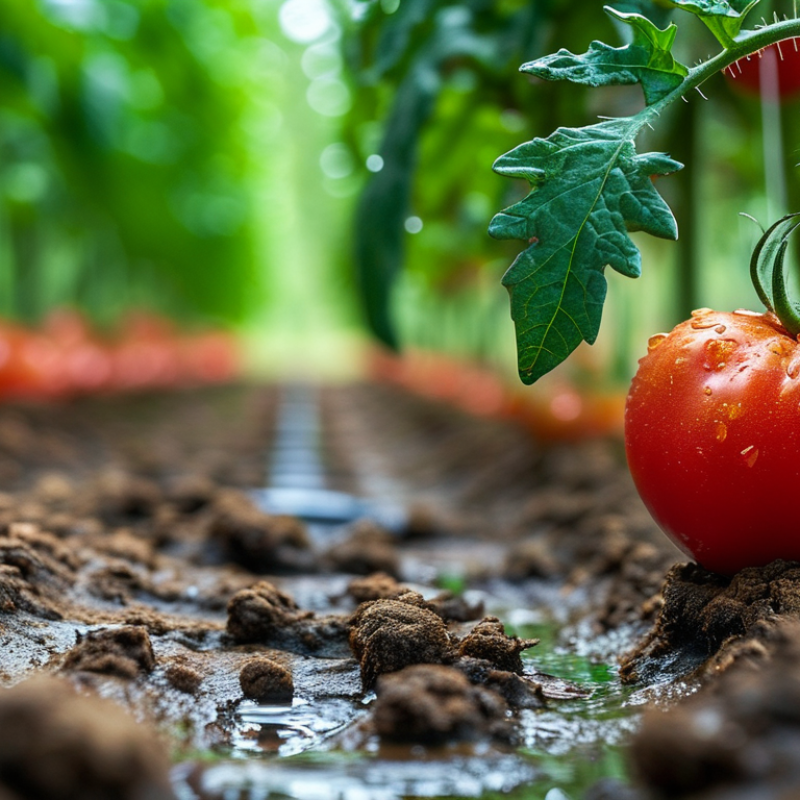
Table of Contents [Hide]
How Drip Hoses Deliver Water Directly to Plant Roots
Why Choose Drip Hose for Efficient Irrigation?
Drip hoses deliver water slowly beside the plant, rather than spraying the entire soil surface. Small emitters release controlled drops near active roots. This keeps moisture where roots can use it. A farmer can see the difference: the soil stays dark in a narrow line, while nearby paths remain dry.
The FAO AQUASTAT database reports that agriculture accounts for roughly 70% of global freshwater withdrawals. Efficient delivery matters. FAO irrigation guidance commonly places drip efficiency near 90–95%, compared with lower rates for many surface systems. USDA Natural Resources Conservation Service guidance also emphasizes matching application rates with soil intake and crop needs. A correctly spaced hose can reduce evaporation, runoff, and unnecessary leaf wetting.
Root access is the real advantage. Water moves outward from each emitter, forming a moist bulb around the root zone. Pressure, soil texture, slope, and hose spacing change that shape. Sandy soil may need closer emitters or shorter watering cycles. Heavy soil can remain wet too long. Small details matter.
Not always perfect.
In practical installations, clogged emitters and uneven pressure still cause dry plants. I have seen the first plants receive water while the final row struggles. Filters, pressure checks, and periodic soil inspection are essential. A hose should not replace observation. Digging a small soil sample can reveal whether moisture reaches the roots or merely wets the surface. Moist roots, not wet ground, indicate effective irrigation.