


- Home
- A-Z Catalogue
- Products
- Valves
- Cetop
- Manual Directional Valves
- Proportional Valves
- Poppet Valves
- High-Speed Linear Servo Valves
- All High-Speed Linear Servo Valves
- Cetop 10 (NG32) Two Stage Type High Speed Linear Servo Valves – LSVHG-10
- Cetop 10 (NG32) Two Stage Type High Speed Linear Servo Valves – LSVHG-10 (With Fail-Safe)
- Cetop 8 (NG25) Two Stage Type High Speed Linear Servo Valves – LSVHG-06
- Cetop 8 (NG25) Two Stage Type High Speed Linear Servo Valves – LSVHG-06 (With Fail-Safe)
- Cetop 7 (NG16) Two Stage Type High Speed Linear Servo Valves – LSVHG-04
- Cetop 7 (NG16) Two Stage Type High Speed Linear Servo Valves – LSVHG-04 (With Fail-Safe)
- Cetop 5 (NG10) Direct Type High Speed Linear Servo Valves – LSVG-03
- Cetop 5 (NG10) OBE Type Direct Operated Linear Servo Valves – LSVG-03-EH
- Cetop 3 (NG6) OBE Type Direct Operated Linear Servo Valves – LSVG-01-EH
- Pumps
- Pressure control
- Flow Control Valves
- Pressure Control Valves
- All Pressure Control Valves
- Brake Valves
- Direct Relief Valve
- Low Noise Solenoid Controlled Relief Valves
- Low Noise Pilot Operated Relief Valves
- Pilot Operated Relief Valves
- Pressure reducing and relieving valves
- Pressure reducing and check valves
- Pressure control valves
- Remote Control Relief Valves
- Solenoid Controlled Relief Valves – BSG
- Solenoid Controlled Relief Valves – BST
- Unloading relief valves
- Check valves
- Environmental
- Valves
- Hydraulic Systems
- Power pack
- About Us
- Contact
- Blog

Why Choose a Butterfly Valve for Industrial Applications?
Industrial systems demand valves that balance reliability, speed, and operating cost. A butterfly valve often meets these needs with a compact, quarter-turn design. Its rotating disc opens or closes flow within seconds. This action supports efficient isolation in water treatment, HVAC, chemical processing, and fire protection systems. The valve’s short face-to-face length also saves valuable pipeline space. In crowded plant rooms, that detail matters.
From practical maintenance experience, installation quality strongly affects performance. Correct alignment prevents unnecessary disc contact and uneven sealing. Suitable seat materials must match temperature, pressure, and chemical exposure. Operators should also confirm whether the valve is intended for isolation or control service. Not every model handles continuous throttling well. That limitation is easy to overlook.
A properly selected butterfly valve can reduce weight, maintenance effort, and actuator requirements. Wafer, lug, and flanged designs offer different installation advantages. Manual handles suit smaller lines, while pneumatic or electric actuators support automated systems. Engineers should review pressure ratings, leakage classifications, torque data, and applicable industry standards before approval. Manufacturer documentation remains essential for dependable selection.
No valve is perfect. Poor sizing can create vibration, excessive wear, or unstable flow. A low-cost option may also require earlier replacement. However, careful specification and routine inspection improve service life considerably. Checking bolt tension, disc movement, and seat condition can reveal problems before shutdowns occur. This article examines why industrial teams choose butterfly valves and where their practical limits deserve closer attention.
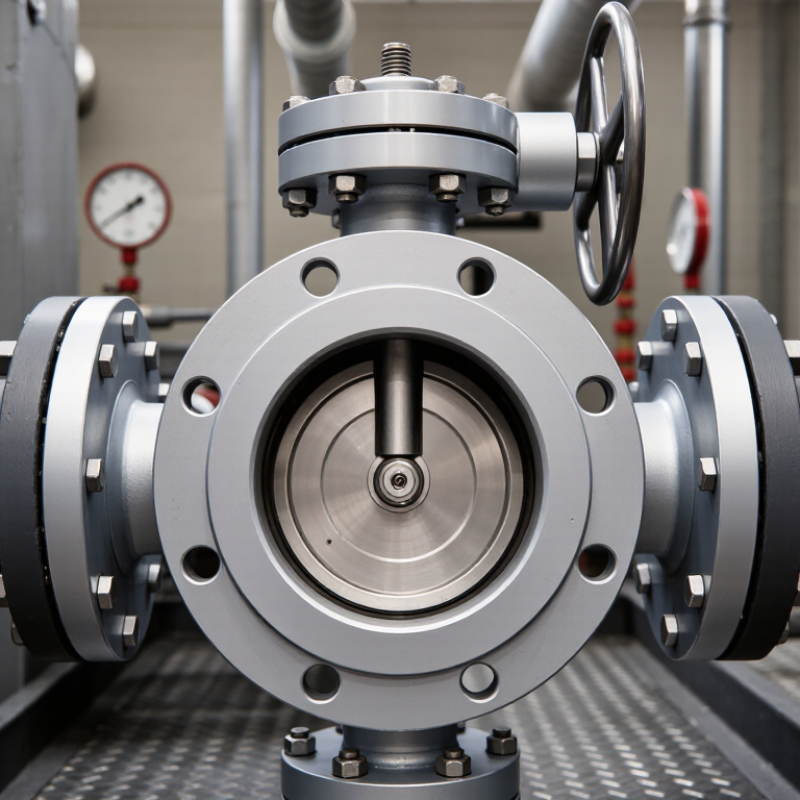
Table of Contents [Hide]
What Is a Butterfly Valve and How Does It Work?
A butterfly valve uses a circular disc to control fluid flow inside a pipe. The disc connects to a stem and rotates through 90 degrees. When fully open, it aligns with the flow and creates limited resistance. When closed, it turns perpendicular to the flow and seals against the seat. Simple, compact, and quick to operate.
This design suits water, air, chemicals, and many process lines. The 2024 UN World Water Development Report states that agriculture accounts for about 70% of global freshwater withdrawals. Reliable flow control therefore matters in large water systems. In compressed-air plants, the U.S. Department of Energy reports that leaks may waste 20–30% of compressor output. A properly selected valve can reduce avoidable losses, although it cannot repair poor piping or neglected maintenance.
Material selection remains critical. Stainless steel, ductile iron, elastomers, and special alloys perform differently under heat, corrosion, and pressure. The disc can also create turbulence during throttling. That means a butterfly valve is not perfect for every control duty. Field checks should examine seat wear, shaft alignment, actuator travel, and flange condition. Small errors matter. A valve that looks closed may still pass fluid when its seat is damaged or its actuator is misadjusted. Industry standards such as API 609 and ISO 5752 help define construction and face-to-face dimensions, but operating conditions must guide the final choice.
Why Choose a Butterfly Valve for Industrial Applications? - What Is a Butterfly Valve and How Does It Work?
| Data Dimension | Typical Data or Description | Industrial Relevance |
|---|---|---|
| Valve Definition | A quarter-turn rotary valve with a circular disc mounted on a rotating shaft. | The disc regulates or stops fluid flow by rotating inside the valve body, making the design compact and relatively simple. |
| Operating Principle | The disc rotates approximately 90 degrees between the fully closed and fully open positions. | Fast actuation supports efficient isolation and flow control in pipelines, process systems, and utility networks. |
| Primary Functions | Shutoff, isolation, throttling, and basic flow regulation. | A suitable disc and seat design can allow one valve type to serve several common industrial duties. |
| Common Valve Types | Concentric, double-offset, and triple-offset butterfly valves. | Concentric designs are widely used for general service, while offset designs can reduce seat friction and support higher-temperature or more demanding applications. |
| Typical Size Range | Commonly available from approximately DN25 to DN1200 and larger, depending on design and service. | The broad size range makes butterfly valves practical for both building services and large-diameter industrial pipelines. |
| Pressure Capability | Typical industrial designs are available from low-pressure utility service to approximately 16 bar or higher, depending on construction. | The pressure rating must be selected according to the body, disc, shaft, seat, temperature, and applicable design standard. |
| Temperature Capability | Generally from below 0°C to around 120°C for many elastomer-seated designs; higher temperatures are possible with suitable metal-seated designs. | Temperature limits depend primarily on the seat, liner, disc material, fluid, pressure, and sealing arrangement. |
| Flow Path | The disc remains in the flow passage when the valve is open. | This creates some pressure loss compared with a full-bore gate valve, but the streamlined design can still provide efficient flow for many services. |
| Actuation Options | Manual lever, handwheel gearbox, electric actuator, pneumatic actuator, or hydraulic actuator. | Actuator selection depends on valve torque, operating frequency, available utilities, control requirements, and safety conditions. |
| Installation Connection | Wafer, lug, double-flanged, and butt-welded configurations are commonly used. | Connection style affects installation space, maintenance access, pipeline loading, and compatibility with the piping system. |
| Body Materials | Common options include ductile iron, carbon steel, stainless steel, and alloy steel. | Material selection should consider pressure, temperature, corrosion, erosion, external environment, and fluid compatibility. |
| Seat Materials | Common resilient seat materials include EPDM, NBR, and PTFE; metal seats are used for selected high-temperature or severe services. | The seat material strongly influences leakage performance, chemical compatibility, temperature range, and service life. |
| Space Requirement | Usually shorter face-to-face dimensions than many comparable gate or globe valves. | The compact profile reduces installation space and can lower the weight and support requirements of large pipeline assemblies. |
| Weight and Handling | Generally lighter than many gate or globe valves of equivalent nominal size. | Lower weight can simplify transport, lifting, installation, and maintenance, especially in large-diameter systems. |
| Flow Control Performance | Provides useful throttling capability, particularly with suitable control actuators and characterized discs. | For precise control, the valve must be correctly sized and evaluated for cavitation, noise, vibration, and unstable flow conditions. |
| Sealing Performance | Resilient-seated designs can provide tight shutoff when correctly selected, installed, and maintained. | Actual leakage performance depends on valve class, seat condition, differential pressure, temperature, and service media. |
| Typical Applications | Water treatment, cooling water, HVAC, fire protection, chemical processing, power utilities, pulp and paper, and general process piping. | The valve is especially useful for clean liquids, gases, slurries, and other services compatible with the selected materials and seat design. |
| Maintenance Needs | Routine inspection should include actuator operation, shaft condition, seat sealing, flange alignment, fasteners, and signs of corrosion or leakage. | The relatively small number of main components can simplify inspection and reduce maintenance time when access is properly provided. |
| Main Advantages | Compact construction, low weight, quarter-turn operation, broad size availability, and compatibility with automated actuation. | These characteristics can reduce installation costs, support rapid isolation, and make the valve suitable for space-constrained industrial systems. |
| Important Limitations | The disc remains in the flow path, and performance can be affected by abrasive particles, unsuitable throttling, high velocity, or incorrect sizing. | A detailed application review is necessary for severe erosion, high-temperature service, high-pressure drops, slurry concentration, and low-emission requirements. |
| Selection Criteria | Nominal size, pressure class, temperature, fluid properties, flow rate, leakage requirement, materials, connection type, actuator torque, and applicable standards. | Correct selection improves safety, service life, energy efficiency, controllability, and total operating cost. |





