


- Home
- A-Z Catalogue
- Products
- Valves
- Cetop
- Manual Directional Valves
- Proportional Valves
- Poppet Valves
- High-Speed Linear Servo Valves
- All High-Speed Linear Servo Valves
- Cetop 10 (NG32) Two Stage Type High Speed Linear Servo Valves – LSVHG-10
- Cetop 10 (NG32) Two Stage Type High Speed Linear Servo Valves – LSVHG-10 (With Fail-Safe)
- Cetop 8 (NG25) Two Stage Type High Speed Linear Servo Valves – LSVHG-06
- Cetop 8 (NG25) Two Stage Type High Speed Linear Servo Valves – LSVHG-06 (With Fail-Safe)
- Cetop 7 (NG16) Two Stage Type High Speed Linear Servo Valves – LSVHG-04
- Cetop 7 (NG16) Two Stage Type High Speed Linear Servo Valves – LSVHG-04 (With Fail-Safe)
- Cetop 5 (NG10) Direct Type High Speed Linear Servo Valves – LSVG-03
- Cetop 5 (NG10) OBE Type Direct Operated Linear Servo Valves – LSVG-03-EH
- Cetop 3 (NG6) OBE Type Direct Operated Linear Servo Valves – LSVG-01-EH
- Pumps
- Pressure control
- Flow Control Valves
- Pressure Control Valves
- All Pressure Control Valves
- Brake Valves
- Direct Relief Valve
- Low Noise Solenoid Controlled Relief Valves
- Low Noise Pilot Operated Relief Valves
- Pilot Operated Relief Valves
- Pressure reducing and relieving valves
- Pressure reducing and check valves
- Pressure control valves
- Remote Control Relief Valves
- Solenoid Controlled Relief Valves – BSG
- Solenoid Controlled Relief Valves – BST
- Unloading relief valves
- Check valves
- Environmental
- Valves
- Hydraulic Systems
- Power pack
- About Us
- Contact
- Blog

Why Choose a 4x2 Dump Truck for Your Business?
Choosing the right dump truck can shape daily productivity, operating costs, and driver confidence. A 4x2 Dump Truck offers a practical balance for contractors, landscapers, municipal teams, and regional construction fleets. Its single powered rear axle usually reduces weight, tire expense, and routine maintenance compared with heavier configurations. That difference matters when the truck carries gravel through narrow streets or delivers sand across paved urban routes.
Veteran fleet consultant Tom Berg captures the practical perspective: “A vocational truck earns its keep when its configuration matches the work, not when it simply looks stronger.” That principle deserves attention. A 4x2 Dump Truck can provide useful payload capacity without the added complexity of an extra drive axle. It may also improve maneuverability around job sites, especially where turning space is limited. Less can be enough.
The decision is not automatic. Muddy construction entrances, steep grades, frequent off-road hauling, and heavy seasonal loads may demand a 6x4 model. A smaller configuration can struggle when conditions become severe. Fleet managers should compare axle ratings, body volume, payload limits, fuel consumption, service access, and local road conditions before purchasing. A short test route can reveal more than a brochure. Watch the suspension settle under load. Listen for drivetrain strain. Measure fuel use honestly.
For many businesses, the 4x2 Dump Truck remains a focused, economical tool. It is not perfect for every assignment. That is precisely why careful specification matters.
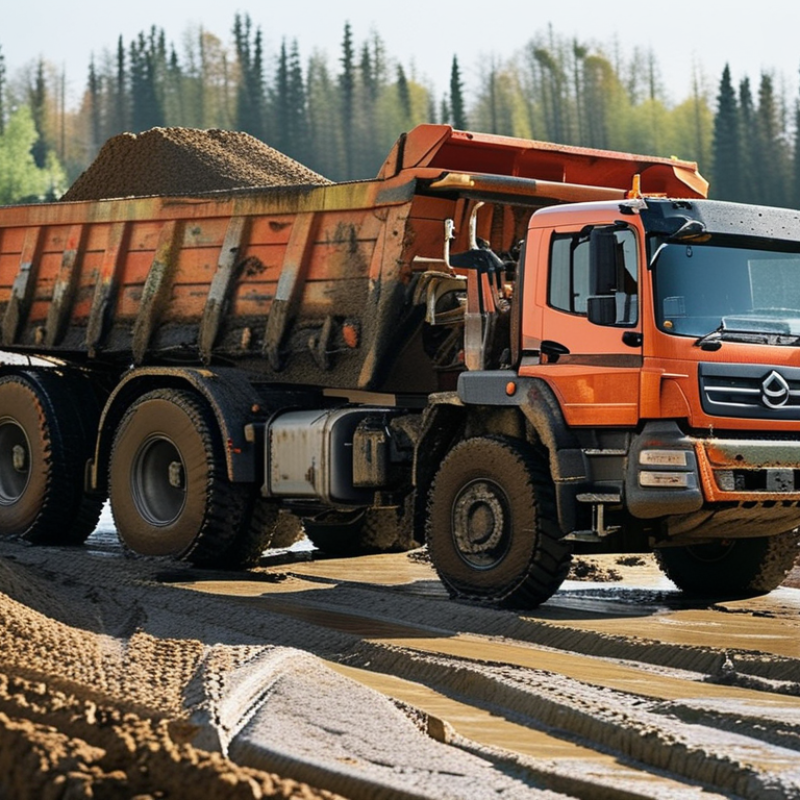
Table of Contents [Hide]
What Is a 4x2 Dump Truck?
A 4x2 dump truck has four wheel positions and two powered wheels. One front axle steers, while one rear axle transfers engine power to the road. Its hydraulic system raises the dump body, allowing loose materials to slide out at a controlled site.
This layout is common for urban construction, landscaping, road maintenance, and short-distance aggregate delivery. With fewer driven components, the truck can weigh less and consume less fuel than a multi-axle-drive model. Its tighter turning circle also helps when navigating narrow streets, compact yards, and crowded building sites.
That distinction matters.
In practical operation, a driver should check the body hinge, hydraulic lines, tires, and load distribution before departure. Uneven loading can affect braking and stability, even on a paved route. A 4x2 configuration usually performs well on firm surfaces, but mud, loose gravel, steep grades, and icy roads can expose its limits. Not everywhere. Selecting the truck only by purchase price is an easy mistake. Payload requirements, axle ratings, local road rules, service access, and typical driving conditions deserve equal attention. Specifications also vary between vehicle configurations, so verified data from the manufacturer and an experienced technician should guide the final choice.