- Home
- A-Z Catalogue
- Products
- Valves
- Cetop
- Manual Directional Valves
- Proportional Valves
- Poppet Valves
- High-Speed Linear Servo Valves
- All High-Speed Linear Servo Valves
- Cetop 10 (NG32) Two Stage Type High Speed Linear Servo Valves – LSVHG-10
- Cetop 10 (NG32) Two Stage Type High Speed Linear Servo Valves – LSVHG-10 (With Fail-Safe)
- Cetop 8 (NG25) Two Stage Type High Speed Linear Servo Valves – LSVHG-06
- Cetop 8 (NG25) Two Stage Type High Speed Linear Servo Valves – LSVHG-06 (With Fail-Safe)
- Cetop 7 (NG16) Two Stage Type High Speed Linear Servo Valves – LSVHG-04
- Cetop 7 (NG16) Two Stage Type High Speed Linear Servo Valves – LSVHG-04 (With Fail-Safe)
- Cetop 5 (NG10) Direct Type High Speed Linear Servo Valves – LSVG-03
- Cetop 5 (NG10) OBE Type Direct Operated Linear Servo Valves – LSVG-03-EH
- Cetop 3 (NG6) OBE Type Direct Operated Linear Servo Valves – LSVG-01-EH
- Pumps
- Pressure control
- Flow Control Valves
- Pressure Control Valves
- All Pressure Control Valves
- Brake Valves
- Direct Relief Valve
- Low Noise Solenoid Controlled Relief Valves
- Low Noise Pilot Operated Relief Valves
- Pilot Operated Relief Valves
- Pressure reducing and relieving valves
- Pressure reducing and check valves
- Pressure control valves
- Remote Control Relief Valves
- Solenoid Controlled Relief Valves – BSG
- Solenoid Controlled Relief Valves – BST
- Unloading relief valves
- Check valves
- Environmental
- Valves
- Hydraulic Systems
- Power pack
- About Us
- Contact
- Blog

What Is a VTOL Fixed Wing Drone?
A Vtol Fixed Wing Drone combines the hovering ability of a multirotor with the efficient forward flight of a conventional airplane. It can rise vertically from a small clearing, then transition to wing-borne flight across a field or coastline. No runway is needed for takeoff. That is the central appeal, especially where launch space is limited.
The design usually includes lift rotors for vertical flight and a wing with a separate cruise propulsion system, though configurations vary. During a typical mission, an operator may watch the aircraft lift above nearby trees, stabilize, and accelerate into forward flight. On return, it slows and descends vertically. The transition is a critical phase, not a minor detail. Wind, aircraft weight, battery condition, and software settings can all affect performance. A published range is not a promise for every mission.
This article explains how these aircraft work, what distinguishes them from multirotors and conventional fixed-wing drones, and where their strengths and limitations become practical. We will also look at payloads, endurance, operating environments, and the questions worth asking before choosing a platform. The category is not perfectly tidy: manufacturers use different layouts and transition methods, so specifications need careful comparison. The label alone tells you little. A capable aircraft still needs sound planning, trained operators, and realistic expectations. Vertical launch is useful, but it does not remove the need to assess weather, landing areas, and mission demands.
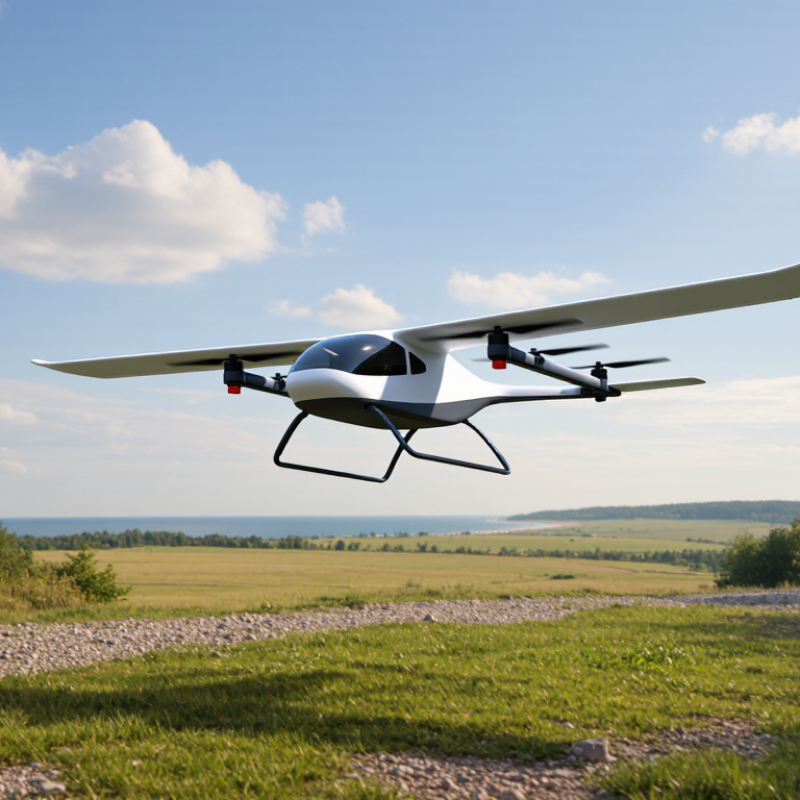
Table of Contents [Hide]
Definition and Core Design of a VTOL Fixed-Wing Drone
A VTOL fixed-wing drone combines vertical takeoff and landing with the efficient forward flight of an airplane. It can rise from a small clearing without a runway, then travel on its wings once it gains speed. The design solves a practical problem: reaching distant sites where a conventional aircraft cannot take off easily.
Most designs use separate systems for these flight modes. Lift motors point upward and provide the thrust needed for takeoff and landing. A fixed wing carries the aircraft during forward flight, while a forward-facing propeller may provide cruise thrust. The frame, motor placement, and flight controller must work together. During transition, the aircraft gradually shifts from rotor-supported flight to wing-borne flight. This moment demands careful control; a poorly tuned transition can cause instability or waste energy.
Not quite simple. The added lift motors, wiring, and structure increase weight and create more parts to inspect. Designers must balance payload, range, wind tolerance, and landing precision rather than maximize one feature. In practice, a careful preflight check should include propellers, fasteners, battery condition, and control response. Dust on a landing surface or a gust across an open field can still affect handling. The layout looks elegant on paper, but real-world performance depends on sound engineering and disciplined operation.