


- Home
- A-Z Catalogue
- Products
- Valves
- Cetop
- Manual Directional Valves
- Proportional Valves
- Poppet Valves
- High-Speed Linear Servo Valves
- All High-Speed Linear Servo Valves
- Cetop 10 (NG32) Two Stage Type High Speed Linear Servo Valves – LSVHG-10
- Cetop 10 (NG32) Two Stage Type High Speed Linear Servo Valves – LSVHG-10 (With Fail-Safe)
- Cetop 8 (NG25) Two Stage Type High Speed Linear Servo Valves – LSVHG-06
- Cetop 8 (NG25) Two Stage Type High Speed Linear Servo Valves – LSVHG-06 (With Fail-Safe)
- Cetop 7 (NG16) Two Stage Type High Speed Linear Servo Valves – LSVHG-04
- Cetop 7 (NG16) Two Stage Type High Speed Linear Servo Valves – LSVHG-04 (With Fail-Safe)
- Cetop 5 (NG10) Direct Type High Speed Linear Servo Valves – LSVG-03
- Cetop 5 (NG10) OBE Type Direct Operated Linear Servo Valves – LSVG-03-EH
- Cetop 3 (NG6) OBE Type Direct Operated Linear Servo Valves – LSVG-01-EH
- Pumps
- Pressure control
- Flow Control Valves
- Pressure Control Valves
- All Pressure Control Valves
- Brake Valves
- Direct Relief Valve
- Low Noise Solenoid Controlled Relief Valves
- Low Noise Pilot Operated Relief Valves
- Pilot Operated Relief Valves
- Pressure reducing and relieving valves
- Pressure reducing and check valves
- Pressure control valves
- Remote Control Relief Valves
- Solenoid Controlled Relief Valves – BSG
- Solenoid Controlled Relief Valves – BST
- Unloading relief valves
- Check valves
- Environmental
- Valves
- Hydraulic Systems
- Power pack
- About Us
- Contact
- Blog

What Is a Three Phase Diesel Generator?
A Three Phase Diesel Generator converts diesel fuel into dependable three-phase electrical power. It combines a diesel engine, alternator, fuel system, control panel, and cooling equipment. Unlike a single-phase unit, it delivers three alternating currents separated by 120 degrees. This arrangement supports balanced loads and efficient power distribution.
These generators commonly serve factories, hospitals, construction sites, data centers, and commercial buildings. A 500 kVA model may power motors, pumps, lighting, and control systems simultaneously. Its deep engine sound, warm exhaust, and steady voltage indicate active operation, but appearance alone proves little. Load testing, insulation checks, coolant inspections, and battery measurements provide stronger evidence of reliability. Experienced technicians also review maintenance records before trusting a standby unit.
Sizing requires more than adding equipment nameplates. Large motors can demand several times their running current during startup. Poor load balance may cause overheating, voltage fluctuation, or unnecessary fuel consumption. Engineers should assess starting loads, operating hours, ambient temperature, altitude, and required backup duration. Manufacturer data and applicable electrical standards should guide the final selection. Real installations still reveal limitations. A generator can be correctly sized yet fail when neglected batteries, blocked airflow, or contaminated fuel are ignored. Regular servicing matters.
Understanding these practical details makes the technology less mysterious. It also helps buyers compare prime, standby, and continuous ratings with greater confidence. Reliable power begins with accurate planning, careful installation, and disciplined maintenance.
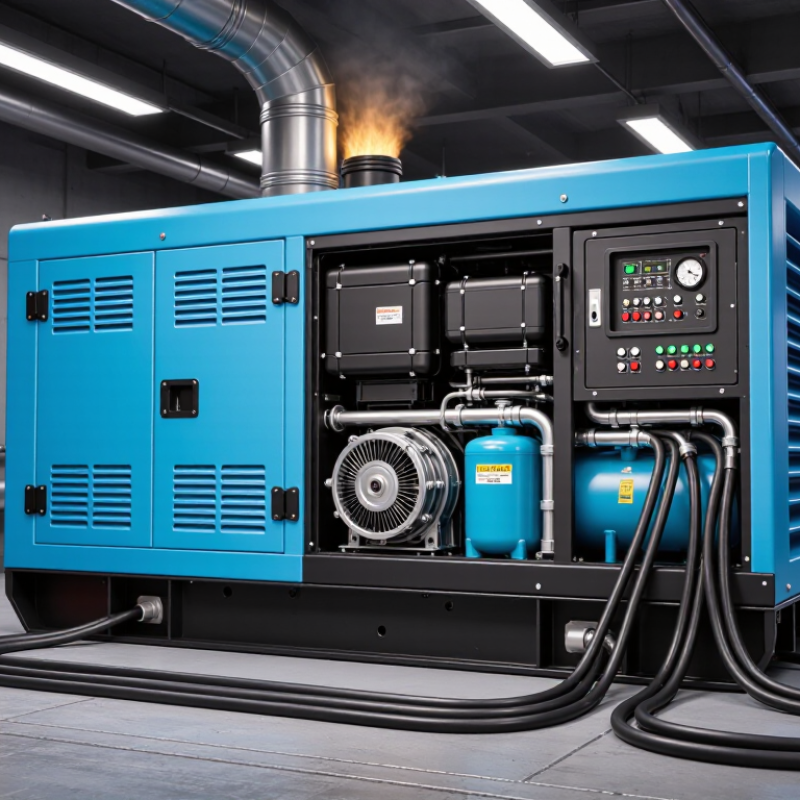
Table of Contents [Hide]
What Is a Three-Phase Diesel Generator?
What Is a Three-Phase Diesel Generator?
A three-phase diesel generator is a machine that produces electrical power through a diesel engine and alternator. It burns diesel fuel to create mechanical energy. The alternator converts that energy into electricity. Its three electrical outputs are separated by 120 degrees. This arrangement delivers smoother power for motors, pumps, compressors, and commercial equipment. It also reduces conductor size compared with some single-phase systems.
In practical installations, technicians calculate the total running load and starting current. Motors may briefly demand much more power during startup. A generator rated only for normal running loads can still trip unexpectedly. That mistake is common. A load-bank test helps verify performance under controlled conditions. Technicians also inspect voltage balance, frequency, grounding, and transfer-switch operation. Real loads fluctuate, so sizing should include a sensible reserve rather than guesswork.
Diesel generators require disciplined maintenance. Oil, coolant, filters, batteries, and belts need scheduled inspection. Fuel quality matters because moisture or sediment can damage injection components. Ventilation must remove heat, while exhaust piping needs proper support and safe discharge. An automatic transfer switch can move critical circuits to backup power after an outage. Operators should record test results and unusual vibration. Noise and vibration can reveal developing faults. That detail is easy to overlook. A professional assessment remains important when loads change or installation conditions are uncertain.





