


- Home
- A-Z Catalogue
- Products
- Valves
- Cetop
- Manual Directional Valves
- Proportional Valves
- Poppet Valves
- High-Speed Linear Servo Valves
- All High-Speed Linear Servo Valves
- Cetop 10 (NG32) Two Stage Type High Speed Linear Servo Valves – LSVHG-10
- Cetop 10 (NG32) Two Stage Type High Speed Linear Servo Valves – LSVHG-10 (With Fail-Safe)
- Cetop 8 (NG25) Two Stage Type High Speed Linear Servo Valves – LSVHG-06
- Cetop 8 (NG25) Two Stage Type High Speed Linear Servo Valves – LSVHG-06 (With Fail-Safe)
- Cetop 7 (NG16) Two Stage Type High Speed Linear Servo Valves – LSVHG-04
- Cetop 7 (NG16) Two Stage Type High Speed Linear Servo Valves – LSVHG-04 (With Fail-Safe)
- Cetop 5 (NG10) Direct Type High Speed Linear Servo Valves – LSVG-03
- Cetop 5 (NG10) OBE Type Direct Operated Linear Servo Valves – LSVG-03-EH
- Cetop 3 (NG6) OBE Type Direct Operated Linear Servo Valves – LSVG-01-EH
- Pumps
- Pressure control
- Flow Control Valves
- Pressure Control Valves
- All Pressure Control Valves
- Brake Valves
- Direct Relief Valve
- Low Noise Solenoid Controlled Relief Valves
- Low Noise Pilot Operated Relief Valves
- Pilot Operated Relief Valves
- Pressure reducing and relieving valves
- Pressure reducing and check valves
- Pressure control valves
- Remote Control Relief Valves
- Solenoid Controlled Relief Valves – BSG
- Solenoid Controlled Relief Valves – BST
- Unloading relief valves
- Check valves
- Environmental
- Valves
- Hydraulic Systems
- Power pack
- About Us
- Contact
- Blog

What Is a Smoke Precipitator and How Does It Work?
A Smoke Precipitator is a device designed to remove suspended particles from smoke or other exhaust streams. Many systems use electrostatic attraction: an electrical field charges particles, then draws them toward collection plates. The plates hold much of the captured material until cleaning or servicing. The exact design depends on the equipment and the exhaust being treated.
The process can sound simple. It is not magic. Particle size, airflow, temperature, and maintenance all affect performance. For example, a unit handling a steady stream of workshop exhaust may behave differently from one exposed to changing temperatures or heavy particle loads. Visible smoke may decrease, but that alone does not show which pollutants remain. A precipitator may capture particles without removing every gas, vapor, or odor.
This article explains what a Smoke Precipitator does and how its main components work together. It also looks at where these devices are used, what can influence their effectiveness, and why regular inspection matters. A technician may check for dirty plates, damaged electrical components, or airflow changes. Those details are easy to overlook. Choosing a system therefore requires more than matching a device to a room or machine; the exhaust conditions and manufacturer’s specifications matter too. No single description fits every model, and real-world results should be checked against suitable measurements rather than appearance alone.
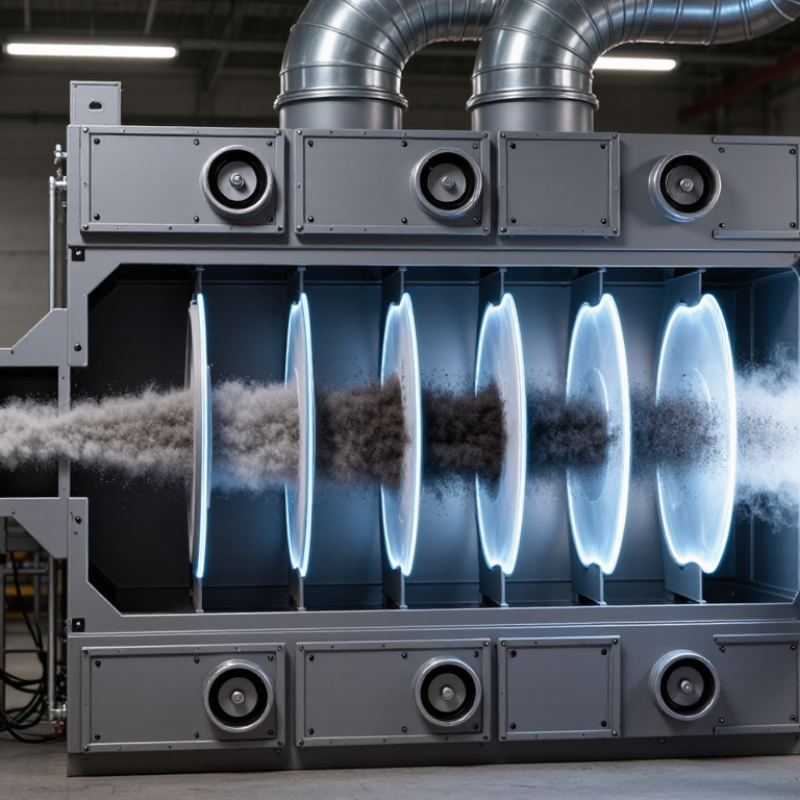
Table of Contents [Hide]
What a Smoke Precipitator Is
A smoke precipitator is a device that removes fine particles from smoke or other exhaust. Many designs use an electrostatic process. Inside the unit, an electrical field gives airborne particles a charge. Charged particles then move toward collection plates, where they stick instead of continuing through the outlet. The plates may collect soot, ash, and other suspended material. A precipitator does not necessarily remove gases, carbon monoxide, or every source of odor. It is not a complete air-cleaning solution.
The basic idea is simple. The details matter. Performance depends on particle size, airflow, plate condition, and how well the unit is maintained. For example, a layer of dark residue on a plate can reduce collection efficiency if it is not cleaned as specified. Some systems use mechanical tapping to dislodge buildup; others require scheduled manual cleaning. Electrical components also need proper inspection. Exact operating procedures vary by equipment and application.
Tips: Check the manufacturer’s maintenance instructions, and inspect collection plates for residue or damage. Keep airflow within the device’s rated range. If smoke remains visible, do not assume the precipitator has failed—or that the air is safe. The source, ventilation, and other pollutants may need separate assessment.