


- Home
- A-Z Catalogue
- Products
- Valves
- Cetop
- Manual Directional Valves
- Proportional Valves
- Poppet Valves
- High-Speed Linear Servo Valves
- All High-Speed Linear Servo Valves
- Cetop 10 (NG32) Two Stage Type High Speed Linear Servo Valves – LSVHG-10
- Cetop 10 (NG32) Two Stage Type High Speed Linear Servo Valves – LSVHG-10 (With Fail-Safe)
- Cetop 8 (NG25) Two Stage Type High Speed Linear Servo Valves – LSVHG-06
- Cetop 8 (NG25) Two Stage Type High Speed Linear Servo Valves – LSVHG-06 (With Fail-Safe)
- Cetop 7 (NG16) Two Stage Type High Speed Linear Servo Valves – LSVHG-04
- Cetop 7 (NG16) Two Stage Type High Speed Linear Servo Valves – LSVHG-04 (With Fail-Safe)
- Cetop 5 (NG10) Direct Type High Speed Linear Servo Valves – LSVG-03
- Cetop 5 (NG10) OBE Type Direct Operated Linear Servo Valves – LSVG-03-EH
- Cetop 3 (NG6) OBE Type Direct Operated Linear Servo Valves – LSVG-01-EH
- Pumps
- Pressure control
- Flow Control Valves
- Pressure Control Valves
- All Pressure Control Valves
- Brake Valves
- Direct Relief Valve
- Low Noise Solenoid Controlled Relief Valves
- Low Noise Pilot Operated Relief Valves
- Pilot Operated Relief Valves
- Pressure reducing and relieving valves
- Pressure reducing and check valves
- Pressure control valves
- Remote Control Relief Valves
- Solenoid Controlled Relief Valves – BSG
- Solenoid Controlled Relief Valves – BST
- Unloading relief valves
- Check valves
- Environmental
- Valves
- Hydraulic Systems
- Power pack
- About Us
- Contact
- Blog

What Is a PTFE Elgiloy Lip Seal?
A Ptfe Elgiloy Lip Seal combines a low-friction PTFE sealing element with an Elgiloy metal energizer or spring. This design supports reliable sealing in rotating equipment, especially where temperature, chemical exposure, and shaft movement challenge ordinary elastomers. PTFE resists many aggressive media and offers stable sliding performance. Elgiloy contributes spring strength and corrosion resistance.
It is not a magic part. Its performance depends on shaft finish, pressure, temperature, installation quality, and lubricant compatibility. A polished shaft can reduce wear, while a damaged surface may cut the lip during operation. Small details matter. So does cleanliness.
Tribology expert Dr. Bharat Bhushan describes the field as “the science and engineering of interacting surfaces in relative motion.” That principle explains why this seal deserves careful evaluation. The PTFE lip touches the shaft continuously, while the Elgiloy element maintains contact pressure as conditions change. Designers must consider friction, heat generation, leakage paths, and material behavior together.
A proper introduction should also admit uncertainty. A Ptfe Elgiloy Lip Seal may perform exceptionally in one application and fail early in another. The difference may involve pressure spikes, shaft runout, incorrect storage, or an unsuitable lip geometry. Product data should therefore be checked against actual operating conditions. Independent testing and manufacturer guidance remain important. This article examines the seal’s structure, operating principle, material advantages, limitations, and practical selection factors. It focuses on engineering evidence rather than broad promises.
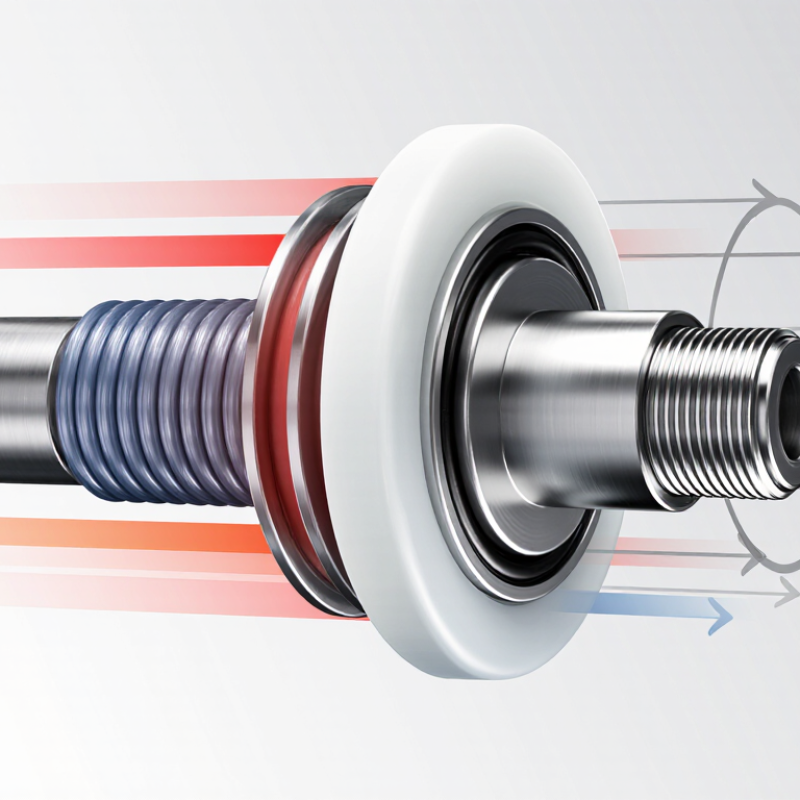
Table of Contents [Hide]
PTFE Lip-Seal Fundamentals: Low Friction and Service Temperatures to 260°C
What Is a PTFE Spring-Energized Lip Seal?
PTFE Lip-Seal Fundamentals: Low Friction and Service Temperatures to 260°C
A PTFE spring-energized lip seal uses a flexible PTFE sealing jacket and an internal metal energizer. The spring keeps the lip against the shaft when pressure changes or the equipment stops. This design suits rotating shafts, plungers, and reciprocating rods.
Low friction is a major advantage. A properly finished shaft can reduce start-up resistance and limit heat generation. In practical seal evaluations, small scratches often matter more than expected. Even a strong PTFE compound may leak across a damaged running surface. Clean assembly is essential. A dry, sharp edge can cut the lip.
Some designs are rated for service temperatures up to 260°C. That value is conditional, not universal. Media type, pressure, speed, spring material, and exposure time all affect performance. At elevated temperatures, PTFE can expand and lose helpful contact pressure. The energizer compensates for part of this movement, but not every design responds equally.
I would avoid choosing a seal from temperature alone. Check the actual shaft speed, pressure direction, surface finish, and chemical environment. Brief peaks may be acceptable, while continuous heat can shorten service life. This is where specifications sometimes feel incomplete. Testing the seal under real operating conditions remains the safer engineering decision. A slightly higher friction seal may perform better if it survives the full temperature cycle.





