


- Home
- A-Z Catalogue
- Products
- Valves
- Cetop
- Manual Directional Valves
- Proportional Valves
- Poppet Valves
- High-Speed Linear Servo Valves
- All High-Speed Linear Servo Valves
- Cetop 10 (NG32) Two Stage Type High Speed Linear Servo Valves – LSVHG-10
- Cetop 10 (NG32) Two Stage Type High Speed Linear Servo Valves – LSVHG-10 (With Fail-Safe)
- Cetop 8 (NG25) Two Stage Type High Speed Linear Servo Valves – LSVHG-06
- Cetop 8 (NG25) Two Stage Type High Speed Linear Servo Valves – LSVHG-06 (With Fail-Safe)
- Cetop 7 (NG16) Two Stage Type High Speed Linear Servo Valves – LSVHG-04
- Cetop 7 (NG16) Two Stage Type High Speed Linear Servo Valves – LSVHG-04 (With Fail-Safe)
- Cetop 5 (NG10) Direct Type High Speed Linear Servo Valves – LSVG-03
- Cetop 5 (NG10) OBE Type Direct Operated Linear Servo Valves – LSVG-03-EH
- Cetop 3 (NG6) OBE Type Direct Operated Linear Servo Valves – LSVG-01-EH
- Pumps
- Pressure control
- Flow Control Valves
- Pressure Control Valves
- All Pressure Control Valves
- Brake Valves
- Direct Relief Valve
- Low Noise Solenoid Controlled Relief Valves
- Low Noise Pilot Operated Relief Valves
- Pilot Operated Relief Valves
- Pressure reducing and relieving valves
- Pressure reducing and check valves
- Pressure control valves
- Remote Control Relief Valves
- Solenoid Controlled Relief Valves – BSG
- Solenoid Controlled Relief Valves – BST
- Unloading relief valves
- Check valves
- Environmental
- Valves
- Hydraulic Systems
- Power pack
- About Us
- Contact
- Blog

What Are the Different Types of Temperature Sensors?
Temperature Sensors turn heat into information, helping engineers protect equipment, control processes, and maintain consistent products. Their differences matter at the point of use: a probe beside a furnace faces intense heat, while a sensor inside a medical device may need to detect tiny changes quickly. The details matter. Thermocouples cover broad temperature ranges and tolerate rugged conditions; resistance temperature detectors (RTDs) offer stable, precise readings. Thermistors respond sensitively over narrower ranges, while infrared sensors measure surface temperatures without contact.
The market is growing, but market size alone does not prove that one sensor type is best. MarketsandMarkets estimated the global temperature sensor market at about US$6.3 billion in 2023 and projected it to reach US$8.1 billion by 2028. Those figures describe commercial demand, not accuracy or suitability. Selection still depends on temperature range, response time, installation, calibration, and exposure to vibration or moisture. A sensor that works well in a laboratory may drift in a factory.
Lord Kelvin, the physicist whose work shaped thermodynamics and temperature measurement, wrote: “When you can measure what you are speaking about, and express it in numbers, you know something about it.” His point remains useful, though measurement is not the whole story. Sensors can be misread, poorly installed, or chosen for the wrong range. This guide compares the main types of Temperature Sensors, explains how they work, and highlights where their trade-offs become visible in real applications—such as a slow response on a production line or a reading that shifts after repeated thermal cycling.
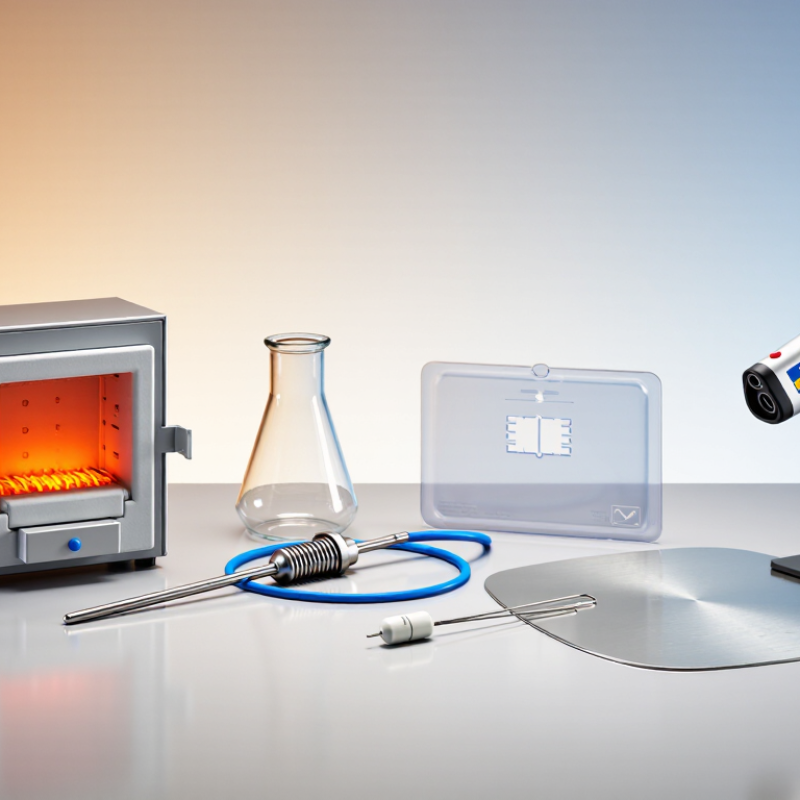
Table of Contents [Hide]
How Temperature Sensors Detect and Measure Temperature
Temperature sensors do not all “read” heat in the same way. A thermocouple converts a temperature difference between two joined metals into a small voltage. The instrument measures that voltage, corrects for the reference junction, then uses a calibrated conversion curve. Small signals matter. NIST Monograph 175 (1993) provides Type K thermocouple reference tables from −270°C to 1,372°C. This range shows why sensor type and calibration data matter: voltage is not a universal temperature scale.
Resistance sensors work differently. Platinum RTDs change resistance predictably as temperature changes. IEC 60751 specifies industrial platinum resistance thermometers, including the common design rated at 100 Ω at 0°C. Thermistors use semiconductor materials and often respond sharply over a narrower range, but their response is nonlinear. Infrared sensors measure radiation from a surface and estimate its temperature using factors such as emissivity. A shiny pipe can mislead an infrared reading. It is an easy detail to overlook.
In practice, mounting can matter as much as the sensing element. A loose probe may measure surrounding air instead of the process. Check calibration records, response time, wiring, and operating range together. No sensor is automatically best; the measurement setup can be the weak link.





