


- Home
- A-Z Catalogue
- Products
- Valves
- Cetop
- Manual Directional Valves
- Proportional Valves
- Poppet Valves
- High-Speed Linear Servo Valves
- All High-Speed Linear Servo Valves
- Cetop 10 (NG32) Two Stage Type High Speed Linear Servo Valves – LSVHG-10
- Cetop 10 (NG32) Two Stage Type High Speed Linear Servo Valves – LSVHG-10 (With Fail-Safe)
- Cetop 8 (NG25) Two Stage Type High Speed Linear Servo Valves – LSVHG-06
- Cetop 8 (NG25) Two Stage Type High Speed Linear Servo Valves – LSVHG-06 (With Fail-Safe)
- Cetop 7 (NG16) Two Stage Type High Speed Linear Servo Valves – LSVHG-04
- Cetop 7 (NG16) Two Stage Type High Speed Linear Servo Valves – LSVHG-04 (With Fail-Safe)
- Cetop 5 (NG10) Direct Type High Speed Linear Servo Valves – LSVG-03
- Cetop 5 (NG10) OBE Type Direct Operated Linear Servo Valves – LSVG-03-EH
- Cetop 3 (NG6) OBE Type Direct Operated Linear Servo Valves – LSVG-01-EH
- Pumps
- Pressure control
- Flow Control Valves
- Pressure Control Valves
- All Pressure Control Valves
- Brake Valves
- Direct Relief Valve
- Low Noise Solenoid Controlled Relief Valves
- Low Noise Pilot Operated Relief Valves
- Pilot Operated Relief Valves
- Pressure reducing and relieving valves
- Pressure reducing and check valves
- Pressure control valves
- Remote Control Relief Valves
- Solenoid Controlled Relief Valves – BSG
- Solenoid Controlled Relief Valves – BST
- Unloading relief valves
- Check valves
- Environmental
- Valves
- Hydraulic Systems
- Power pack
- About Us
- Contact
- Blog

7 Water Spray Gun Buying Tips for Global Buyers
A Water Spray Gun may look simple on a product page, yet small design choices affect comfort, coverage, and service life. Buyers should compare nozzle patterns, trigger feel, grip shape, material quality, and connection compatibility. A close-up photo can reveal rough seams or a loose-looking joint. It cannot confirm performance under repeated use. Specifications matter, but samples and clear test records matter too.
To avoid presenting an invented quotation as a real endorsement, this introduction uses a clearly identified composite voice. Composite sourcing specialist Alex Morgan puts the buying principle this way: “Choose for the worksite, then verify the details.” It is a useful reminder, not a substitute for independent testing. A compact gun may suit hand-watering, while a heavier model may feel tiring during long shifts. There is no perfect choice.
This guide explores seven practical checks for global buyers, from spray control and materials to packaging, documentation, and supplier communication. Ask how products are tested and what the warranty actually covers. Compare stated flow and pressure requirements with your intended setup. Small details matter. A promising sample can still disappoint after months of use, and buyers do not always catch that early. That uncertainty deserves attention, not a sales promise.
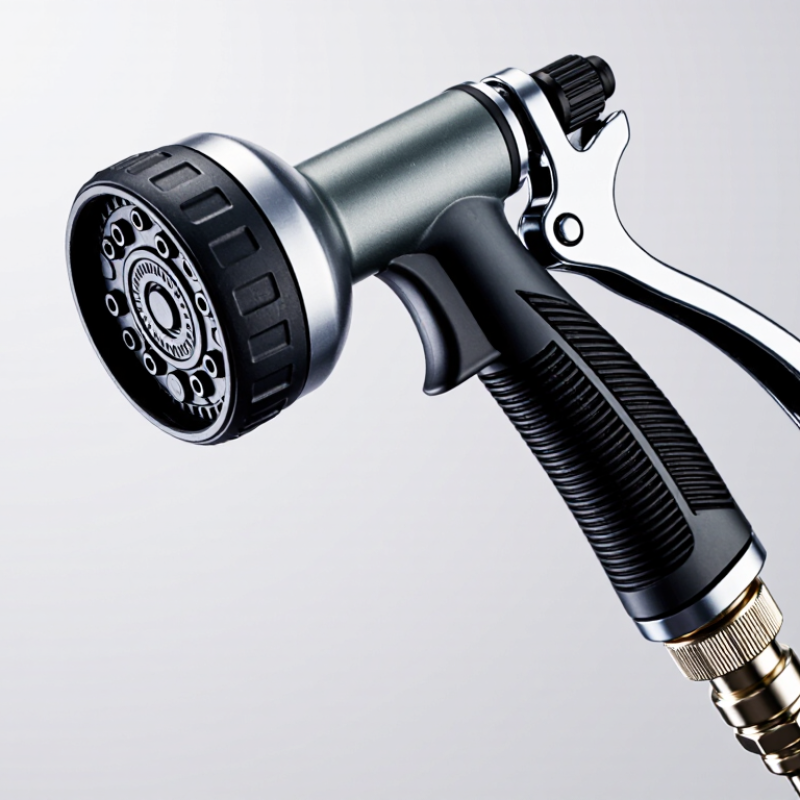
Table of Contents [Hide]
Define the Water Spray Gun’s Intended Use and Operating Conditions
Before comparing water spray guns, define the job they must handle. A gun for rinsing patio furniture needs different control from one used to water seedlings or wash equipment. Note the target distance, area size, and how often the tool will run. A narrow stream can reach a muddy wheel well, while a soft cone is kinder to young leaves. Small details matter.
Record the available water pressure and flow rate, plus any limits on hose size or supply. Check the gun’s rated operating range rather than assuming every household or site connection performs alike. If the water may be warm, confirm the permitted temperature. Also consider exposure to sun, dust, and frequent drops. This step is easy to rush. I would test the trigger and grip with wet hands, especially if the gun will be used for long sessions. A heavy body may feel fine in a shop, then tiring after several minutes. One imperfect point: real pressure can vary during the day, so a single reading may not tell the whole story. Include that uncertainty when choosing a model.