


- Home
- A-Z Catalogue
- Products
- Valves
- Cetop
- Manual Directional Valves
- Proportional Valves
- Poppet Valves
- High-Speed Linear Servo Valves
- All High-Speed Linear Servo Valves
- Cetop 10 (NG32) Two Stage Type High Speed Linear Servo Valves – LSVHG-10
- Cetop 10 (NG32) Two Stage Type High Speed Linear Servo Valves – LSVHG-10 (With Fail-Safe)
- Cetop 8 (NG25) Two Stage Type High Speed Linear Servo Valves – LSVHG-06
- Cetop 8 (NG25) Two Stage Type High Speed Linear Servo Valves – LSVHG-06 (With Fail-Safe)
- Cetop 7 (NG16) Two Stage Type High Speed Linear Servo Valves – LSVHG-04
- Cetop 7 (NG16) Two Stage Type High Speed Linear Servo Valves – LSVHG-04 (With Fail-Safe)
- Cetop 5 (NG10) Direct Type High Speed Linear Servo Valves – LSVG-03
- Cetop 5 (NG10) OBE Type Direct Operated Linear Servo Valves – LSVG-03-EH
- Cetop 3 (NG6) OBE Type Direct Operated Linear Servo Valves – LSVG-01-EH
- Pumps
- Pressure control
- Flow Control Valves
- Pressure Control Valves
- All Pressure Control Valves
- Brake Valves
- Direct Relief Valve
- Low Noise Solenoid Controlled Relief Valves
- Low Noise Pilot Operated Relief Valves
- Pilot Operated Relief Valves
- Pressure reducing and relieving valves
- Pressure reducing and check valves
- Pressure control valves
- Remote Control Relief Valves
- Solenoid Controlled Relief Valves – BSG
- Solenoid Controlled Relief Valves – BST
- Unloading relief valves
- Check valves
- Environmental
- Valves
- Hydraulic Systems
- Power pack
- About Us
- Contact
- Blog

7 Waste Water RO System Buying Tips for Global Buyers
Buying a Waste Water Ro System is not simply a matter of comparing prices and membrane ratings. Global buyers must examine feedwater quality, recovery targets, energy demand, maintenance access, and local operating conditions. A system that performs well in a coastal factory may struggle in a remote inland plant. Salt levels, temperature changes, suspended solids, and cleaning practices can alter results quickly.
Dr. Glen T. Daigger, a recognized wastewater treatment expert, has stated, “The future of water is reuse.” That idea gives this buying guide its direction. A reliable Waste Water RO System should recover useful water without creating an unmanageable concentrate stream. It should also include practical pretreatment, dependable monitoring, and parts that technicians can replace without waiting months. Small details matter. A faulty pressure sensor can stop production. An undersized cartridge filter can increase membrane fouling.
These seven buying tips focus on decisions that affect long-term performance, not only the first quotation. They cover supplier experience, membrane selection, automation, water testing, lifecycle cost, after-sales support, and commissioning. Some recommendations may seem obvious. They are still often missed. Buyers should also question optimistic recovery claims and request test data under similar conditions. No design is perfect. Even experienced teams may revise their assumptions after pilot testing. That is not failure; it is responsible engineering.
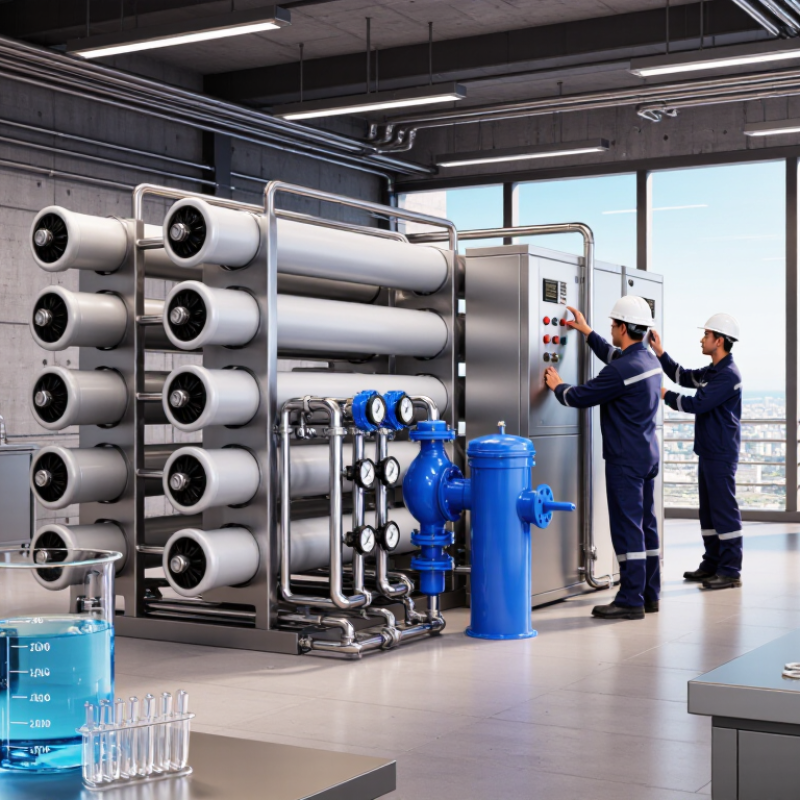
Table of Contents [Hide]
Define Wastewater RO System Requirements and Treatment Goals
Before buying a wastewater RO system, define the water source and treatment goal precisely. Measure flow, temperature, pH, conductivity, hardness, silica, oil, and suspended solids. A kitchen effluent stream needs a different design from textile or metal-finishing wastewater. UN-Water reported that agriculture represented about 72% of global freshwater withdrawals in 2022, showing why water reuse demands careful planning. The UN World Water Development Report 2024 also highlights growing pressure on freshwater supplies.
Tip: Write the target in numbers. Specify feed flow, operating hours, permeate quality, recovery rate, and discharge limits. Decide whether the permeate will support cooling, cleaning, irrigation, or process production. Each use requires different conductivity and microbiological controls. A practical design often includes screening, clarification, filtration, and cartridge protection before the RO membranes. Skipping pretreatment can cause rapid fouling and unstable performance.
Do not select a system from flow rate alone. Analyze seasonal changes and shock loads. A factory may produce clean water on Monday and oily wastewater after maintenance. That detail matters. Industry practice commonly places RO recovery around 50% to 85%, but the real figure depends on scaling risk and concentrate management. Higher recovery sounds efficient, yet it can increase silica or hardness precipitation.
I have seen specifications fail because they assumed laboratory water conditions. A pilot test may expose this weakness early. Record the laboratory method, sampling date, and detection limits. These small details make supplier comparisons more reliable and support decisions based on evidence, not attractive promises.





