


- Home
- A-Z Catalogue
- Products
- Valves
- Cetop
- Manual Directional Valves
- Proportional Valves
- Poppet Valves
- High-Speed Linear Servo Valves
- All High-Speed Linear Servo Valves
- Cetop 10 (NG32) Two Stage Type High Speed Linear Servo Valves – LSVHG-10
- Cetop 10 (NG32) Two Stage Type High Speed Linear Servo Valves – LSVHG-10 (With Fail-Safe)
- Cetop 8 (NG25) Two Stage Type High Speed Linear Servo Valves – LSVHG-06
- Cetop 8 (NG25) Two Stage Type High Speed Linear Servo Valves – LSVHG-06 (With Fail-Safe)
- Cetop 7 (NG16) Two Stage Type High Speed Linear Servo Valves – LSVHG-04
- Cetop 7 (NG16) Two Stage Type High Speed Linear Servo Valves – LSVHG-04 (With Fail-Safe)
- Cetop 5 (NG10) Direct Type High Speed Linear Servo Valves – LSVG-03
- Cetop 5 (NG10) OBE Type Direct Operated Linear Servo Valves – LSVG-03-EH
- Cetop 3 (NG6) OBE Type Direct Operated Linear Servo Valves – LSVG-01-EH
- Pumps
- Pressure control
- Flow Control Valves
- Pressure Control Valves
- All Pressure Control Valves
- Brake Valves
- Direct Relief Valve
- Low Noise Solenoid Controlled Relief Valves
- Low Noise Pilot Operated Relief Valves
- Pilot Operated Relief Valves
- Pressure reducing and relieving valves
- Pressure reducing and check valves
- Pressure control valves
- Remote Control Relief Valves
- Solenoid Controlled Relief Valves – BSG
- Solenoid Controlled Relief Valves – BST
- Unloading relief valves
- Check valves
- Environmental
- Valves
- Hydraulic Systems
- Power pack
- About Us
- Contact
- Blog

What Is a Vehicle Battery Checker and How Does It Work?
A Vehicle Battery Checker is a practical diagnostic tool for testing a vehicle’s electrical heart. It measures battery voltage, starting power, and charging performance. Some advanced models also assess internal resistance, temperature, and battery health. A small screen can reveal whether a battery is ready, weak, or nearing failure.
This matters because modern vehicles depend on stable electrical power. The U.S. Department of Energy’s Vehicle Technologies Office identifies the low-voltage battery as essential for starting, control systems, lighting, and accessories. AAA roadside service reports have also consistently listed dead or weak batteries among common causes of vehicle breakdowns. These findings support regular battery testing, especially before winter travel or long journeys.
The testing process is straightforward. The checker connects to the positive and negative terminals. It then sends a controlled electrical signal through the battery. The device compares the response with stored standards, often using cold-cranking amps and voltage readings. A healthy battery may show stable voltage and strong starting capacity. A failing one can display low reserve power, even when the engine still starts.
Not every result is perfect. Temperature, dirty terminals, incorrect ratings, and recent driving can affect accuracy. The checker is evidence, not a final verdict. A trained technician should confirm unusual readings with a load test and charging-system inspection. That small distinction matters. Used carefully, a Vehicle Battery Checker turns a hidden electrical problem into measurable information before a silent driveway becomes a roadside delay.
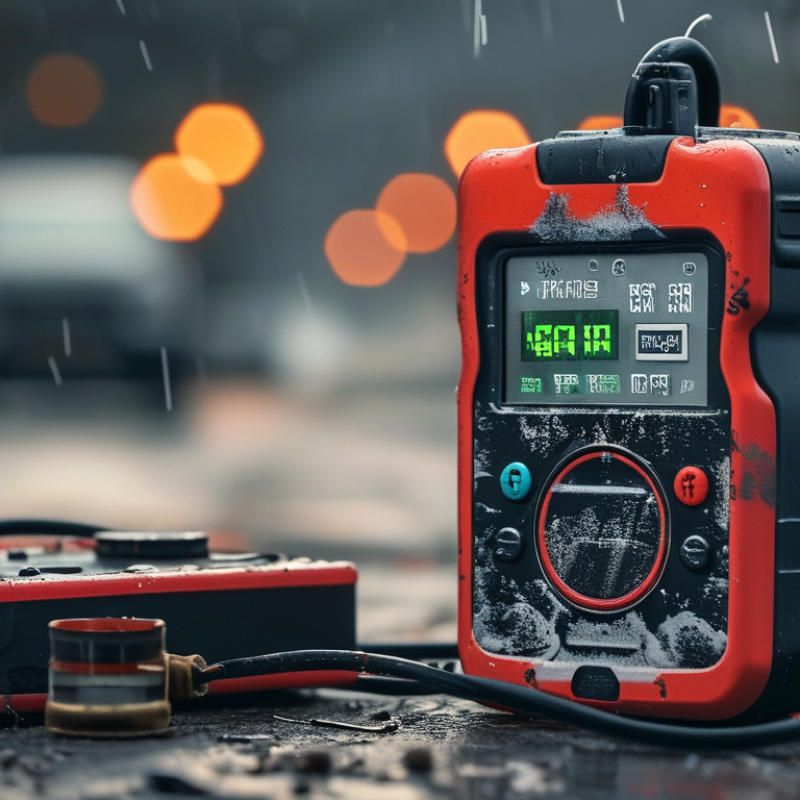
Table of Contents [Hide]
What Is a Vehicle Battery Checker?
A vehicle battery checker is a diagnostic device that evaluates a battery’s electrical condition. It measures resting voltage, starting power, and sometimes charging performance. Basic models show voltage on a digital screen. Advanced testers apply a controlled load or analyze internal resistance. These measurements help indicate whether the battery is charged, weak, or nearing failure. It is not magic.
In practical use, the engine should usually be switched off before testing. A fully charged battery often shows about 12.6 volts at rest. A much lower reading may suggest discharge, aging, or an electrical drain. The checker can also estimate cranking ability by simulating the heavy demand of engine starting. A weak result may appear even when the lights still work. That difference is easy to miss. Temperature, dirty terminals, and loose cable connections can also affect the reading.
A battery checker cannot explain every starting problem. It may report low power when the real issue is poor charging or damaged wiring. For that reason, technicians compare the result with the vehicle’s symptoms and charging voltage. I would recheck an unusual reading after cleaning the terminals and allowing the battery to rest. No tester is perfect. Human judgment still matters. Even a good reading can change after several cold starts or repeated short trips.