


- Home
- A-Z Catalogue
- Products
- Valves
- Cetop
- Manual Directional Valves
- Proportional Valves
- Poppet Valves
- High-Speed Linear Servo Valves
- All High-Speed Linear Servo Valves
- Cetop 10 (NG32) Two Stage Type High Speed Linear Servo Valves – LSVHG-10
- Cetop 10 (NG32) Two Stage Type High Speed Linear Servo Valves – LSVHG-10 (With Fail-Safe)
- Cetop 8 (NG25) Two Stage Type High Speed Linear Servo Valves – LSVHG-06
- Cetop 8 (NG25) Two Stage Type High Speed Linear Servo Valves – LSVHG-06 (With Fail-Safe)
- Cetop 7 (NG16) Two Stage Type High Speed Linear Servo Valves – LSVHG-04
- Cetop 7 (NG16) Two Stage Type High Speed Linear Servo Valves – LSVHG-04 (With Fail-Safe)
- Cetop 5 (NG10) Direct Type High Speed Linear Servo Valves – LSVG-03
- Cetop 5 (NG10) OBE Type Direct Operated Linear Servo Valves – LSVG-03-EH
- Cetop 3 (NG6) OBE Type Direct Operated Linear Servo Valves – LSVG-01-EH
- Pumps
- Pressure control
- Flow Control Valves
- Pressure Control Valves
- All Pressure Control Valves
- Brake Valves
- Direct Relief Valve
- Low Noise Solenoid Controlled Relief Valves
- Low Noise Pilot Operated Relief Valves
- Pilot Operated Relief Valves
- Pressure reducing and relieving valves
- Pressure reducing and check valves
- Pressure control valves
- Remote Control Relief Valves
- Solenoid Controlled Relief Valves – BSG
- Solenoid Controlled Relief Valves – BST
- Unloading relief valves
- Check valves
- Environmental
- Valves
- Hydraulic Systems
- Power pack
- About Us
- Contact
- Blog

How to Use RFID for Tool Tracking?
Tools often go missing between the workbench, service vehicle, and job site. A technician may spend ten minutes checking cases for one drill, while another tool sits unused in storage. Rfid Tool Tracking can make these movements easier to see by linking tagged equipment to recorded check-ins and check-outs. It is not magic. Results depend on sensible tag placement, reader coverage, and staff following a clear process.
An RFID setup usually includes tags, readers, and software that stores tool records. Each tag carries an identifier; readers capture it when tools pass through selected areas or are scanned during handovers. Metal surfaces can affect some tags, so test the chosen type on actual tools before buying in volume. Small details matter. A pilot can reveal missed reads, awkward scanning points, or records that do not match daily routines. A first rollout may feel clumsy; that is useful feedback, not failure. Staff input often exposes problems a floor plan cannot show.
This guide explains how to choose tags, plan reader locations, organize tool records, and check performance. It also covers practical limits, including read range, battery needs for active tags, and the importance of maintaining accurate inventory data. RFID can reduce manual searching, but it cannot fix unclear ownership or inconsistent returns by itself. The best system fits the way people already move tools—and leaves room to improve when real use reveals gaps.
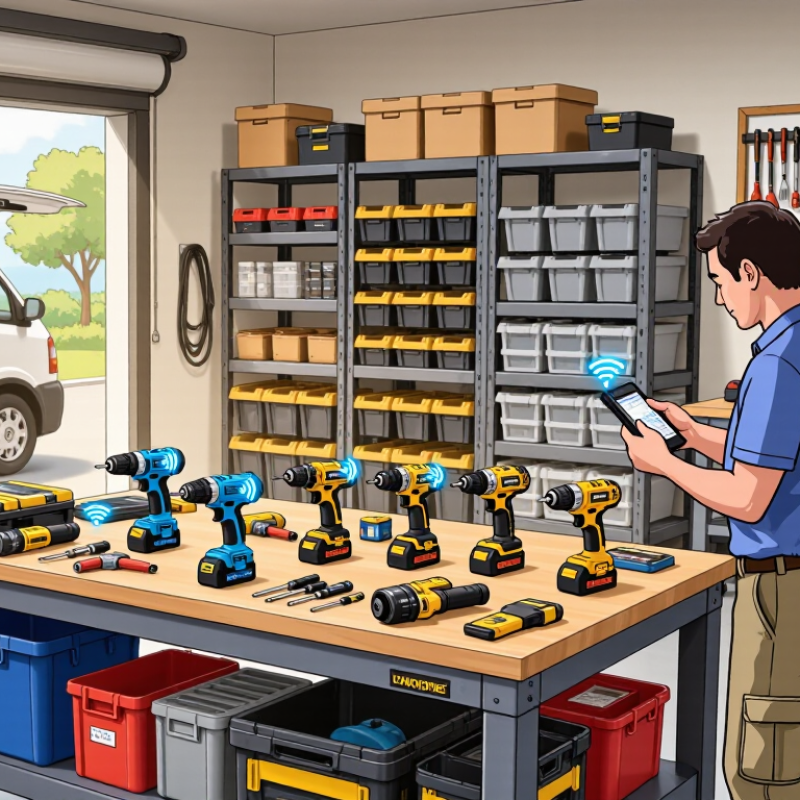
Table of Contents [Hide]
How RFID Identifies and Locates Tools
RFID identifies a tool through a small tag attached to its handle, case, or storage slot. Each tag has a unique electronic identifier. When a reader sends out a radio signal, a passive tag uses that energy to respond with its ID. The tracking system links the ID to details such as tool type, serial number, and assigned location. No line of sight is needed.
Location depends on where readers are installed and how the system is configured. A reader at a cabinet can record tools entering or leaving storage. Readers near workshop doors can log movement between areas, while a handheld reader helps staff check a shelf or workbench. These readings show a tool’s likely zone, not its exact position. RFID is not a map pin.
Metal can weaken or distort radio signals, especially when a tag is mounted directly against a steel tool. Use tags designed for metal surfaces, then test them on the actual tools and at the intended read points. A missed read is possible. I would treat RFID records as useful evidence, not perfect truth: compare them with occasional physical checks and adjust antenna placement when tools are repeatedly overlooked.





