


- Home
- A-Z Catalogue
- Products
- Valves
- Cetop
- Manual Directional Valves
- Proportional Valves
- Poppet Valves
- High-Speed Linear Servo Valves
- All High-Speed Linear Servo Valves
- Cetop 10 (NG32) Two Stage Type High Speed Linear Servo Valves – LSVHG-10
- Cetop 10 (NG32) Two Stage Type High Speed Linear Servo Valves – LSVHG-10 (With Fail-Safe)
- Cetop 8 (NG25) Two Stage Type High Speed Linear Servo Valves – LSVHG-06
- Cetop 8 (NG25) Two Stage Type High Speed Linear Servo Valves – LSVHG-06 (With Fail-Safe)
- Cetop 7 (NG16) Two Stage Type High Speed Linear Servo Valves – LSVHG-04
- Cetop 7 (NG16) Two Stage Type High Speed Linear Servo Valves – LSVHG-04 (With Fail-Safe)
- Cetop 5 (NG10) Direct Type High Speed Linear Servo Valves – LSVG-03
- Cetop 5 (NG10) OBE Type Direct Operated Linear Servo Valves – LSVG-03-EH
- Cetop 3 (NG6) OBE Type Direct Operated Linear Servo Valves – LSVG-01-EH
- Pumps
- Pressure control
- Flow Control Valves
- Pressure Control Valves
- All Pressure Control Valves
- Brake Valves
- Direct Relief Valve
- Low Noise Solenoid Controlled Relief Valves
- Low Noise Pilot Operated Relief Valves
- Pilot Operated Relief Valves
- Pressure reducing and relieving valves
- Pressure reducing and check valves
- Pressure control valves
- Remote Control Relief Valves
- Solenoid Controlled Relief Valves – BSG
- Solenoid Controlled Relief Valves – BST
- Unloading relief valves
- Check valves
- Environmental
- Valves
- Hydraulic Systems
- Power pack
- About Us
- Contact
- Blog

What Is Tungsten Carbide Ceramic Used For?
Tungsten Carbide Ceramic is often chosen when ordinary steel wears too quickly. Its extreme hardness helps components resist abrasion, cutting, and repeated contact. In workshops, it may appear as a compact cutting insert, a drill tip, or a wear-resistant nozzle. Mining equipment uses it against rock and mineral dust. Manufacturers also install it in dies, seals, guide parts, and other surfaces exposed to friction. The material can keep a sharp edge or stable shape under demanding conditions. That practical performance explains its value in manufacturing, energy, construction, and precision engineering.
The name deserves a closer look. Many commercial grades combine tungsten carbide particles with a metallic binder, commonly cobalt, rather than forming a pure ceramic body. This structure creates an important balance between hardness and toughness, although the balance changes with grade, grain size, and binder content. It resists wear strongly, but it is not indestructible. A sudden impact, poor support, or excessive heat can cause chipping or cracking. Small details matter. Selecting a grade without considering load, temperature, corrosion, and surface contact may shorten service life. Reliable recommendations should therefore come from verified material data, application testing, and experienced engineering judgment. Even then, performance can vary in real equipment. This guide examines where Tungsten Carbide Ceramic is used, why it works, and where its limitations deserve honest attention.
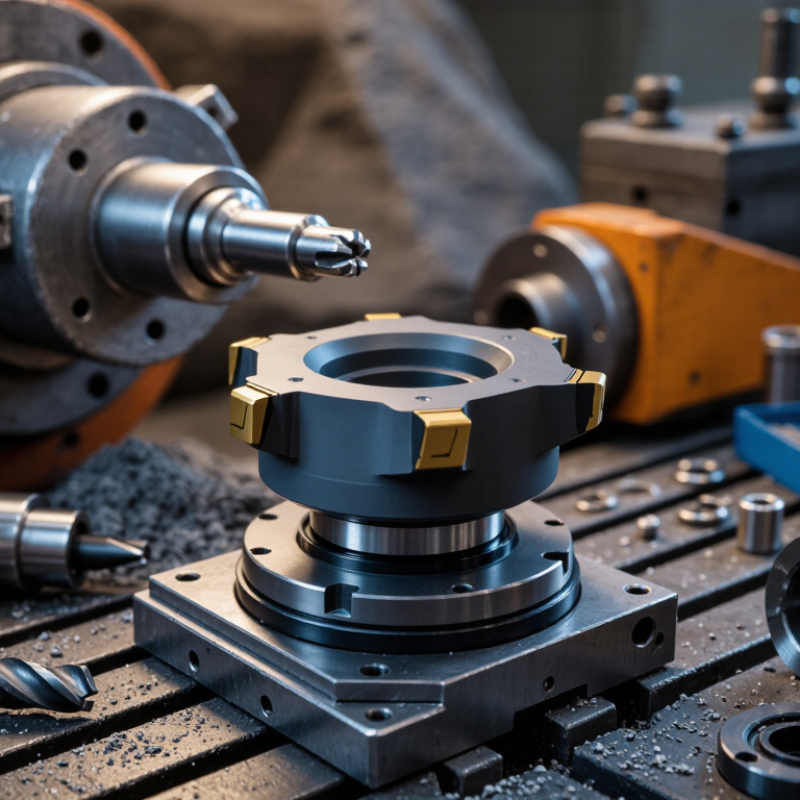
Table of Contents [Hide]
What Is Tungsten Carbide Ceramic?
Tungsten carbide ceramic is an extremely hard engineering material made from tungsten and carbon. Its main phase, tungsten carbide, has a dense crystal structure that resists scratching, abrasion, and deformation. In practical products, fine tungsten carbide grains are often combined with a metallic binder, creating a cemented carbide composite rather than a completely pure ceramic. This difference matters because the binder can improve toughness while slightly reducing hardness.
The material is used where ordinary steel wears too quickly. Manufacturers shape it into cutting inserts, drilling components, wear plates, seals, nozzles, and forming tools. In a workshop, a carbide cutting edge can keep its shape while machining abrasive alloys or mineral-filled materials.
Its surface may look smooth and dark gray, but microscopic pores, grain size, and binder distribution strongly affect performance. Small changes can influence tool life.
Hardness is not everything. Tungsten carbide ceramic can crack under sudden impact, poor mounting, or rapid temperature changes. It also requires careful grinding because excessive heat may damage the edge. The material is costly to process, and incorrect selection can waste more money than it saves. A tougher grade may perform better in interrupted cutting, while a harder grade may suit steady abrasion. The label alone does not guarantee success. Real service conditions must guide the choice.





