


- Home
- A-Z Catalogue
- Products
- Valves
- Cetop
- Manual Directional Valves
- Proportional Valves
- Poppet Valves
- High-Speed Linear Servo Valves
- All High-Speed Linear Servo Valves
- Cetop 10 (NG32) Two Stage Type High Speed Linear Servo Valves – LSVHG-10
- Cetop 10 (NG32) Two Stage Type High Speed Linear Servo Valves – LSVHG-10 (With Fail-Safe)
- Cetop 8 (NG25) Two Stage Type High Speed Linear Servo Valves – LSVHG-06
- Cetop 8 (NG25) Two Stage Type High Speed Linear Servo Valves – LSVHG-06 (With Fail-Safe)
- Cetop 7 (NG16) Two Stage Type High Speed Linear Servo Valves – LSVHG-04
- Cetop 7 (NG16) Two Stage Type High Speed Linear Servo Valves – LSVHG-04 (With Fail-Safe)
- Cetop 5 (NG10) Direct Type High Speed Linear Servo Valves – LSVG-03
- Cetop 5 (NG10) OBE Type Direct Operated Linear Servo Valves – LSVG-03-EH
- Cetop 3 (NG6) OBE Type Direct Operated Linear Servo Valves – LSVG-01-EH
- Pumps
- Pressure control
- Flow Control Valves
- Pressure Control Valves
- All Pressure Control Valves
- Brake Valves
- Direct Relief Valve
- Low Noise Solenoid Controlled Relief Valves
- Low Noise Pilot Operated Relief Valves
- Pilot Operated Relief Valves
- Pressure reducing and relieving valves
- Pressure reducing and check valves
- Pressure control valves
- Remote Control Relief Valves
- Solenoid Controlled Relief Valves – BSG
- Solenoid Controlled Relief Valves – BST
- Unloading relief valves
- Check valves
- Environmental
- Valves
- Hydraulic Systems
- Power pack
- About Us
- Contact
- Blog

What Is the Top Wildlife Night Camera for Buyers?
Choosing the top Wildlife Night Camera is not as simple as comparing megapixels or advertised detection ranges. A reliable model must perform quietly in darkness, rain, cold weather, and unpredictable woodland conditions. Its infrared illumination should reveal movement without creating harsh white flashes. Trigger speed, recovery time, battery life, and image clarity matter more than impressive packaging.
Wildlife camera researcher Roland Kays has said, “Camera traps let us see the secret lives of animals without disturbing them.” That principle should guide every buying decision. The best Wildlife Night Camera should capture a fox crossing wet leaves, an owl landing on a low branch, or a deer pausing beside a hedgerow. It should also protect those observations through dependable seals, secure mounting, and sensible data storage. Field experience teaches a difficult lesson: even expensive cameras can produce empty frames, blurred animals, or false triggers from moving grass.
This guide compares leading models through practical criteria, including night range, infrared visibility, sensor accuracy, sound recording, cellular options, and long-term reliability. We consider independent testing, manufacturer specifications, and real outdoor use. However, no camera wins in every habitat. A powerful model may consume batteries quickly. A compact unit may miss distant movement. That limitation matters. Buyers should match the camera to their terrain, target species, weather exposure, and monitoring purpose. The “best” choice may still disappoint without careful placement. Even perfect equipment cannot correct poor positioning.
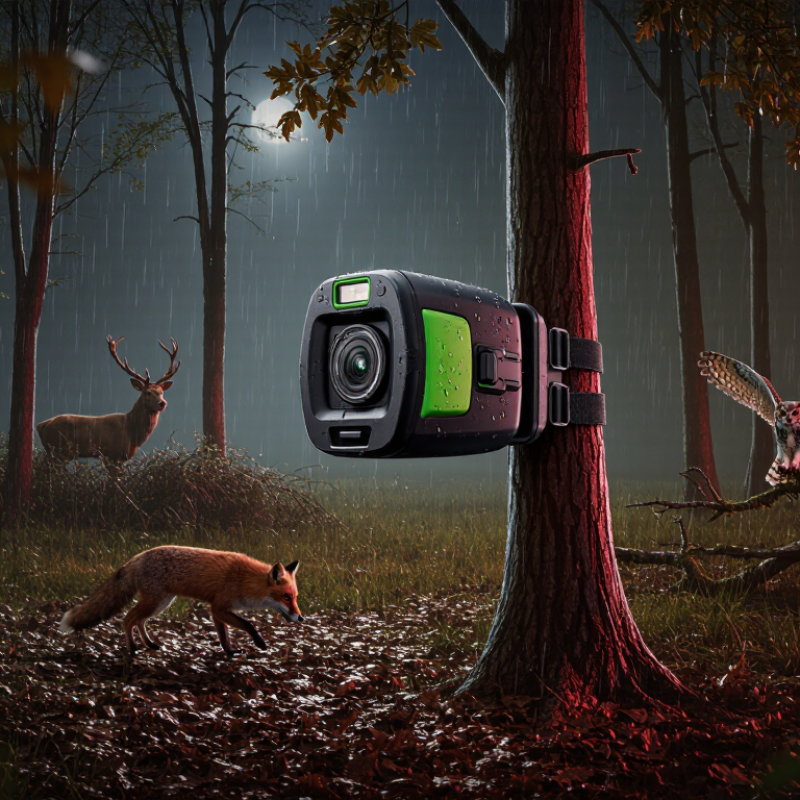
Table of Contents [Hide]
Define Core Wildlife Camera Types and Buyer Use Cases
What Is the Top Wildlife Night Camera for Buyers?
The best wildlife night camera depends on what you hope to observe. Infrared trail cameras suit remote woods, garden paths, and feeding areas. They trigger when movement enters the detection zone. Standard infrared models may show a faint red glow. No-glow models are less noticeable, but their images can appear less detailed. Cellular cameras send photos remotely, although they require reliable network coverage and more power.
Buyers should match camera features with real conditions. Choose a wide detection angle for open clearings. Select a shorter trigger distance for narrow animal trails. A fast trigger helps capture a fox crossing quickly. Strong weather sealing matters during heavy rain and freezing nights. Image resolution is useful, but lens quality and infrared balance often matter more. A bright flash can disturb animals and create washed-out images. That is easy to underestimate.
Tips: Test the camera at home before placing it outdoors. Walk across its view at different distances. Check night images for glare, dark corners, and delayed triggers. Use fresh batteries, secure the mounting strap, and angle the lens slightly downward. Keep the camera away from moving branches. Review timestamps often, since incorrect settings can confuse feeding patterns. No camera is perfect. Even careful placement can miss shy animals or produce empty frames. That limitation deserves attention before buyers spend more.





