


- Home
- A-Z Catalogue
- Products
- Valves
- Cetop
- Manual Directional Valves
- Proportional Valves
- Poppet Valves
- High-Speed Linear Servo Valves
- All High-Speed Linear Servo Valves
- Cetop 10 (NG32) Two Stage Type High Speed Linear Servo Valves – LSVHG-10
- Cetop 10 (NG32) Two Stage Type High Speed Linear Servo Valves – LSVHG-10 (With Fail-Safe)
- Cetop 8 (NG25) Two Stage Type High Speed Linear Servo Valves – LSVHG-06
- Cetop 8 (NG25) Two Stage Type High Speed Linear Servo Valves – LSVHG-06 (With Fail-Safe)
- Cetop 7 (NG16) Two Stage Type High Speed Linear Servo Valves – LSVHG-04
- Cetop 7 (NG16) Two Stage Type High Speed Linear Servo Valves – LSVHG-04 (With Fail-Safe)
- Cetop 5 (NG10) Direct Type High Speed Linear Servo Valves – LSVG-03
- Cetop 5 (NG10) OBE Type Direct Operated Linear Servo Valves – LSVG-03-EH
- Cetop 3 (NG6) OBE Type Direct Operated Linear Servo Valves – LSVG-01-EH
- Pumps
- Pressure control
- Flow Control Valves
- Pressure Control Valves
- All Pressure Control Valves
- Brake Valves
- Direct Relief Valve
- Low Noise Solenoid Controlled Relief Valves
- Low Noise Pilot Operated Relief Valves
- Pilot Operated Relief Valves
- Pressure reducing and relieving valves
- Pressure reducing and check valves
- Pressure control valves
- Remote Control Relief Valves
- Solenoid Controlled Relief Valves – BSG
- Solenoid Controlled Relief Valves – BST
- Unloading relief valves
- Check valves
- Environmental
- Valves
- Hydraulic Systems
- Power pack
- About Us
- Contact
- Blog

What Are the Top Well Drilling Equipment Types in 2026?
Choosing the right Well Drilling Equipment in 2026 starts with the ground beneath the rig. A compact rotary rig can suit a tight residential lot, while a truck-mounted system may be better for deeper or more demanding work. Air, mud, and cable-tool rigs each bring different strengths. None is the universal answer.
The U.S. Geological Survey’s 2015 water-use assessment found that groundwater supplied about 26 percent of U.S. freshwater withdrawals. USGS hydrologist Cheryl A. Dieter and coauthors document that substantial reliance in their national assessment. It is useful context, not a forecast of equipment sales. Local aquifer depth, rock hardness, access, and water quality still shape the rig choice. A national number cannot tell a contractor whether a site needs a high-torque rotary rig or a lighter, portable unit.
Details matter. A narrow driveway, loose sand, or fractured granite can change the equipment plan before drilling begins. Buyers should compare rated depth, mast capacity, circulation systems, maintenance access, and parts availability—not just purchase price. A rig that looks powerful on paper may be awkward on a muddy site. That is worth admitting.
This guide compares the leading equipment types and explains where each tends to fit. It also flags trade-offs, because product claims are not field results. No verbatim expert quotation is included here: without a supplied source, attributing one would risk misquoting an industry professional. The focus stays on verifiable data and practical selection criteria.
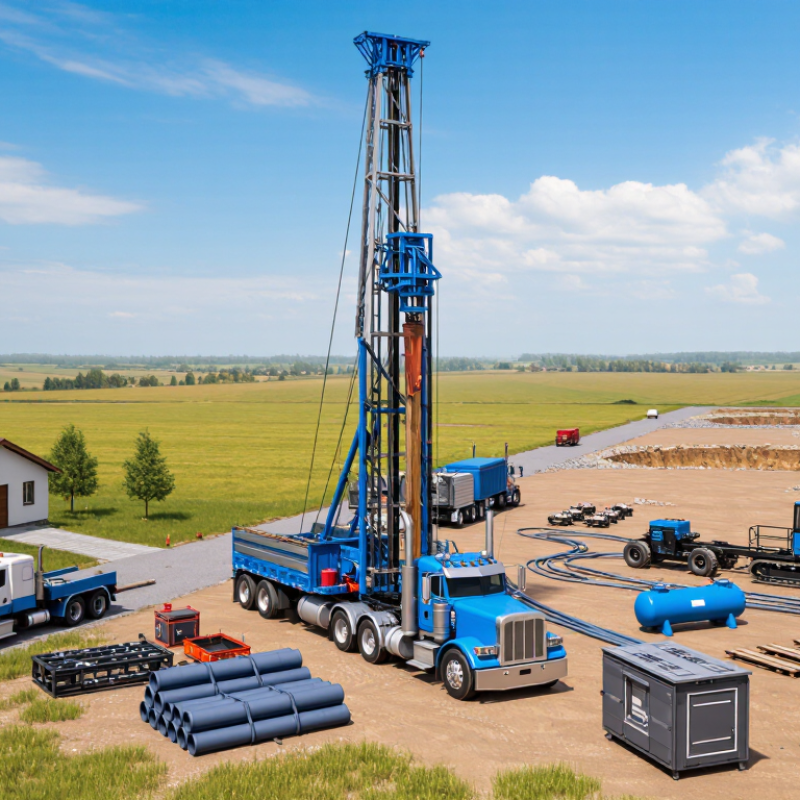
Table of Contents [Hide]
What Well Drilling Equipment Includes and How It Works
What Are the Top Well Drilling Equipment Types in 2026?
What Well Drilling Equipment Includes and How It Works
Well drilling equipment is a coordinated system, not a single machine. A rig supplies force and rotation, while the mast supports the drill string. A hoist raises or lowers the pipe. At the bottom, the drill bit cuts through soil or rock. Different bits suit different formations, and choosing one by habit can cause rapid wear.
During drilling, pumps send fluid through the drill pipe and back up the space around it. The flow cools the bit, carries cuttings to the surface, and helps stabilize the borehole. A tank and screens separate debris before the fluid circulates again. In loose ground, casing can help prevent the hole from collapsing. Equipment choices depend on depth, geology, access, and water quality. Conditions can shift, so a setup may need a rethink.
Tips: Check connections, guards, hoses, and fluid levels before operation. Watch returned cuttings and pressure readings, not just drilling speed. Small details matter.