


- Home
- A-Z Catalogue
- Products
- Valves
- Cetop
- Manual Directional Valves
- Proportional Valves
- Poppet Valves
- High-Speed Linear Servo Valves
- All High-Speed Linear Servo Valves
- Cetop 10 (NG32) Two Stage Type High Speed Linear Servo Valves – LSVHG-10
- Cetop 10 (NG32) Two Stage Type High Speed Linear Servo Valves – LSVHG-10 (With Fail-Safe)
- Cetop 8 (NG25) Two Stage Type High Speed Linear Servo Valves – LSVHG-06
- Cetop 8 (NG25) Two Stage Type High Speed Linear Servo Valves – LSVHG-06 (With Fail-Safe)
- Cetop 7 (NG16) Two Stage Type High Speed Linear Servo Valves – LSVHG-04
- Cetop 7 (NG16) Two Stage Type High Speed Linear Servo Valves – LSVHG-04 (With Fail-Safe)
- Cetop 5 (NG10) Direct Type High Speed Linear Servo Valves – LSVG-03
- Cetop 5 (NG10) OBE Type Direct Operated Linear Servo Valves – LSVG-03-EH
- Cetop 3 (NG6) OBE Type Direct Operated Linear Servo Valves – LSVG-01-EH
- Pumps
- Pressure control
- Flow Control Valves
- Pressure Control Valves
- All Pressure Control Valves
- Brake Valves
- Direct Relief Valve
- Low Noise Solenoid Controlled Relief Valves
- Low Noise Pilot Operated Relief Valves
- Pilot Operated Relief Valves
- Pressure reducing and relieving valves
- Pressure reducing and check valves
- Pressure control valves
- Remote Control Relief Valves
- Solenoid Controlled Relief Valves – BSG
- Solenoid Controlled Relief Valves – BST
- Unloading relief valves
- Check valves
- Environmental
- Valves
- Hydraulic Systems
- Power pack
- About Us
- Contact
- Blog

Best Wedge Anchors in 2026 for Global Buyers
For global buyers, choosing a Wedge Anchor is not just a matter of comparing prices or picking a familiar size. The anchor must suit the base material, fixture, installation conditions, and expected load. Concrete strength, hole diameter, embedment depth, and edge distance can all affect performance. Small details matter. That sounds simple. It isn’t always.
A useful comparison starts with clear product data. Check the anchor’s dimensions, material and coating, installation instructions, and published load information. Consider whether the product is intended for indoor or outdoor use, and how moisture or corrosive conditions may affect the finish. For large projects, request traceable test reports and confirm that the documentation matches the exact model being quoted. A neat catalog table can still leave questions unanswered.
Global sourcing adds practical considerations. Packaging, consistent production, lead times, and communication with the supplier can matter as much as the quoted unit cost. Buyers should also verify that product claims and technical documents meet the requirements of their project and destination market; requirements can differ. Do not assume that two anchors with the same diameter are interchangeable. Compare installation details carefully, and ask the manufacturer or a qualified engineer when load conditions are uncertain. This guide examines leading wedge anchor options through those buyer-focused criteria. It aims to make comparison clearer, while recognizing that no single product is best for every concrete, environment, or application.
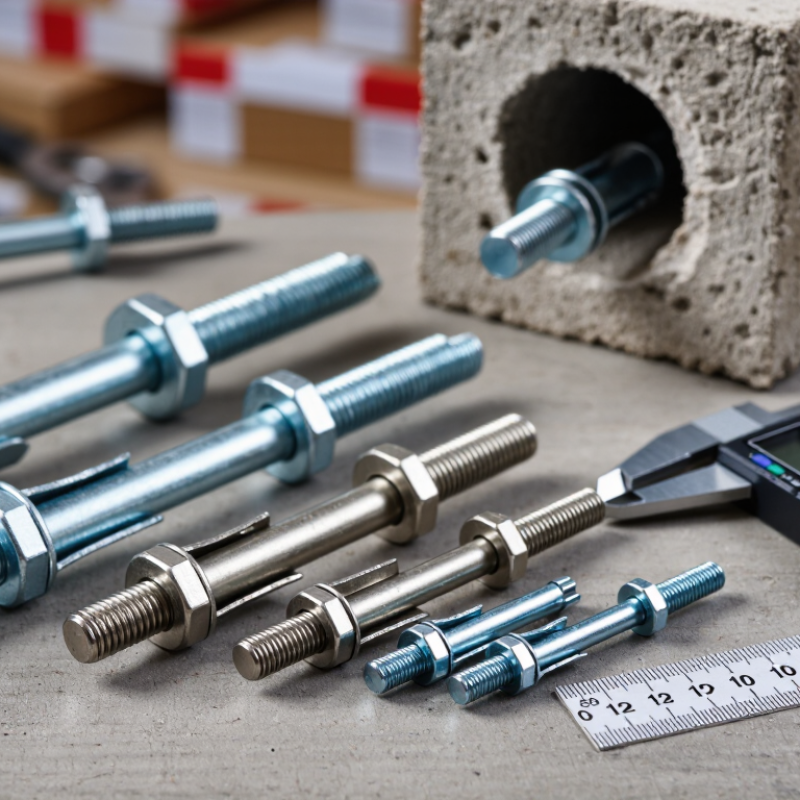
Table of Contents [Hide]
Understanding Wedge Anchors and How They Work
Wedge anchors are mechanical fasteners designed mainly for solid concrete. A threaded steel stud has an expansion clip near its lower end. After the anchor enters a drilled hole, tightening the nut pulls the stud upward. The clip presses outward against the concrete walls, helping resist pullout. Simple mechanism. Reliable performance still depends on the concrete and installation.
For example, a 12-millimeter anchor needs a correctly sized hole, drilled straight and deep enough for its specified embedment. Brush and blow out the dust; debris can interfere with expansion. Then insert the anchor, fit the fixture, and tighten the nut to the specified torque.
In practice, hole cleaning is easy to underestimate. I would check it twice.
Buyers should also compare anchor diameter, embedment, corrosion resistance, and published load data with the project conditions. Wedge anchors are generally unsuitable for brick or hollow block unless the product documentation specifically allows that use. Concrete strength, edge distance, and nearby anchors can affect capacity, so a catalog number alone is not a design check. For unfamiliar concrete or overhead loads, have a qualified professional verify the selection and installation.





