


- Home
- A-Z Catalogue
- Products
- Valves
- Cetop
- Manual Directional Valves
- Proportional Valves
- Poppet Valves
- High-Speed Linear Servo Valves
- All High-Speed Linear Servo Valves
- Cetop 10 (NG32) Two Stage Type High Speed Linear Servo Valves – LSVHG-10
- Cetop 10 (NG32) Two Stage Type High Speed Linear Servo Valves – LSVHG-10 (With Fail-Safe)
- Cetop 8 (NG25) Two Stage Type High Speed Linear Servo Valves – LSVHG-06
- Cetop 8 (NG25) Two Stage Type High Speed Linear Servo Valves – LSVHG-06 (With Fail-Safe)
- Cetop 7 (NG16) Two Stage Type High Speed Linear Servo Valves – LSVHG-04
- Cetop 7 (NG16) Two Stage Type High Speed Linear Servo Valves – LSVHG-04 (With Fail-Safe)
- Cetop 5 (NG10) Direct Type High Speed Linear Servo Valves – LSVG-03
- Cetop 5 (NG10) OBE Type Direct Operated Linear Servo Valves – LSVG-03-EH
- Cetop 3 (NG6) OBE Type Direct Operated Linear Servo Valves – LSVG-01-EH
- Pumps
- Pressure control
- Flow Control Valves
- Pressure Control Valves
- All Pressure Control Valves
- Brake Valves
- Direct Relief Valve
- Low Noise Solenoid Controlled Relief Valves
- Low Noise Pilot Operated Relief Valves
- Pilot Operated Relief Valves
- Pressure reducing and relieving valves
- Pressure reducing and check valves
- Pressure control valves
- Remote Control Relief Valves
- Solenoid Controlled Relief Valves – BSG
- Solenoid Controlled Relief Valves – BST
- Unloading relief valves
- Check valves
- Environmental
- Valves
- Hydraulic Systems
- Power pack
- About Us
- Contact
- Blog

What Are the Top Types of Cold Rolled Steel in 2026?
In 2026, choosing Cold Rolled Steel means matching a grade to the job, not simply picking the smoothest sheet. A bright, even surface may suit visible panels, while a formable grade can better handle tight bends and stamped parts. The difference becomes clear on the shop floor: a bracket that cracks at the edge can waste more time than a slightly rougher finish.
This guide explores common types, including commercial-quality, drawing-quality, deep-drawing, and high-strength low-alloy steel. Each offers a different balance of formability, strength, surface quality, and cost. Names and specifications can vary by standard and supplier, so buyers should confirm the grade designation, thickness tolerance, coating, and intended forming limits on the product documentation. Small details matter.
We will also look at how these materials perform in appliances, furniture, automotive components, and general fabrication. A grade suited to a shallow panel may not work for a deep-drawn housing. In practice, material selection is rarely perfect on the first try; sample forming and clear communication with the supplier can reveal problems before production scales up. That step is easy to overlook. The goal is not to rank every type as universally best, but to explain where each option makes sense—and what to check before ordering.
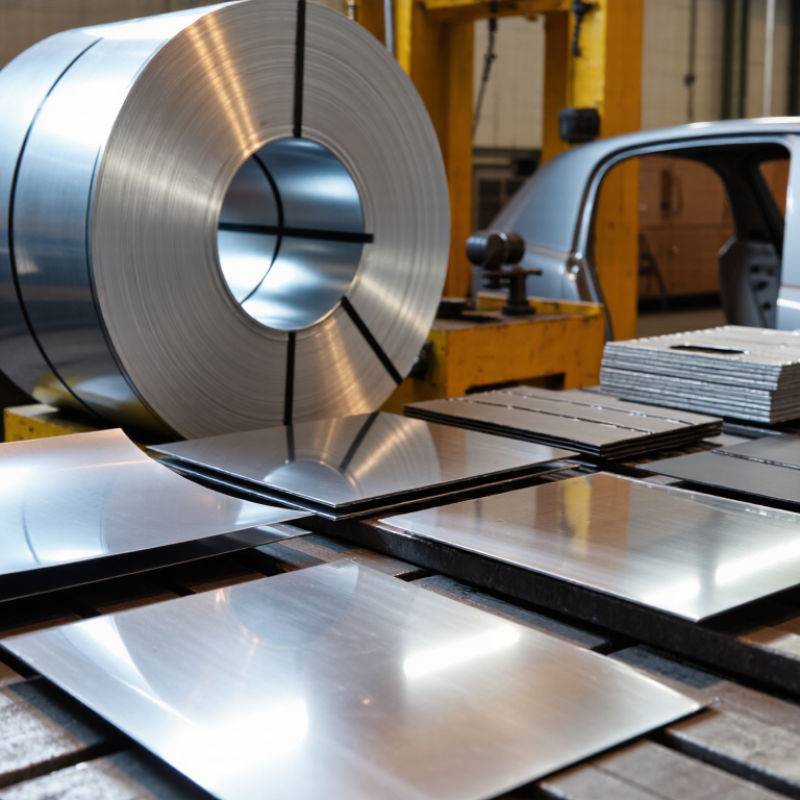
Table of Contents [Hide]
What Cold-Rolled Steel Is and How It Is Produced
Cold-rolled steel begins as hot-rolled steel, which is cooled and cleaned to remove scale. The strip often passes through an acid pickling line before rolling. It is not rolled in a freezer. The process usually takes place near room temperature, though friction can warm the metal.
During cold reduction, powerful rollers squeeze the strip thinner and improve its thickness consistency. The steel also becomes harder and less ductile as its grains deform. That trade-off matters. A bright, smooth surface and crisp edges are common results, but the finish depends on cleaning, roll condition, and later handling. Even a small scratch can show clearly under workshop lights.
Some products are annealed after rolling. Controlled heating softens the steel and restores formability; a light temper pass can then refine flatness and surface texture. Not every coil receives identical treatment. Buyers should check the grade, thickness tolerance, surface designation, and intended forming method rather than relying on “cold rolled” alone. In practice, deep drawing may require softer material than a stiff panel. The label is useful, but incomplete. Specification sheets can be dense, and I would still verify the requirements before choosing a coil.





