- Home
- A-Z Catalogue
- Products
- Valves
- Cetop
- Manual Directional Valves
- Proportional Valves
- Poppet Valves
- High-Speed Linear Servo Valves
- All High-Speed Linear Servo Valves
- Cetop 10 (NG32) Two Stage Type High Speed Linear Servo Valves – LSVHG-10
- Cetop 10 (NG32) Two Stage Type High Speed Linear Servo Valves – LSVHG-10 (With Fail-Safe)
- Cetop 8 (NG25) Two Stage Type High Speed Linear Servo Valves – LSVHG-06
- Cetop 8 (NG25) Two Stage Type High Speed Linear Servo Valves – LSVHG-06 (With Fail-Safe)
- Cetop 7 (NG16) Two Stage Type High Speed Linear Servo Valves – LSVHG-04
- Cetop 7 (NG16) Two Stage Type High Speed Linear Servo Valves – LSVHG-04 (With Fail-Safe)
- Cetop 5 (NG10) Direct Type High Speed Linear Servo Valves – LSVG-03
- Cetop 5 (NG10) OBE Type Direct Operated Linear Servo Valves – LSVG-03-EH
- Cetop 3 (NG6) OBE Type Direct Operated Linear Servo Valves – LSVG-01-EH
- Pumps
- Pressure control
- Flow Control Valves
- Pressure Control Valves
- All Pressure Control Valves
- Brake Valves
- Direct Relief Valve
- Low Noise Solenoid Controlled Relief Valves
- Low Noise Pilot Operated Relief Valves
- Pilot Operated Relief Valves
- Pressure reducing and relieving valves
- Pressure reducing and check valves
- Pressure control valves
- Remote Control Relief Valves
- Solenoid Controlled Relief Valves – BSG
- Solenoid Controlled Relief Valves – BST
- Unloading relief valves
- Check valves
- Environmental
- Valves
- Hydraulic Systems
- Power pack
- About Us
- Contact
- Blog

What Are the Top Types of Ball End Mills?
Ball end mills shape curved surfaces, deep cavities, and detailed contours that flat cutters cannot reach cleanly. Their rounded tips leave smooth transitions, but tool choice changes cutting forces, reach, finish, and tool life. Small details matter.
Manufacturing engineering author Serope Kalpakjian is a respected voice in production technology. The following line is a practical paraphrase of manufacturing principles, not a verbatim quotation: “Choose cutting geometry to match the material, feature, and finish.” That rule helps organize this guide. It also keeps selection grounded in the workpiece, not marketing claims.
This overview compares common Ball End End Mill types, including standard, tapered, long-reach, and micro designs. It explains where each geometry performs well and where it may struggle. A tapered tool can reach angled walls; a long-reach tool accesses deep pockets, but added length can increase deflection. Micro tools capture fine details. They need careful handling.
Coatings, flute counts, and carbide grades also affect performance. Yet no single type suits every machine, material, or setup. Real results depend on rigidity, toolpath, and cutting conditions, so published guidance should be tested against the actual job. A useful starting point. The sections ahead connect each tool type with practical applications, selection trade-offs, and common limits. Expect clear comparisons, not a universal winner.
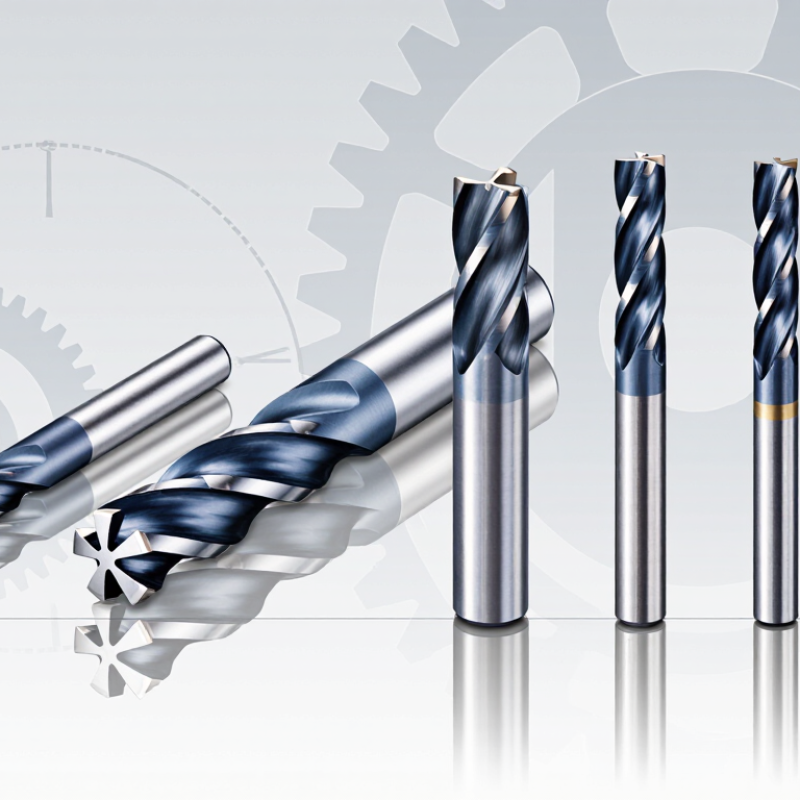
Table of Contents [Hide]
How Ball End Mills Are Classified by Shape and Application
What Are the Top Types of Ball End Mills?
How Ball End Mills Are Classified by Shape and Application
Ball end mills are commonly classified by the shape of their cutting ends and the work they perform. A standard ball nose cutter has a rounded tip and is widely used for curved surfaces, sculpted contours, and mold cavities. Its tip leaves a smooth, concave path, though the very center cuts slowly because its surface speed approaches zero. Toolpath planning matters.
Tapered ball nose mills combine a rounded tip with a narrowing, angled neck. This shape adds stiffness and helps reach deep, narrow features, such as fine channels in a mold. Small details matter. Micro ball end mills serve miniature parts and delicate features, but their small diameters can make them sensitive to runout and vibration. A rigid setup is essential.
Application also separates roughing and finishing choices. Larger ball mills can remove material from broad contours, while smaller tools reach tight radii and add detail. Finishing passes usually use light cuts and close stepover spacing to reduce visible scallops. The right choice depends on material, cavity depth, machine rigidity, and the desired surface. A chart helps, but a short test cut often exposes practical limits that geometry alone cannot predict.