


- Home
- A-Z Catalogue
- Products
- Valves
- Cetop
- Manual Directional Valves
- Proportional Valves
- Poppet Valves
- High-Speed Linear Servo Valves
- All High-Speed Linear Servo Valves
- Cetop 10 (NG32) Two Stage Type High Speed Linear Servo Valves – LSVHG-10
- Cetop 10 (NG32) Two Stage Type High Speed Linear Servo Valves – LSVHG-10 (With Fail-Safe)
- Cetop 8 (NG25) Two Stage Type High Speed Linear Servo Valves – LSVHG-06
- Cetop 8 (NG25) Two Stage Type High Speed Linear Servo Valves – LSVHG-06 (With Fail-Safe)
- Cetop 7 (NG16) Two Stage Type High Speed Linear Servo Valves – LSVHG-04
- Cetop 7 (NG16) Two Stage Type High Speed Linear Servo Valves – LSVHG-04 (With Fail-Safe)
- Cetop 5 (NG10) Direct Type High Speed Linear Servo Valves – LSVG-03
- Cetop 5 (NG10) OBE Type Direct Operated Linear Servo Valves – LSVG-03-EH
- Cetop 3 (NG6) OBE Type Direct Operated Linear Servo Valves – LSVG-01-EH
- Pumps
- Pressure control
- Flow Control Valves
- Pressure Control Valves
- All Pressure Control Valves
- Brake Valves
- Direct Relief Valve
- Low Noise Solenoid Controlled Relief Valves
- Low Noise Pilot Operated Relief Valves
- Pilot Operated Relief Valves
- Pressure reducing and relieving valves
- Pressure reducing and check valves
- Pressure control valves
- Remote Control Relief Valves
- Solenoid Controlled Relief Valves – BSG
- Solenoid Controlled Relief Valves – BST
- Unloading relief valves
- Check valves
- Environmental
- Valves
- Hydraulic Systems
- Power pack
- About Us
- Contact
- Blog

What Are the Top Stainless Wire Grates for 2026?
Stainless Wire Grates can look similar in a product photo, yet small construction differences affect how they perform. Wire diameter, mesh spacing, weld quality, and frame design all matter. So does the environment. A grate used near salt air, frequent washdowns, or heavy equipment may need different specifications from one used for light indoor duties. Details matter.
This guide to the top stainless wire grates for 2026 will compare practical features rather than rely on appearance alone. It will consider stainless steel grade, load capacity, opening size, edge finish, and available dimensions. These details help buyers assess airflow, drainage, cleaning access, and fit for a specific installation. Check current manufacturer data before choosing; product specifications and availability can change.
There is no single grate that suits every project. A tighter mesh can help contain smaller items, while wider openings may support drainage or ventilation needs. The trade-off is not always obvious. Installation conditions, maintenance routines, and expected loads should guide the shortlist. Even a well-made grate can disappoint if its dimensions or support requirements are overlooked. This comparison aims to make those checks clearer, while noting where product claims need verification. For 2026, the strongest choice is the one that matches the job, not simply the one with the most impressive listing.
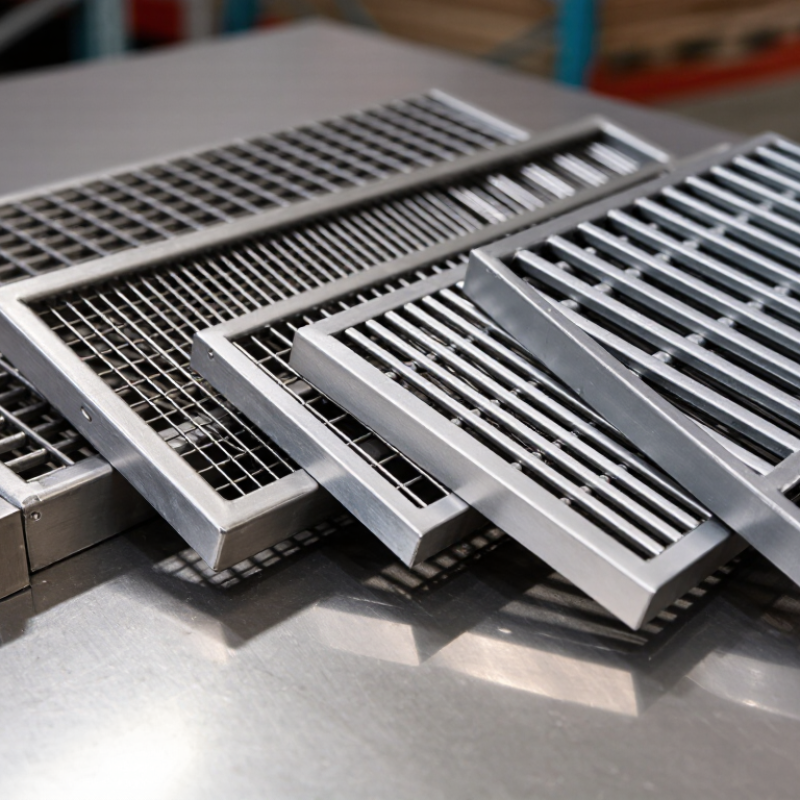
Table of Contents [Hide]
What Stainless Wire Grates Are and Where They Are Used
Stainless wire grates are open-grid panels made from stainless-steel wires joined by welding or weaving. Their gaps let air, water, and light pass through while the wires support loads. The exact capacity depends on wire diameter, spacing, panel size, and how the grate is supported. Check these details before choosing one. Appearance alone tells you little.
These grates appear in food-preparation areas, drainage channels, storage racks, equipment guards, and building walkways. In a commercial kitchen, a removable grate can keep trays above a sink while water drains below. On an outdoor platform, an open surface can shed rain instead of holding puddles. Grade selection matters: common stainless grades suit many indoor uses, while more corrosive or salty settings may call for a more corrosion-resistant alloy. Cleaning access matters too. Narrow openings can trap crumbs or residue. Stainless steel is not maintenance-free; harsh cleaners and neglected deposits can still cause trouble. I would verify the intended load, environment, and cleaning routine with the supplier, because a grate that looks sturdy may flex once installed.
What Are the Top Stainless Wire Grates for 2026? — What Stainless Wire Grates Are and Where They Are Used
Stainless wire grates are open-grid panels, covers, or conveyor surfaces made from joined or woven stainless steel wire. The options below represent common grate forms and applications; suitability depends on load, opening size, temperature, cleaning requirements, and exposure to chemicals or salt.
| Grate type | How it is made | Common stainless steel choices | Typical uses | Key characteristics | Selection considerations |
|---|---|---|---|---|---|
| Welded wire grate panel | Longitudinal and cross wires are resistance-welded at their intersections to form a rigid grid. | Type 304 is commonly used for general indoor and food-service environments; Type 316 is often selected for greater exposure to chlorides or marine conditions. | Equipment guards, shelving, access panels, machine platforms, and general-purpose industrial covers. | Rigid construction, consistent openings, and good visibility and airflow through the grid. | Check wire diameter, grid spacing, support span, edge finish, and the load the panel must carry. A wire panel should not be treated as a rated walking surface unless it has been designed and tested for that use. |
| Woven wire mesh grate | Wires are interlaced in a woven pattern. The mesh may be supplied as a sheet or formed into a framed panel or basket. | Type 304 is a common general-purpose option; Type 316 or 316L may be preferred where corrosion resistance is more demanding. | Filters, screens, drying racks, process baskets, and removable equipment inserts. | Can provide smaller openings than many rigid grid panels and allows air or liquid to pass through. | Match mesh opening and wire thickness to the smallest particles to be retained, cleaning method, and required stiffness. Fine mesh can clog more readily than open grid. |
| Crimped woven wire grate | Pre-crimped wires are woven together; the crimps help hold the wires in position and maintain regular openings. | Type 304 is widely used in general industrial settings; Type 316 is commonly considered for salt-rich or more corrosive environments. | Screening, ventilation panels, protective covers, and process equipment where a stable mesh pattern is needed. | Offers a regular open area and a more stable mesh structure than loosely arranged wire. | Confirm the mesh opening, wire size, edge support, and expected impact or vibration. Corrosion resistance depends on the exact environment, cleaning chemicals, and fabrication quality. |
| Stainless wire conveyor mesh | Woven or assembled stainless wire forms a moving belt that carries products through a process. | Type 304 is commonly used in many food-processing applications; Type 316 may be considered for exposure to chlorides or aggressive washdown conditions. | Food baking, cooling, washing, drying, heat-treatment, and other continuous-production lines. | Provides an open conveying surface that supports airflow, drainage, and heat transfer. | Specify belt width, wire pattern, operating temperature, product size, drive arrangement, and cleaning method. Confirm compatibility with applicable food-contact and sanitation requirements. |
| Removable wire-mesh drain cover | A framed stainless wire grid or mesh panel sits over a drain channel or opening. | Type 304 is often suitable for many indoor drainage areas; Type 316 can be a better candidate for coastal, brine, or chloride-exposed locations. | Commercial kitchens, washdown areas, food-processing rooms, and industrial floor-drain channels. | Allows water to drain while helping intercept larger debris; a removable design can simplify access for cleaning. | Check opening dimensions, support and load rating, slip resistance, debris size, and local drainage requirements. Fine openings may slow drainage or trap residue. |
Material note: Type 304 and Type 316 are common austenitic stainless steel grades. Type 316 generally offers better resistance to chloride-related corrosion than Type 304, but neither grade is immune to corrosion in every service condition. Verify the alloy, finish, fabrication, and suitability for the intended environment with the supplier.





