


- Home
- A-Z Catalogue
- Products
- Valves
- Cetop
- Manual Directional Valves
- Proportional Valves
- Poppet Valves
- High-Speed Linear Servo Valves
- All High-Speed Linear Servo Valves
- Cetop 10 (NG32) Two Stage Type High Speed Linear Servo Valves – LSVHG-10
- Cetop 10 (NG32) Two Stage Type High Speed Linear Servo Valves – LSVHG-10 (With Fail-Safe)
- Cetop 8 (NG25) Two Stage Type High Speed Linear Servo Valves – LSVHG-06
- Cetop 8 (NG25) Two Stage Type High Speed Linear Servo Valves – LSVHG-06 (With Fail-Safe)
- Cetop 7 (NG16) Two Stage Type High Speed Linear Servo Valves – LSVHG-04
- Cetop 7 (NG16) Two Stage Type High Speed Linear Servo Valves – LSVHG-04 (With Fail-Safe)
- Cetop 5 (NG10) Direct Type High Speed Linear Servo Valves – LSVG-03
- Cetop 5 (NG10) OBE Type Direct Operated Linear Servo Valves – LSVG-03-EH
- Cetop 3 (NG6) OBE Type Direct Operated Linear Servo Valves – LSVG-01-EH
- Pumps
- Pressure control
- Flow Control Valves
- Pressure Control Valves
- All Pressure Control Valves
- Brake Valves
- Direct Relief Valve
- Low Noise Solenoid Controlled Relief Valves
- Low Noise Pilot Operated Relief Valves
- Pilot Operated Relief Valves
- Pressure reducing and relieving valves
- Pressure reducing and check valves
- Pressure control valves
- Remote Control Relief Valves
- Solenoid Controlled Relief Valves – BSG
- Solenoid Controlled Relief Valves – BST
- Unloading relief valves
- Check valves
- Environmental
- Valves
- Hydraulic Systems
- Power pack
- About Us
- Contact
- Blog

Who Are the Top Slab Formwork Manufacturers in China?
Choosing among China’s top slab formwork manufacturers requires more than comparing prices or glossy catalogs. The right supplier should match the demands of your project, from floor dimensions and concrete loads to site access and reuse targets. Small details matter. Ask for technical drawings, load data, material specifications, and clear guidance on assembly. Check whether quoted panel sizes fit your slab layout without excessive cutting or awkward joints.
This guide explores manufacturers and the factors that help distinguish them, including production capability, quality control, customization, delivery support, and documented project experience. A smooth plywood face may reduce patching, while sturdy beams and connectors can make repeated cycles more predictable. Still, specifications on paper do not tell the whole story. Request samples, verify references where possible, and clarify how damaged parts or replacement components are handled. That extra work can feel tedious. It is often worthwhile.
“Top” is not a universal ranking. A supplier suited to a large infrastructure project may not be the best choice for a compact residential build. Compare slab formwork systems against your drawings, crew experience, schedule, and total cost across multiple pours. Even this approach has limits: site conditions change, and advertised reuse figures may depend on careful handling. Treat them as claims to verify, not promises. The sections ahead offer a practical starting point for assessing Chinese manufacturers with informed questions and realistic expectations.
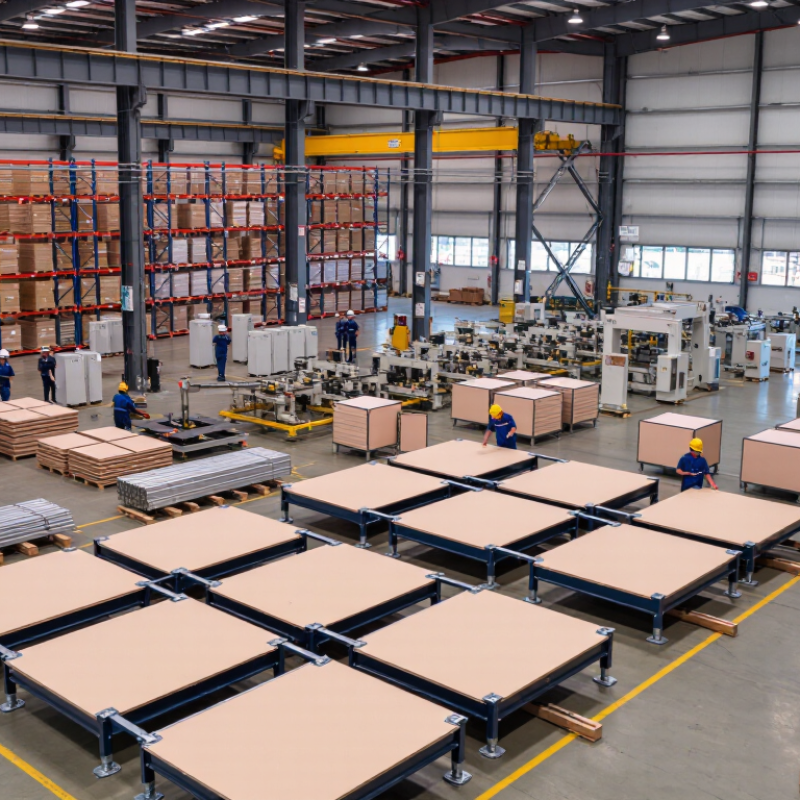
Table of Contents [Hide]
What Slab Formwork Is and How It Is Used
Slab formwork is a temporary support system that shapes and holds fresh concrete until it can carry its own weight. It usually includes a deck, beams, props, and connecting parts. The deck creates the slab’s underside, while props transfer loads to a stable surface below. It is temporary. But the setup must be precise.
On site, crews place and level the supports, install beams and deck panels, then check dimensions and joints before concrete is poured. Small gaps can leak cement paste. Uneven supports may create variations in slab thickness or surface level. Details matter.
During placement, workers monitor the formwork for movement and keep loads distributed as planned. After the concrete gains sufficient strength, the forms are removed according to the project’s requirements. Timing depends on factors such as concrete strength, span, temperature, and support conditions, so a fixed schedule does not suit every job.
A practical point is easy to overlook: tidy components do not guarantee a sound system. The supporting ground, connections, and installation quality matter just as much. A short site check can catch problems, though it cannot replace proper design and inspection.





