


- Home
- A-Z Catalogue
- Products
- Valves
- Cetop
- Manual Directional Valves
- Proportional Valves
- Poppet Valves
- High-Speed Linear Servo Valves
- All High-Speed Linear Servo Valves
- Cetop 10 (NG32) Two Stage Type High Speed Linear Servo Valves – LSVHG-10
- Cetop 10 (NG32) Two Stage Type High Speed Linear Servo Valves – LSVHG-10 (With Fail-Safe)
- Cetop 8 (NG25) Two Stage Type High Speed Linear Servo Valves – LSVHG-06
- Cetop 8 (NG25) Two Stage Type High Speed Linear Servo Valves – LSVHG-06 (With Fail-Safe)
- Cetop 7 (NG16) Two Stage Type High Speed Linear Servo Valves – LSVHG-04
- Cetop 7 (NG16) Two Stage Type High Speed Linear Servo Valves – LSVHG-04 (With Fail-Safe)
- Cetop 5 (NG10) Direct Type High Speed Linear Servo Valves – LSVG-03
- Cetop 5 (NG10) OBE Type Direct Operated Linear Servo Valves – LSVG-03-EH
- Cetop 3 (NG6) OBE Type Direct Operated Linear Servo Valves – LSVG-01-EH
- Pumps
- Pressure control
- Flow Control Valves
- Pressure Control Valves
- All Pressure Control Valves
- Brake Valves
- Direct Relief Valve
- Low Noise Solenoid Controlled Relief Valves
- Low Noise Pilot Operated Relief Valves
- Pilot Operated Relief Valves
- Pressure reducing and relieving valves
- Pressure reducing and check valves
- Pressure control valves
- Remote Control Relief Valves
- Solenoid Controlled Relief Valves – BSG
- Solenoid Controlled Relief Valves – BST
- Unloading relief valves
- Check valves
- Environmental
- Valves
- Hydraulic Systems
- Power pack
- About Us
- Contact
- Blog

What Are the Top Polymer PE Masterbatch Types in 2026?
What Are the Top Polymer Pe Masterbatch Types in 2026? The answer depends on the product, not just the color chart. Polymer Pe Masterbatch is used to add color, improve processing, or introduce selected performance features to polyethylene products. Common categories include black, white, and color masterbatches, alongside additive and mineral-filled grades. Each serves a different purpose. The choice matters.
Black masterbatch can support UV protection and consistent coloration, while white grades often use titanium dioxide for opacity and brightness. Color concentrates help manufacturers match a target shade, but results depend on the base resin, let-down ratio, and processing conditions. Additive masterbatches may provide slip, antistatic, antioxidant, or other properties. Mineral-filled grades can adjust stiffness, surface feel, or material cost, although they may also affect impact strength and appearance. Details count.
A neat ranking can mislead. There is no single “top” type for every film, pipe, sheet, or molded part. Buyers should compare carrier-resin compatibility, pigment or additive dispersion, dosage, batch consistency, and technical documentation. Ask suppliers for relevant test data, then validate the grade on the actual line. Small trials matter. A sample that looks right in a datasheet may behave differently under real heat, shear, and cooling conditions. This guide examines the major PE masterbatch types expected to matter in 2026, where each fits, and what to verify before choosing one. Some trade-offs are easy to miss.
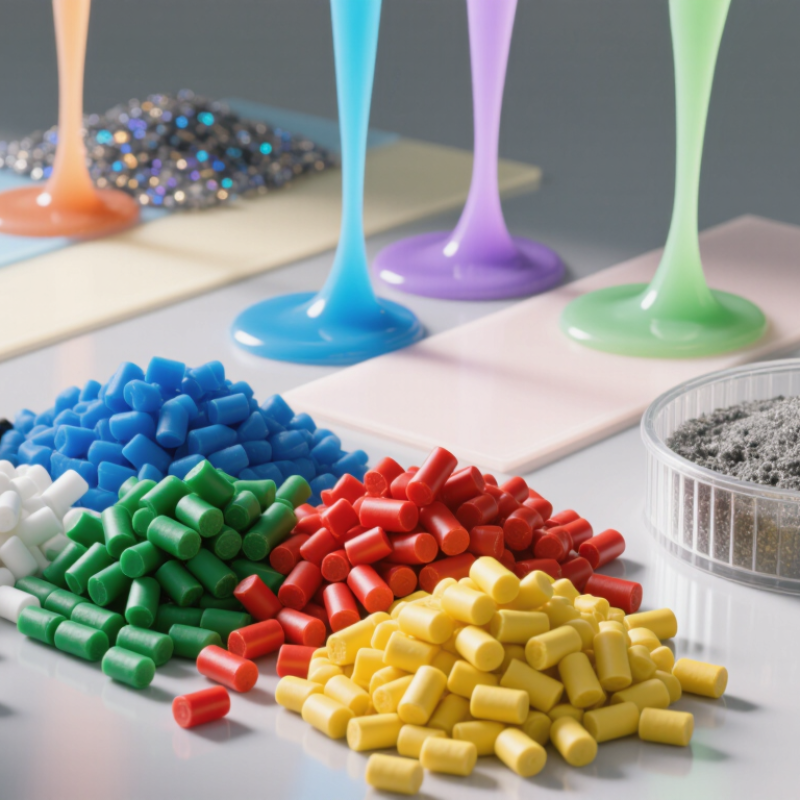
Table of Contents [Hide]
What Polyethylene Masterbatch Is and How It Is Made
Polyethylene (PE) masterbatch is a concentrated blend of pigments or functional additives carried in polyethylene resin. It lets manufacturers add color or specific properties during plastic processing, rather than handling fine powders directly. Common ingredients include colorants, UV stabilizers, antioxidants, and processing aids. The carrier resin should suit the base PE and the intended process. A mismatch can affect flow, surface quality, or additive distribution. Not a finished product. Masterbatch is typically supplied as small pellets for controlled feeding into an extruder or molding machine.
Production starts with selecting and weighing the carrier resin and additives. The materials are premixed, then fed into a compounding extruder, where heat and screw action melt and disperse them. The molten blend is cooled, often as strands, and cut into pellets. Process conditions vary with the formulation. One detail is easy to overlook: a recipe can look sound on paper, yet uneven dispersion may leave visible specks in a molded sample. Manufacturers can check pellet consistency and test sample plaques for color, flow, or performance. Those checks help, but results still depend on accurate dosing and suitable processing conditions. Small details matter.





