


- Home
- A-Z Catalogue
- Products
- Valves
- Cetop
- Manual Directional Valves
- Proportional Valves
- Poppet Valves
- High-Speed Linear Servo Valves
- All High-Speed Linear Servo Valves
- Cetop 10 (NG32) Two Stage Type High Speed Linear Servo Valves – LSVHG-10
- Cetop 10 (NG32) Two Stage Type High Speed Linear Servo Valves – LSVHG-10 (With Fail-Safe)
- Cetop 8 (NG25) Two Stage Type High Speed Linear Servo Valves – LSVHG-06
- Cetop 8 (NG25) Two Stage Type High Speed Linear Servo Valves – LSVHG-06 (With Fail-Safe)
- Cetop 7 (NG16) Two Stage Type High Speed Linear Servo Valves – LSVHG-04
- Cetop 7 (NG16) Two Stage Type High Speed Linear Servo Valves – LSVHG-04 (With Fail-Safe)
- Cetop 5 (NG10) Direct Type High Speed Linear Servo Valves – LSVG-03
- Cetop 5 (NG10) OBE Type Direct Operated Linear Servo Valves – LSVG-03-EH
- Cetop 3 (NG6) OBE Type Direct Operated Linear Servo Valves – LSVG-01-EH
- Pumps
- Pressure control
- Flow Control Valves
- Pressure Control Valves
- All Pressure Control Valves
- Brake Valves
- Direct Relief Valve
- Low Noise Solenoid Controlled Relief Valves
- Low Noise Pilot Operated Relief Valves
- Pilot Operated Relief Valves
- Pressure reducing and relieving valves
- Pressure reducing and check valves
- Pressure control valves
- Remote Control Relief Valves
- Solenoid Controlled Relief Valves – BSG
- Solenoid Controlled Relief Valves – BST
- Unloading relief valves
- Check valves
- Environmental
- Valves
- Hydraulic Systems
- Power pack
- About Us
- Contact
- Blog

What Are the 2026 Top Types of Pneumatic Valves?
As automation becomes more connected in 2026, Pneumatic Valves remain essential for controlling compressed air safely and precisely. They direct, regulate, or stop airflow inside machinery. A small valve can influence an entire production cycle. In a packaging line, for example, a directional valve may move a cylinder within milliseconds. In a workshop, a pressure regulator can prevent unstable tool performance.
This guide examines the top types of pneumatic valves used across manufacturing, robotics, transportation, and process equipment. It covers directional control valves, solenoid valves, proportional valves, flow control valves, pressure relief valves, and check valves. Each type has a different operating purpose. Their performance depends on pressure range, response time, port size, seal material, and maintenance conditions. Installation quality matters too. Even an advanced valve may fail when moisture enters the air system.
Practical selection requires more than comparing catalog prices. Engineers should review air consumption, cycle frequency, actuator load, ambient temperature, and required safety functions. Trusted manufacturers normally provide technical drawings, operating limits, and material information. Independent testing and recognized industry standards also support better decisions. Still, product claims deserve careful checking. Marketing language can sound stronger than field results.
No single valve wins every application. That remains easy to forget. This 2026 overview offers a realistic comparison rather than a perfect ranking. Some recommendations may change as smart sensors, energy-saving designs, and digital diagnostics become more common. The right choice should balance reliability, serviceability, efficiency, and total operating cost.
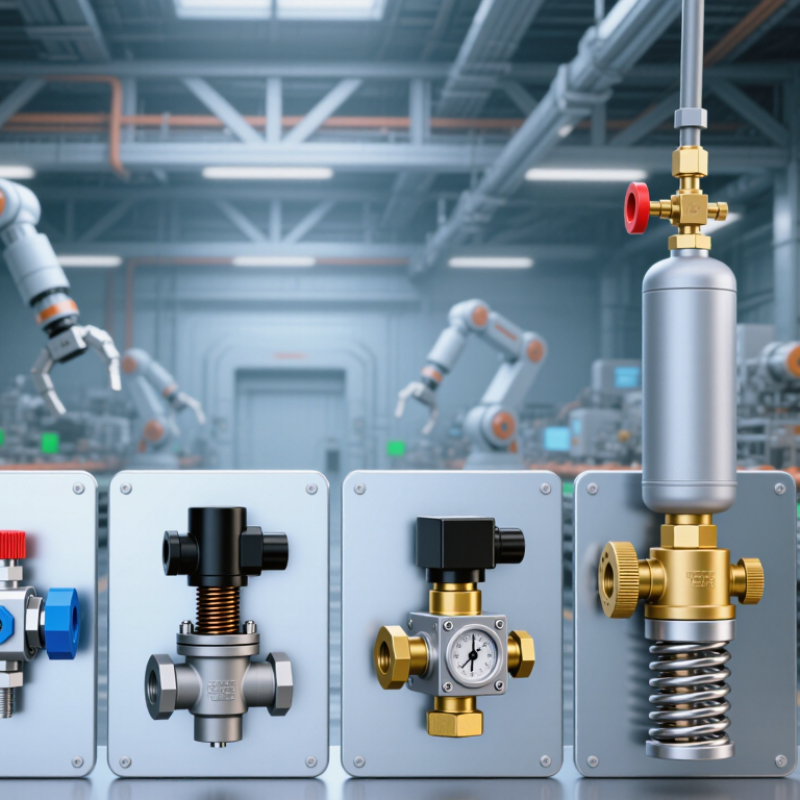
Table of Contents [Hide]
Pneumatic Valve Basics and Their Role in 2026 Automation
Pneumatic Valve Basics and Their Role in 2026 Automation
Pneumatic valves control compressed air by directing, regulating, or stopping its flow. In practical systems, this action moves cylinders, clamps, grippers, and rotary actuators. A clean signal can turn a slow production step into a repeatable motion.
The most common 2026 types include solenoid directional valves, proportional valves, flow-control valves, pressure-control valves, and check valves. Directional valves switch airflow between ports, often using two or three positions. Proportional valves adjust air pressure or flow with greater precision. They support gentle gripping and controlled actuator speed.
Pressure-control valves protect equipment from unstable supply conditions. Flow-control valves help tune cylinder movement near the end of a stroke. Check valves permit airflow in one direction and prevent unwanted reversal. Their small bodies can hide major effects. A poorly adjusted valve may cause vibration, noise, or uneven assembly.
Modern automation connects valves with sensors, controllers, and networked diagnostic tools. This connection helps maintenance teams detect pressure loss, delayed switching, or excessive cycle time. Still, digital monitoring cannot repair wet air or incorrect sizing. That part is often underestimated.
The classification is not always clean. Some valves combine flow, pressure, and directional functions in one assembly. Engineers should verify port size, response time, pressure range, seal material, and expected cycle frequency. A valve that works well on a test bench may perform differently beside dust, heat, and repeated impact. In 2026, practical selection remains a balance between precision, reliability, service access, and realistic plant conditions.