


- Home
- A-Z Catalogue
- Products
- Valves
- Cetop
- Manual Directional Valves
- Proportional Valves
- Poppet Valves
- High-Speed Linear Servo Valves
- All High-Speed Linear Servo Valves
- Cetop 10 (NG32) Two Stage Type High Speed Linear Servo Valves – LSVHG-10
- Cetop 10 (NG32) Two Stage Type High Speed Linear Servo Valves – LSVHG-10 (With Fail-Safe)
- Cetop 8 (NG25) Two Stage Type High Speed Linear Servo Valves – LSVHG-06
- Cetop 8 (NG25) Two Stage Type High Speed Linear Servo Valves – LSVHG-06 (With Fail-Safe)
- Cetop 7 (NG16) Two Stage Type High Speed Linear Servo Valves – LSVHG-04
- Cetop 7 (NG16) Two Stage Type High Speed Linear Servo Valves – LSVHG-04 (With Fail-Safe)
- Cetop 5 (NG10) Direct Type High Speed Linear Servo Valves – LSVG-03
- Cetop 5 (NG10) OBE Type Direct Operated Linear Servo Valves – LSVG-03-EH
- Cetop 3 (NG6) OBE Type Direct Operated Linear Servo Valves – LSVG-01-EH
- Pumps
- Pressure control
- Flow Control Valves
- Pressure Control Valves
- All Pressure Control Valves
- Brake Valves
- Direct Relief Valve
- Low Noise Solenoid Controlled Relief Valves
- Low Noise Pilot Operated Relief Valves
- Pilot Operated Relief Valves
- Pressure reducing and relieving valves
- Pressure reducing and check valves
- Pressure control valves
- Remote Control Relief Valves
- Solenoid Controlled Relief Valves – BSG
- Solenoid Controlled Relief Valves – BST
- Unloading relief valves
- Check valves
- Environmental
- Valves
- Hydraulic Systems
- Power pack
- About Us
- Contact
- Blog

Top 10 LED Tunnel Light Manufacturers for Global Buyers
Tunnel lighting is no longer a simple replacement for traditional lamps. A modern Led Tunnel Light must deliver stable visibility, controlled glare, efficient heat management, and reliable performance in dust, moisture, and vibration. Drivers need to recognize lane edges, reflective signs, and vehicles within seconds. The fixture must remain dependable above moving traffic.
The technical baseline is demanding. CIE 88:2004 and the PIARC Road Tunnels Manual emphasize luminance, adaptation, uniformity, glare control, and maintenance conditions. The U.S. Department of Energy has reported that LED systems can reduce lighting energy use by up to 75% compared with older technologies. That figure is useful, but tunnel projects rarely achieve it automatically. Poor controls, dirty lenses, and excessive output can erase part of the expected savings.
Dr. John D. Bullough, a recognized lighting researcher, offers a practical principle: “Tunnel lighting should be judged by visual performance, not brightness alone.” This idea guides our review of the Top 10 LED Tunnel Light Manufacturers for Global Buyers. We compare optical design, ingress protection, impact resistance, thermal construction, dimming systems, certifications, warranty terms, and documented field experience. Product brochures are not enough.
The ranking is not flawless. Regional standards, tunnel geometry, traffic speed, and maintenance budgets can change the best choice. A compact fixture may suit a short urban tunnel, while a high-output system may serve a long highway passage. Buyers should verify photometric files, testing records, and lifecycle assumptions before signing a purchase contract. Reliable light begins with evidence, not impressive claims.
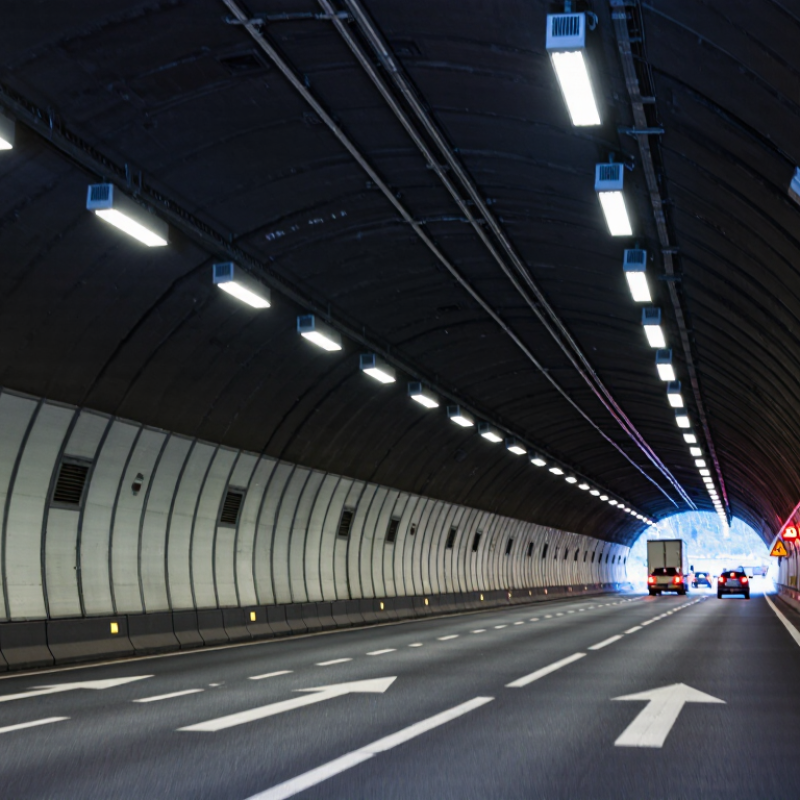
Table of Contents [Hide]
What Defines a Reliable LED Tunnel Light Manufacturer
Top 10 LED Tunnel Light Manufacturers for Global Buyers
What Defines a Reliable LED Tunnel Light Manufacturer
A reliable LED tunnel light manufacturer proves performance under harsh, continuous operating conditions. Its engineers should explain optical design, thermal management, driver selection, and maintenance access clearly. Look for verified photometric data, IP and IK ratings, surge protection, and documented electrical safety testing. The housing should resist dust, moisture, vibration, and temperature changes near tunnel entrances. Ask how light output changes after thousands of operating hours. Real evidence matters. Factory experience also matters. Manufacturers with tested tunnel projects often understand glare control, emergency lighting, and uneven road surfaces better than general lighting suppliers.
Reliability also depends on traceable production and responsive technical support. Check whether each batch receives inspection records and whether critical components have stable sourcing. A serious manufacturer should provide samples, installation guidance, warranty terms, and replacement procedures in plain language. However, a sample can look excellent while large-scale production varies. This is where buyer references and independent test reports become useful. No supplier is perfect. A dependable one admits limitations and explains corrective actions instead of making vague promises.
Tips: Request a complete test package, including photometric files, thermal results, ingress testing, and driver specifications. Confirm performance at the tunnel’s actual mounting height and temperature range. Review a real project’s maintenance records when possible. Compare measured results, not only catalogue claims. Ask who answers technical questions after installation. That detail often reveals the manufacturer’s true level of commitment.





