


- Home
- A-Z Catalogue
- Products
- Valves
- Cetop
- Manual Directional Valves
- Proportional Valves
- Poppet Valves
- High-Speed Linear Servo Valves
- All High-Speed Linear Servo Valves
- Cetop 10 (NG32) Two Stage Type High Speed Linear Servo Valves – LSVHG-10
- Cetop 10 (NG32) Two Stage Type High Speed Linear Servo Valves – LSVHG-10 (With Fail-Safe)
- Cetop 8 (NG25) Two Stage Type High Speed Linear Servo Valves – LSVHG-06
- Cetop 8 (NG25) Two Stage Type High Speed Linear Servo Valves – LSVHG-06 (With Fail-Safe)
- Cetop 7 (NG16) Two Stage Type High Speed Linear Servo Valves – LSVHG-04
- Cetop 7 (NG16) Two Stage Type High Speed Linear Servo Valves – LSVHG-04 (With Fail-Safe)
- Cetop 5 (NG10) Direct Type High Speed Linear Servo Valves – LSVG-03
- Cetop 5 (NG10) OBE Type Direct Operated Linear Servo Valves – LSVG-03-EH
- Cetop 3 (NG6) OBE Type Direct Operated Linear Servo Valves – LSVG-01-EH
- Pumps
- Pressure control
- Flow Control Valves
- Pressure Control Valves
- All Pressure Control Valves
- Brake Valves
- Direct Relief Valve
- Low Noise Solenoid Controlled Relief Valves
- Low Noise Pilot Operated Relief Valves
- Pilot Operated Relief Valves
- Pressure reducing and relieving valves
- Pressure reducing and check valves
- Pressure control valves
- Remote Control Relief Valves
- Solenoid Controlled Relief Valves – BSG
- Solenoid Controlled Relief Valves – BST
- Unloading relief valves
- Check valves
- Environmental
- Valves
- Hydraulic Systems
- Power pack
- About Us
- Contact
- Blog

What Are the Top Industrial Printing Systems in 2026?
Industrial Printing Systems are entering 2026 under pressure to deliver speed, consistency, and measurable sustainability. In a factory, this means a production line that prints thousands of labels, cartons, or technical parts without visible banding, unexpected downtime, or costly substrate waste. The strongest systems must combine reliable hardware, intelligent software, accurate color control, and responsive service support.
Market data shows why this technology deserves close attention. Smithers’ study, The Future of Digital Print for Packaging to 2028, forecasts digital packaging print value to grow from approximately $22.3 billion in 2023 to $36.2 billion by 2028. Grand View Research also identifies steady expansion in industrial inkjet printing through the decade. These figures suggest strong demand, but growth alone does not identify the best machine. A faster press may consume more energy. A cheaper system may require expensive maintenance. Real performance is often decided during the night shift.
Frank Romano, a respected printing-industry analyst, has captured this transition clearly: “Digital printing is a process, not a product.” His point remains important in 2026. The best Industrial Printing Systems should be judged by complete workflow results, not impressive specifications alone. This comparison examines inkjet, toner, hybrid, and specialized systems across productivity, print quality, automation, operating costs, substrate flexibility, and environmental performance.
Some conclusions will remain imperfect. Vendor data is not always measured consistently. Regional service quality can also change the buying decision. Still, production evidence, independent market reports, and operator experience provide a practical foundation for identifying the leading systems available today.
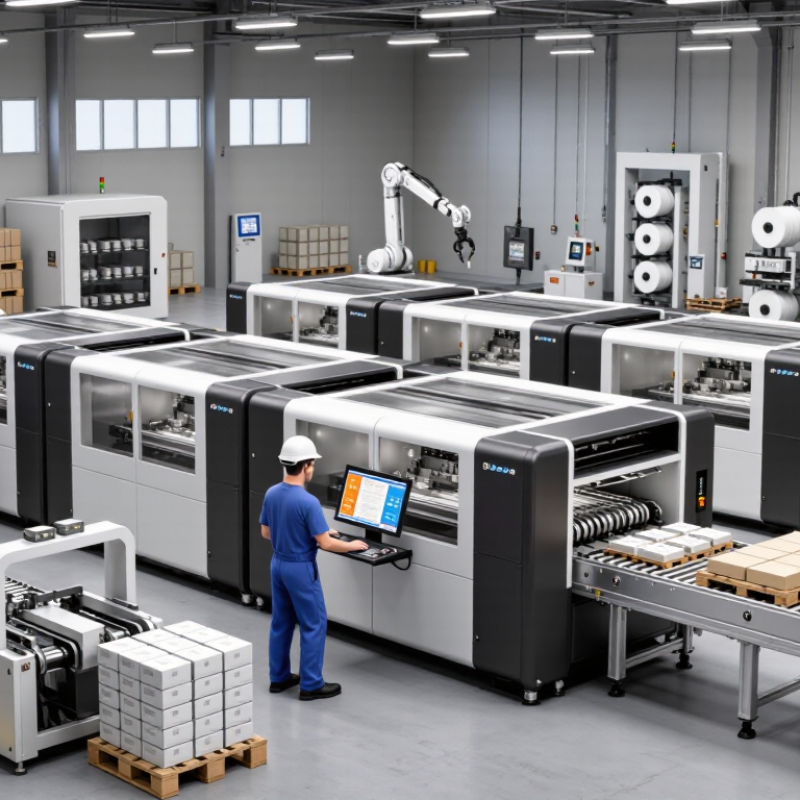
Table of Contents [Hide]
Industrial Printing Systems: Definition, Scope, and Core Technologies
What Are the Top Industrial Printing Systems in 2026?
Industrial printing systems are production machines built for continuous, accurate, and repeatable output. Their scope includes packaging, labels, textiles, metal parts, building materials, and electronic components. Unlike office printers, they connect with curing units, inspection cameras, dryers, conveyors, and factory software. The best system depends on material, volume, image quality, and required production speed.
Core technologies include inkjet, electrophotographic, flexographic, screen, and thermal transfer printing. Inkjet supports variable data and direct-to-object decoration. Electrophotographic systems deliver sharp short runs with controlled color. Flexographic equipment remains valuable for high-volume packaging. UV, water-based, solvent, and resin inks offer different adhesion and durability. However, ink performance can change with humidity, surface energy, and curing temperature. A specification sheet may look impressive, yet real factory conditions can expose hidden limits.
Tips: Test the actual substrate before purchasing. Measure setup time, waste, maintenance access, and operator training. Inspect fine text under production lighting. Ask for repeatability data, not only maximum speed. No system wins everywhere. A faster line may create more rejected pieces. In production reviews, teams sometimes focus too heavily on resolution and overlook cleaning routines, spare parts, and workflow integration. That is a costly mistake. Better decisions come from controlled trials, documented measurements, and honest feedback from operators.





