


- Home
- A-Z Catalogue
- Products
- Valves
- Cetop
- Manual Directional Valves
- Proportional Valves
- Poppet Valves
- High-Speed Linear Servo Valves
- All High-Speed Linear Servo Valves
- Cetop 10 (NG32) Two Stage Type High Speed Linear Servo Valves – LSVHG-10
- Cetop 10 (NG32) Two Stage Type High Speed Linear Servo Valves – LSVHG-10 (With Fail-Safe)
- Cetop 8 (NG25) Two Stage Type High Speed Linear Servo Valves – LSVHG-06
- Cetop 8 (NG25) Two Stage Type High Speed Linear Servo Valves – LSVHG-06 (With Fail-Safe)
- Cetop 7 (NG16) Two Stage Type High Speed Linear Servo Valves – LSVHG-04
- Cetop 7 (NG16) Two Stage Type High Speed Linear Servo Valves – LSVHG-04 (With Fail-Safe)
- Cetop 5 (NG10) Direct Type High Speed Linear Servo Valves – LSVG-03
- Cetop 5 (NG10) OBE Type Direct Operated Linear Servo Valves – LSVG-03-EH
- Cetop 3 (NG6) OBE Type Direct Operated Linear Servo Valves – LSVG-01-EH
- Pumps
- Pressure control
- Flow Control Valves
- Pressure Control Valves
- All Pressure Control Valves
- Brake Valves
- Direct Relief Valve
- Low Noise Solenoid Controlled Relief Valves
- Low Noise Pilot Operated Relief Valves
- Pilot Operated Relief Valves
- Pressure reducing and relieving valves
- Pressure reducing and check valves
- Pressure control valves
- Remote Control Relief Valves
- Solenoid Controlled Relief Valves – BSG
- Solenoid Controlled Relief Valves – BST
- Unloading relief valves
- Check valves
- Environmental
- Valves
- Hydraulic Systems
- Power pack
- About Us
- Contact
- Blog

Top Industrial Panel Computer Suppliers for Global Buyers
Industrial Panel Computer suppliers now serve factories where operators need clear, dependable access to machine data. Buyers compare more than screen size. They assess processor performance, enclosure protection, operating temperature, touch response, mounting options, and long-term product support. A panel mounted beside a packaging line faces dust, vibration, and frequent cleaning. A unit used in a control room may have very different demands.
Market figures offer useful context, but they need careful interpretation. Grand View Research valued the global industrial PC market at approximately USD 5.45 billion in 2023 and projected a 5.6% compound annual growth rate from 2024 to 2030. This category is broader than panel computers, so it should not be treated as a panel-PC sales forecast. Still, it reflects sustained interest in computing at industrial sites. Gartner research vice president John-David Lovelock forecast, “By 2025, 75% of enterprise-generated data will be created and processed outside the traditional centralized data center or cloud.” Industrial Panel Computer systems can support that edge shift by placing computing and visualization close to equipment. The forecast is not a guarantee, of course.
Supplier choice remains practical, not just technical. Buyers should verify specifications, certifications, warranty terms, regional service coverage, and spare-part availability against their own application. A polished datasheet is not enough. This guide compares leading suppliers for global buyers, while noting that product ranges and support can vary by region. No single vendor is right for every factory. That point is easy to overlook.
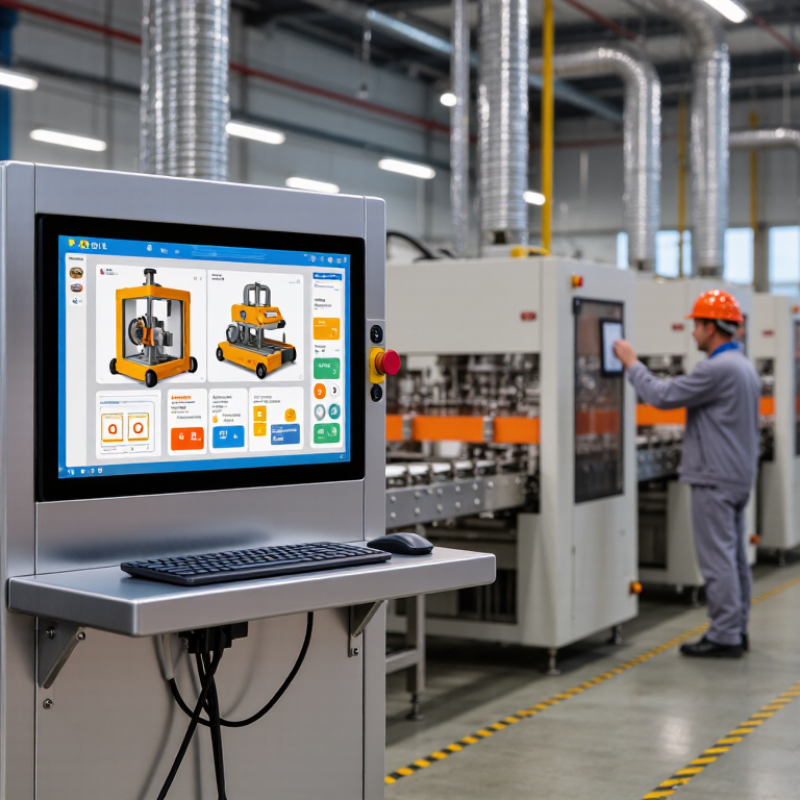
Table of Contents [Hide]
Global Industrial Panel Computer Suppliers: Product Types and Market Roles
Top Industrial Panel Computer Suppliers for Global Buyers
Global industrial panel computer suppliers serve different roles, even when their product pages look similar. Some build complete panel PCs, combining a display, touch interface, processor, and enclosure. Others focus on open-frame units for machine builders, or provide rugged, fanless systems for dusty production floors. Fit matters. Screen sizes, mounting patterns, and operating temperature ranges can vary substantially.
Suppliers also differ in how much engineering support they provide. A system integrator may adapt I/O ports or install a customer’s software image, while a component-focused supplier may offer more standard configurations. Buyers should check details such as sunlight readability, glove-friendly touch response, cable access, and the availability of replacement parts. A bright display is useful near a factory window, but brightness alone does not prove readability at every angle.
For multi-site projects, regional service coverage and consistent configuration can matter as much as initial price. Ask for lifecycle information, warranty terms, and documentation for the exact model being quoted. Details matter. A specification sheet can still leave questions about real-world vibration or long-term parts availability. Requesting a sample and testing it with the intended mount, cables, and application can expose gaps before deployment. That takes time, and it may feel excessive for a small order, but assumptions about factory conditions are often imperfect.





