


- Home
- A-Z Catalogue
- Products
- Valves
- Cetop
- Manual Directional Valves
- Proportional Valves
- Poppet Valves
- High-Speed Linear Servo Valves
- All High-Speed Linear Servo Valves
- Cetop 10 (NG32) Two Stage Type High Speed Linear Servo Valves – LSVHG-10
- Cetop 10 (NG32) Two Stage Type High Speed Linear Servo Valves – LSVHG-10 (With Fail-Safe)
- Cetop 8 (NG25) Two Stage Type High Speed Linear Servo Valves – LSVHG-06
- Cetop 8 (NG25) Two Stage Type High Speed Linear Servo Valves – LSVHG-06 (With Fail-Safe)
- Cetop 7 (NG16) Two Stage Type High Speed Linear Servo Valves – LSVHG-04
- Cetop 7 (NG16) Two Stage Type High Speed Linear Servo Valves – LSVHG-04 (With Fail-Safe)
- Cetop 5 (NG10) Direct Type High Speed Linear Servo Valves – LSVG-03
- Cetop 5 (NG10) OBE Type Direct Operated Linear Servo Valves – LSVG-03-EH
- Cetop 3 (NG6) OBE Type Direct Operated Linear Servo Valves – LSVG-01-EH
- Pumps
- Pressure control
- Flow Control Valves
- Pressure Control Valves
- All Pressure Control Valves
- Brake Valves
- Direct Relief Valve
- Low Noise Solenoid Controlled Relief Valves
- Low Noise Pilot Operated Relief Valves
- Pilot Operated Relief Valves
- Pressure reducing and relieving valves
- Pressure reducing and check valves
- Pressure control valves
- Remote Control Relief Valves
- Solenoid Controlled Relief Valves – BSG
- Solenoid Controlled Relief Valves – BST
- Unloading relief valves
- Check valves
- Environmental
- Valves
- Hydraulic Systems
- Power pack
- About Us
- Contact
- Blog

Top 10 Types of HDD Machines for Global Buyers?
Choosing the right HDD machine can shape productivity, risk, and project cost. Global buyers face different ground conditions, climates, standards, and service expectations. This guide examines ten major HDD machine types used across trenchless construction. They include compact units for residential roads, high-powered rigs for deep crossings, and specialized systems for difficult alignments. Each type responds to a different engineering problem. A rocky urban route needs controlled torque and accurate steering. A long river crossing demands stable pullback force and reliable fluid management. Small details matter. Torque, pullback force, rod length, drilling angle, and mud recycling capacity affect results. Operators also need clear displays, accessible maintenance points, and tested emergency controls. This practical view helps buyers connect brochures with actual jobsite demands.
The discussion draws on equipment specifications, contractor experience, and established industry practices. It considers manufacturer reputation, warranty terms, operator training, and parts availability. Independent test records can strengthen confidence. Safety documentation matters too. Compliance should be verified locally before purchase or import. Yet published figures rarely show the whole story. Real performance varies. Buyers should request references from comparable projects and inspect service arrangements. A machine rated for impressive pullback may still struggle in unstable clay. Supplier support can determine whether a minor fault becomes a costly delay. Training, spare parts, and remote assistance deserve attention. These factors often matter more than a low purchase price. The list is useful, but it is not absolute. Soil conditions, utility density, and local rules should guide the final choice. That assumption can fail. Readers can compare machine classes with greater clarity. The goal is informed selection, not a universal ranking.
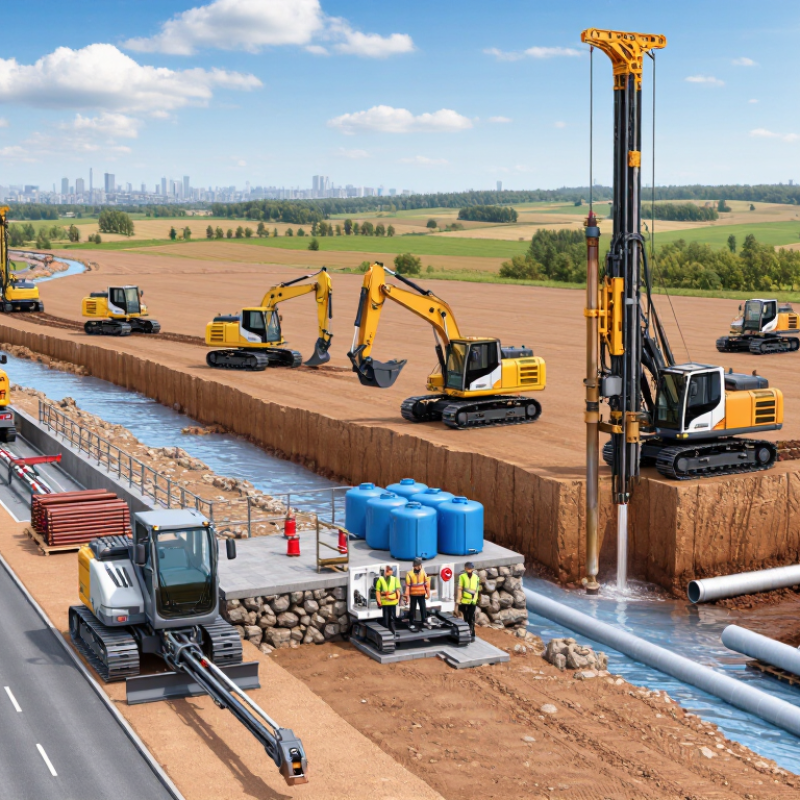
Table of Contents [Hide]
What Is an HDD Machine and How Does It Work?
Top 10 Types of HDD Machines for Global Buyers?
What Is an HDD Machine and How Does It Work?
A horizontal directional drilling (HDD) machine installs underground pipes, cables, and conduits with limited surface disruption. It usually includes a drilling rig, drill rods, a locating system, mixing equipment, and a slurry pump. The process begins with a pilot bore along a planned underground path. A steerable drilling head creates this narrow channel. An operator tracks its position from the surface and adjusts the head when soil or depth changes.
After completing the pilot bore, the crew enlarges the hole with a reamer. The final pipe is then pulled through the prepared bore. Drilling fluid cools the cutting head, carries soil away, and supports the bore wall. Clay, sand, gravel, and rock each require different tooling and pressure settings. Real sites are less tidy than brochures. Ground conditions can change within a few meters, so production estimates need caution.
Tips: Check maximum pullback force, torque, drilling diameter, rod length, and locating accuracy before buying. Ask for verified performance data and operator training details. A larger machine is not always better. Access limits, transport costs, and maintenance support can matter more. I would also inspect fluid recycling options and emergency controls. Small omissions here can create expensive delays. Proper planning, experienced supervision, and site-specific testing improve reliability across the ten main HDD machine categories.