


- Home
- A-Z Catalogue
- Products
- Valves
- Cetop
- Manual Directional Valves
- Proportional Valves
- Poppet Valves
- High-Speed Linear Servo Valves
- All High-Speed Linear Servo Valves
- Cetop 10 (NG32) Two Stage Type High Speed Linear Servo Valves – LSVHG-10
- Cetop 10 (NG32) Two Stage Type High Speed Linear Servo Valves – LSVHG-10 (With Fail-Safe)
- Cetop 8 (NG25) Two Stage Type High Speed Linear Servo Valves – LSVHG-06
- Cetop 8 (NG25) Two Stage Type High Speed Linear Servo Valves – LSVHG-06 (With Fail-Safe)
- Cetop 7 (NG16) Two Stage Type High Speed Linear Servo Valves – LSVHG-04
- Cetop 7 (NG16) Two Stage Type High Speed Linear Servo Valves – LSVHG-04 (With Fail-Safe)
- Cetop 5 (NG10) Direct Type High Speed Linear Servo Valves – LSVG-03
- Cetop 5 (NG10) OBE Type Direct Operated Linear Servo Valves – LSVG-03-EH
- Cetop 3 (NG6) OBE Type Direct Operated Linear Servo Valves – LSVG-01-EH
- Pumps
- Pressure control
- Flow Control Valves
- Pressure Control Valves
- All Pressure Control Valves
- Brake Valves
- Direct Relief Valve
- Low Noise Solenoid Controlled Relief Valves
- Low Noise Pilot Operated Relief Valves
- Pilot Operated Relief Valves
- Pressure reducing and relieving valves
- Pressure reducing and check valves
- Pressure control valves
- Remote Control Relief Valves
- Solenoid Controlled Relief Valves – BSG
- Solenoid Controlled Relief Valves – BST
- Unloading relief valves
- Check valves
- Environmental
- Valves
- Hydraulic Systems
- Power pack
- About Us
- Contact
- Blog

Top Laser Cladding Machine Manufacturers Worldwide?
Choosing among the top Laser Cladding machine manufacturers worldwide requires more than comparing laser power or machine price. A reliable evaluation considers engineering experience, process stability, service coverage, and documented results. This guide introduces leading manufacturers through practical criteria. These include laser source quality, powder feeding accuracy, scanning control, enclosure design, and software usability.
Real production details matter. A manufacturer may advertise a 6 kW laser, yet stable deposition depends on beam control and thermal management. Look for evidence from turbine repair, mining equipment, automotive tooling, and heavy industrial applications. Examine case studies closely. Check coating thickness, dilution rate, hardness, deposition speed, and post-processing requirements. Independent testing and customer references can reveal more than polished brochures.
Service is equally important. Spare parts, operator training, remote diagnostics, and local technical support affect long-term value. Certifications and quality systems also strengthen confidence, but they do not replace factory visits or sample trials. There is no universal best manufacturer. A compact workshop may need flexibility, while a large repair center may prioritize automation and throughput. Published specifications can be incomplete. That deserves caution. Even experienced buyers may overlook operator skill, powder handling, or fixture design. Therefore, this overview focuses on balanced evidence rather than simple rankings, helping readers identify manufacturers that match their materials, production goals, budget, and regional support needs.
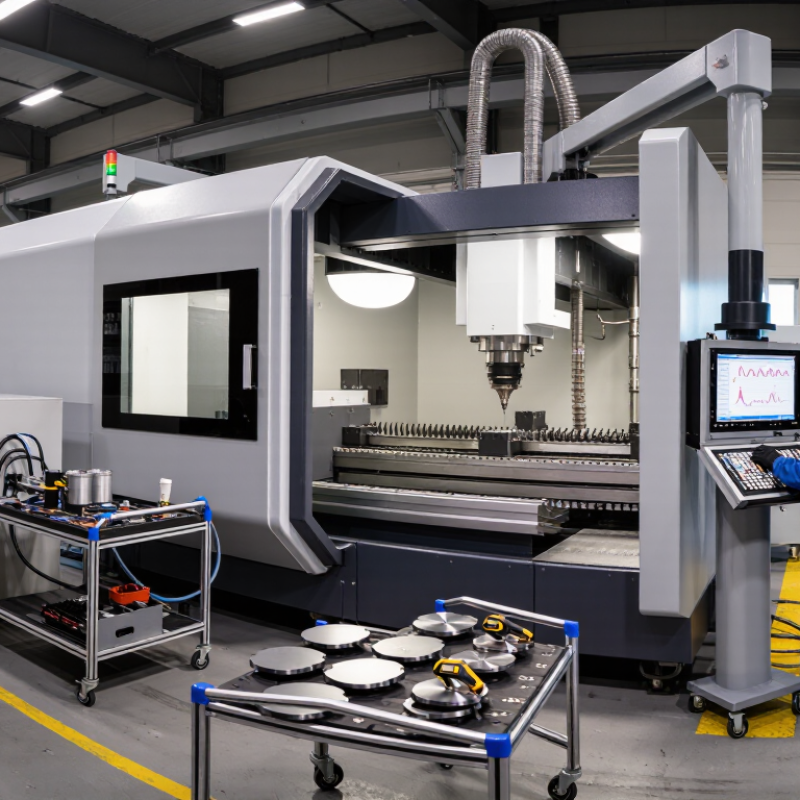
Table of Contents [Hide]
What Is a Laser Cladding Machine?
A laser cladding machine deposits protective metal onto a component using a focused laser beam. The system feeds powder or wire into the molten pool. The laser melts the material, while the base part remains mostly solid. This creates a dense metallurgical bond, not a simple painted coating.
The machine usually includes a laser source, powder feeder, motion platform, shielding gas system, and control software. Common applications include turbine repair, mining tools, molds, shafts, and oilfield components. According to MarketsandMarkets, the global laser cladding equipment market was valued at approximately USD 0.5 billion in 2023. The report also forecasts strong growth through 2028, supported by demand for repair and surface protection. Grand View Research identifies aerospace, energy, and industrial manufacturing as major application areas. Yet, market forecasts are not guarantees. Material waste, operator skill, and process calibration can change the final return.
Tips: Match the laser power to the coating material and part geometry. Check powder flow before production. Measure hardness and bonding strength after cladding. A shiny surface can still hide pores. It happens. Test cross-sections when failure costs are high. Keep shielding gas stable, because oxidation may weaken the deposit. Choose machines with precise motion control and traceable process records. In practice, the “best” machine depends on layer thickness, repair size, alloy behavior, and production volume. Cost alone gives an incomplete answer.





