- Home
- A-Z Catalogue
- Products
- Valves
- Cetop
- Manual Directional Valves
- Proportional Valves
- Poppet Valves
- High-Speed Linear Servo Valves
- All High-Speed Linear Servo Valves
- Cetop 10 (NG32) Two Stage Type High Speed Linear Servo Valves – LSVHG-10
- Cetop 10 (NG32) Two Stage Type High Speed Linear Servo Valves – LSVHG-10 (With Fail-Safe)
- Cetop 8 (NG25) Two Stage Type High Speed Linear Servo Valves – LSVHG-06
- Cetop 8 (NG25) Two Stage Type High Speed Linear Servo Valves – LSVHG-06 (With Fail-Safe)
- Cetop 7 (NG16) Two Stage Type High Speed Linear Servo Valves – LSVHG-04
- Cetop 7 (NG16) Two Stage Type High Speed Linear Servo Valves – LSVHG-04 (With Fail-Safe)
- Cetop 5 (NG10) Direct Type High Speed Linear Servo Valves – LSVG-03
- Cetop 5 (NG10) OBE Type Direct Operated Linear Servo Valves – LSVG-03-EH
- Cetop 3 (NG6) OBE Type Direct Operated Linear Servo Valves – LSVG-01-EH
- Pumps
- Pressure control
- Flow Control Valves
- Pressure Control Valves
- All Pressure Control Valves
- Brake Valves
- Direct Relief Valve
- Low Noise Solenoid Controlled Relief Valves
- Low Noise Pilot Operated Relief Valves
- Pilot Operated Relief Valves
- Pressure reducing and relieving valves
- Pressure reducing and check valves
- Pressure control valves
- Remote Control Relief Valves
- Solenoid Controlled Relief Valves – BSG
- Solenoid Controlled Relief Valves – BST
- Unloading relief valves
- Check valves
- Environmental
- Valves
- Hydraulic Systems
- Power pack
- About Us
- Contact
- Blog

What Are the Top Extruder Machine Parts?
An extruder can appear simple from the outside: material enters, heat and pressure build, and a shaped product emerges. Inside, however, each component affects output, consistency, and maintenance. Extruder Machine Parts such as the screw, barrel, feed throat, gearbox, heaters, screen changer, and die work as a connected system. A worn screw flight or poorly controlled barrel temperature can change melt quality, even when the rest of the line seems sound.
The scale of plastics processing makes these details worth understanding. PlasticsEurope’s Plastics – the Fast Facts 2024 report estimates global plastics production at 413.8 million tonnes in 2023. That figure describes production, not extruder sales, but it shows the enormous volume of material that processing equipment must handle. For buyers and operators, part selection should reflect resin type, throughput, operating temperature, and cleaning requirements—not just the machine’s purchase price. Small details matter.
This guide examines the parts that most directly shape extrusion performance, explains what each one does, and identifies practical signs of wear. It also considers how screw design, barrel condition, and die geometry interact during a production run. No single component is “top” for every application; a PVC profile line and a flexible-film line have different priorities. That distinction is easy to miss. Specific maintenance intervals and replacement choices should always be checked against the machine manufacturer’s documentation and the material supplier’s processing guidance.
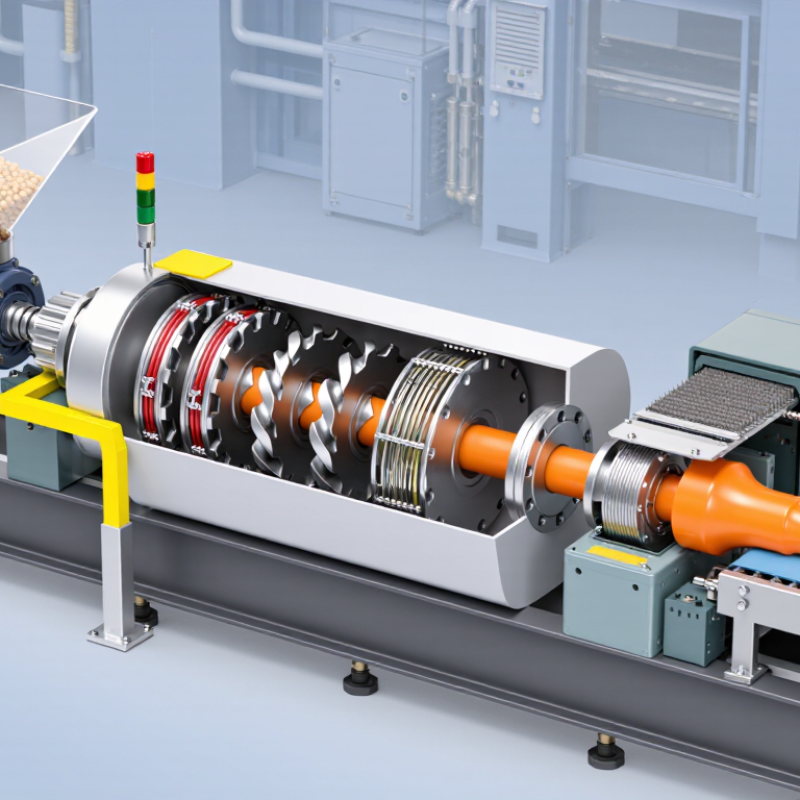
Table of Contents [Hide]
Core Components and Operating Principle of an Extruder Machine
What Are the Top Extruder Machine Parts?
An extruder turns solid feed into a continuous stream of shaped material. Its core parts work together: the hopper feeds material into a heated barrel, while a motor and gearbox rotate the screw inside it. The screw’s flights move material forward and gradually compress it. The path is simple.
Heat comes from barrel heaters and friction created as material moves along the screw. The screw also helps mix the melt, though results depend on its geometry and the material being processed. Near the barrel outlet, a screen pack can catch contaminants and help stabilize flow. The die then shapes the pressurized melt into a profile, sheet, or strand. Not always. Temperature sensors and pressure readings help operators spot changes before they become visible in the product.
In practice, stable output depends on more than setting a heater temperature. Operators monitor melt pressure, motor load, and the appearance of the product. A rough surface or uneven strand may point to inconsistent feeding, worn screw components, or temperature variation. These clues are useful, but they do not identify a fault on their own. I would treat quick adjustments cautiously; changing several settings at once can hide the real cause. Regular inspection of the screw, barrel, heaters, and die helps maintain dependable operation.