


- Home
- A-Z Catalogue
- Products
- Valves
- Cetop
- Manual Directional Valves
- Proportional Valves
- Poppet Valves
- High-Speed Linear Servo Valves
- All High-Speed Linear Servo Valves
- Cetop 10 (NG32) Two Stage Type High Speed Linear Servo Valves – LSVHG-10
- Cetop 10 (NG32) Two Stage Type High Speed Linear Servo Valves – LSVHG-10 (With Fail-Safe)
- Cetop 8 (NG25) Two Stage Type High Speed Linear Servo Valves – LSVHG-06
- Cetop 8 (NG25) Two Stage Type High Speed Linear Servo Valves – LSVHG-06 (With Fail-Safe)
- Cetop 7 (NG16) Two Stage Type High Speed Linear Servo Valves – LSVHG-04
- Cetop 7 (NG16) Two Stage Type High Speed Linear Servo Valves – LSVHG-04 (With Fail-Safe)
- Cetop 5 (NG10) Direct Type High Speed Linear Servo Valves – LSVG-03
- Cetop 5 (NG10) OBE Type Direct Operated Linear Servo Valves – LSVG-03-EH
- Cetop 3 (NG6) OBE Type Direct Operated Linear Servo Valves – LSVG-01-EH
- Pumps
- Pressure control
- Flow Control Valves
- Pressure Control Valves
- All Pressure Control Valves
- Brake Valves
- Direct Relief Valve
- Low Noise Solenoid Controlled Relief Valves
- Low Noise Pilot Operated Relief Valves
- Pilot Operated Relief Valves
- Pressure reducing and relieving valves
- Pressure reducing and check valves
- Pressure control valves
- Remote Control Relief Valves
- Solenoid Controlled Relief Valves – BSG
- Solenoid Controlled Relief Valves – BST
- Unloading relief valves
- Check valves
- Environmental
- Valves
- Hydraulic Systems
- Power pack
- About Us
- Contact
- Blog

Who Is the Top Electronic Component Assembler in China?
Choosing the top Electronic Component Assembler in China is not a simple matter of comparing factory size or quoted prices. A polished website tells only part of the story. Buyers need evidence of consistent workmanship, clear communication, dependable lead times, and production capacity that matches their actual requirements. One missed detail can matter: a component’s orientation, a solder joint under magnification, or a label that does not match the purchase order.
IPC president and CEO John Mitchell has emphasized the importance of skilled workers and resilient electronics supply chains. That perspective offers a useful lens for this comparison: an assembler’s value depends on the people, processes, and controls behind each shipment. A top provider should explain how it manages inspection, traceability, material sourcing, and changes to customer specifications—not simply promise “high quality.” Ask for relevant certifications, sample inspection records, and references for comparable projects. Verify claims directly.
There is no universal winner. The right partner for a small prototype may not suit a high-volume production run. Price matters, but so do response time, engineering support, and how clearly a supplier handles problems. And sometimes, the first conversation feels reassuring before the hard questions begin. That is worth noticing. This guide compares practical signals to help buyers assess Chinese assemblers with care, rather than treating a bold ranking as proof.
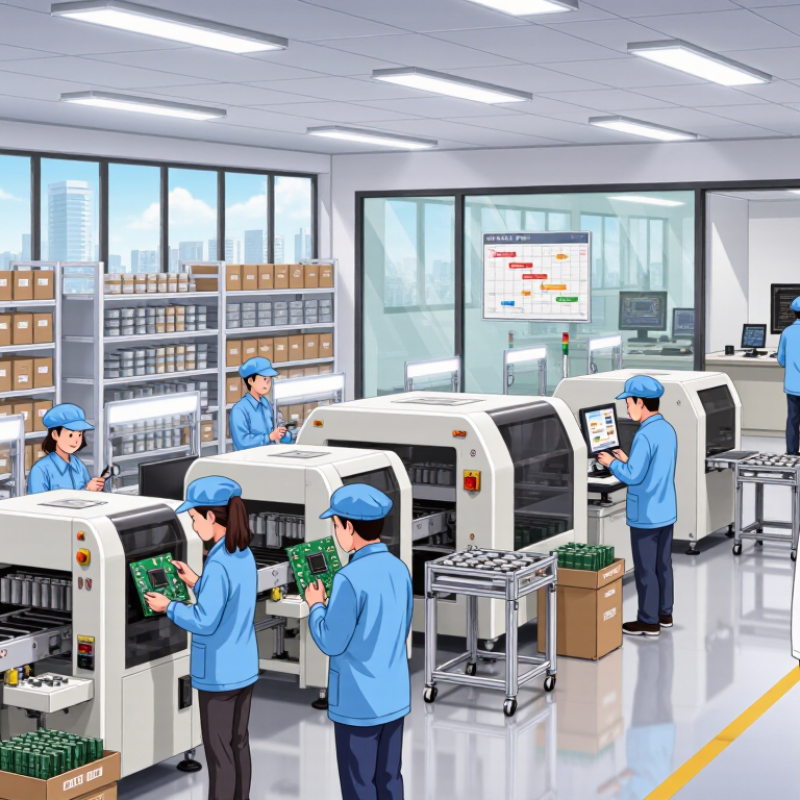
Table of Contents [Hide]
Definition and Role of an Electronic Component Assembler
An electronic component assembler is a manufacturing partner that installs and connects electronic parts on circuit boards or within finished modules. The work may include placing resistors, chips, connectors, and capacitors, then soldering them to specified locations. It is more than putting parts in the right spots. Assemblers interpret bills of materials, assembly drawings, and process instructions, while keeping components traceable through production.
In China, an assembler may support prototype builds, small batches, or high-volume production. Typical checks include verifying component values, inspecting solder joints under magnification, and testing electrical connections. A misplaced connector can stop a device from fitting its enclosure. A weak solder joint may pass a quick visual check but fail after vibration or repeated use. Small details matter. Clear communication about tolerances and inspection criteria helps prevent avoidable rework.
A reliable assembler documents how work is performed and responds when defects appear, rather than treating inspection as a final formality. Buyers can review sample builds, process records, and test methods before choosing a supplier. Still, a polished sample does not prove that every production run will be consistent. That is worth remembering. Even a capable process can miss a defect, so ongoing checks and honest reporting remain essential.
Who Is the Top Electronic Component Assembler in China? – Definition and Role of an Electronic Component Assembler
| Dimension | What an Electronic Component Assembler Does | How to Evaluate Capability | Relevant Evidence or Metrics |
|---|---|---|---|
| Definition | Combines electronic components and materials into subassemblies or finished electronic products according to engineering specifications. | Confirm whether the supplier’s services match the product’s assembly complexity and production stage. | Documented process scope, product types, and approved manufacturing procedures. |
| PCB assembly | Mounts components onto printed circuit boards using processes such as surface-mount technology (SMT) and through-hole assembly. | Review process controls for component placement, soldering, inspection, and rework. | Inspection records, process instructions, and applicable workmanship requirements, such as IPC standards when specified by the customer. |
| Mechanical and cable assembly | May integrate circuit boards with enclosures, connectors, wiring harnesses, and other mechanical parts. | Assess assembly instructions, tooling, connector handling, and control of configuration changes. | Assembly travelers, wiring or connection checks, and configuration records. |
| Quality control | Uses inspection and testing to identify defects and verify that assemblies meet defined requirements. | Check whether inspection methods are appropriate to the product and whether nonconformities are tracked to closure. | Incoming, in-process, and final inspection records; test results; corrective-action documentation. |
| Traceability | Maintains records that can link materials, production batches, and inspection results to an assembled product. | Verify the level of traceability required for the product and the customer’s supply-chain obligations. | Lot or serial records, material documentation, and production history where required. |
| Supply-chain coordination | Coordinates component sourcing, material availability, production planning, and handling of substitutions. | Review how shortages, obsolete parts, and proposed component changes are communicated and approved. | Approved supplier controls, change notifications, and documented customer approvals for substitutions. |
| Testing and validation | Can perform or coordinate electrical, functional, or other specified tests on assemblies. | Match test coverage to the product’s requirements and confirm that test equipment is maintained and calibrated as applicable. | Test plans, acceptance criteria, equipment records, and retained test results. |
| Standards and compliance | Works to applicable customer, product, and regulatory requirements; obligations vary by product and destination market. | Ask which standards and certifications apply to the specific facility, product, and requested scope. | Current certificates and audit records that can be independently verified; compliance documentation for the product where applicable. |
| Production capacity | Plans labor, equipment, materials, and production schedules to support agreed order volumes. | Compare demonstrated capacity and lead times with the required ramp-up plan and forecast. | Capacity plans, delivery performance records, and documented production schedules. |
| Supplier selection | A capable assembler is one that can consistently meet the buyer’s technical, quality, delivery, and compliance requirements. | Use a documented assessment rather than relying on a general “top” ranking; validate claims through audits, samples, and references. | Technical review, sample evaluation, quality-system audit, delivery history, and total-cost assessment. |





