What Are the Top Control Valve Manufacturers in China?
China has become a major manufacturing base for industrial flow-control equipment. Its control valve producers serve oil and gas, chemical processing, power generation, water treatment, and general manufacturing. However, identifying the “top” companies requires more than reviewing export figures or attractive websites.
This guide examines leading Chinese manufacturers through practical evidence. It considers valve design, pressure ratings, material quality, testing procedures, certifications, delivery performance, and technical support. A reliable supplier should explain how each control valve performs under heat, corrosion, vibration, and changing flow conditions. Factory audits, inspection records, traceable materials, and responsive engineering teams also matter. A polished catalog is not proof.
Field experience often reveals details that brochures omit. Can the actuator maintain stable positioning? Are spare parts available years later? Does the supplier test leakage before shipment? These questions help separate capable manufacturers from traders with limited technical control. Shortlist carefully.
No ranking is universally correct. A company strong in pneumatic control valves may not suit severe-service applications. Another may offer excellent engineering but weaker after-sales support in overseas markets. This article therefore compares manufacturers by application fit, manufacturing depth, quality evidence, and customer reliability. Some conclusions may remain imperfect because public information changes, and supplier claims require independent verification. Readers should confirm current certifications, references, production capacity, and compliance requirements before signing a purchase agreement. The goal is not to promote one brand blindly. It is to provide a clear, evidence-based starting point for selecting a dependable Chinese control valve manufacturer.
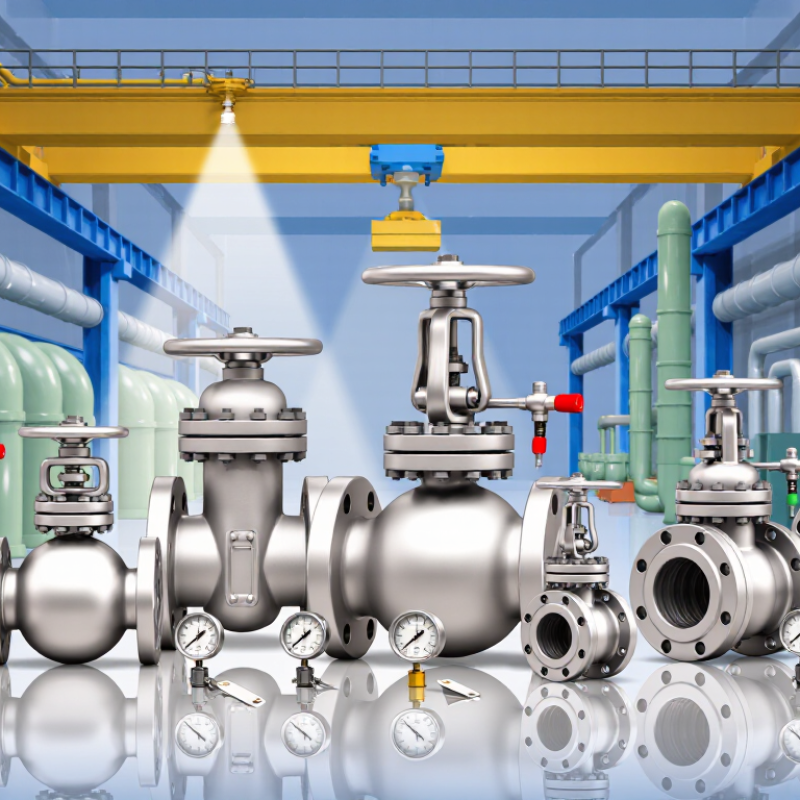
China’s Control Valve Industry: Scope, Standards, and Applications
China’s control valve industry supports water treatment, power generation, chemical processing, HVAC, and general manufacturing. Its scope includes globe, ball, butterfly, rotary, and pressure-control valves. Manufacturers also supply actuators, positioners, sensors, and diagnostic systems. Each application creates different demands. A wastewater plant may need corrosion resistance, while a steam line needs tight shutoff and thermal stability. Not every catalog fits.
Reliable projects usually reference Chinese GB/T standards alongside IEC or ISO requirements. GB/T 4213 is widely associated with industrial-process control valves. IEC 60534 helps engineers assess flow capacity, noise, sizing, and performance. Safety-related systems may require evidence linked to functional safety standards. Standards are not decoration. Engineers should verify pressure class, leakage rate, material certificates, calibration records, and test conditions. Documentation can expose weaknesses that polished sales language hides.
Applications reveal practical differences between suppliers. During site inspections, excessive valve noise may indicate cavitation, poor sizing, or unstable process conditions. A coastal facility may require enhanced coating and stainless-steel components. A pharmaceutical line may prioritize cleanability and documented materials. Strong manufacturers provide traceable testing, responsive technical support, and replacement guidance. However, supplier comparisons are rarely perfect. Published performance may not match field conditions, especially when fluid data is incomplete. Engineers should question assumptions, request application-specific calculations, and examine how each supplier handles failures after installation.
Key Criteria for Evaluating Chinese Control Valve Manufacturers
Choosing among China’s top control valve manufacturers requires more than comparing prices or factory photographs. Grand View Research estimates the global control valve market reached about USD 7.9 billion in 2023, with continued growth expected through 2030. That expansion increases supplier choice, but it also makes verification harder. A serious evaluation should begin with ISO 9001 certification, documented process control, and clear material traceability from casting to final assembly.
Technical evidence matters most.
Check whether the manufacturer designs and tests valves against IEC 60534 or ISA 75 requirements. Request Cv data, leakage-class results, pressure-test records, and actuator response curves. For corrosive service, review body materials, trim selection, coating thickness, and temperature limits. Independent inspection can confirm these details. It is worth paying for.
Manufacturing capacity should include CNC machining, calibration equipment, and repeatable testing procedures. Ask for recent FAT records and anonymized references from similar industries. MarketsandMarkets projects the control valve market to grow at roughly 6% annually toward 2028, so after-sales capability deserves equal attention. Spare-part availability, response time, commissioning support, and local technical staff can prevent costly downtime.
A polished brochure is not proof. I would still challenge unusually high accuracy claims without test evidence. Even a clean factory tour can hide weak documentation. Reliable suppliers explain limitations, correct mistakes, and provide consistent records across batches.
Leading Control Valve Manufacturers and Their Product Strengths
What Are the Top Control Valve Manufacturers in China?
China’s leading control valve manufacturers compete through engineering depth, not price alone. MarketsandMarkets reported that the global control valve market could grow from about USD 7.8 billion in 2023 to USD 10.2 billion by 2028. This growth supports stronger domestic investment in intelligent positioning, corrosion-resistant alloys, and severe-service designs. Major Chinese producers typically serve power generation, petrochemicals, water treatment, and industrial automation. Their product strengths differ. Some focus on high-pressure globe valves, while others develop rotary valves for compact pipelines. Several manufacturers also provide pneumatic actuators, digital positioners, and customized trim. These combinations can reduce installation delays.
Certification matters greatly. Experienced buyers should check pressure testing, material traceability, leakage results, and compliance with IEC 60534 or equivalent standards. The International Energy Agency continues to identify industrial efficiency and digital monitoring as important energy-management priorities. Smart valves can support these goals by reporting stroke position, friction changes, and maintenance warnings. However, “smart” does not always mean reliable. Field calibration still matters. A polished brochure cannot replace operating evidence.
Tips: Compare tested flow coefficients, shutoff classes, response time, and service temperature. Request sample inspection records and references from similar plants. Review spare-part availability before signing a contract. A lower purchase price may create higher lifecycle costs. Some manufacturers still provide limited after-sales documentation, which is a weakness worth questioning. Ask for a failure-analysis process, not only a warranty period.
Manufacturing Capabilities, Certifications, and Quality Assurance
China’s leading control valve manufacturers are increasingly judged by process discipline, not catalog size. Grand View Research estimates the global industrial valves market at about USD 77.6 billion in 2023, with continued growth toward 2030. That expansion raises the quality bar for Chinese suppliers.
Look for CNC machining, automated welding, and traceable material control. Strong factories can produce valves for steam, chemicals, water treatment, and high-pressure service. Their test rooms should include hydrostatic, pneumatic, seat leakage, flow-characteristic, and fugitive-emission testing. IEC 60534 provides a useful technical reference for control valve sizing and performance. IEC 61508 matters when valves support functional safety systems.
Certifications help, but they are not enough.
ISO 9001 shows that a quality management system exists. It does not guarantee every batch performs consistently. ISO 15848 testing is more meaningful for low-emission applications, while NACE MR0175 is relevant to sour-service environments. The ISO Survey has repeatedly identified China as the world’s largest base of ISO 9001-certified organizations, yet certificate volume alone cannot rank manufacturers.
Published market figures also differ. Fortune Business Insights values the global control valve market at roughly USD 7.5 billion in 2023, while other research firms report different boundaries. Buyers should verify the methodology. Factory audits, witnessed tests, calibration records, and sample-based inspections reveal more than brochures. Ask for serial-number traceability. Check the actuator response on a real test bench. Small gaps often expose large risks.
How to Select the Right Chinese Control Valve Manufacturer
Choosing a Chinese control valve manufacturer requires more than comparing prices. Start with the valve’s duty, pressure rating, temperature range, media, and required flow accuracy. A supplier should understand these details before recommending a model. If the sales team gives a quick answer without asking technical questions, be cautious.
Review manufacturing evidence, not only brochures. Ask for material certificates, dimensional records, pressure-test reports, and traceability documents. Check whether the factory controls casting, machining, assembly, and calibration internally. A useful supplier can explain its quality system and provide recent inspection samples. Factory audits, video inspections, and third-party testing can reveal practical gaps.
Communication matters greatly. Confirm drawing approval, delivery milestones, spare parts, warranty terms, and technical support in writing. Ask how the manufacturer handles leakage, actuator failure, or incorrect materials. The answer should include a clear process, not vague promises. Short response times help.
Do not ignore after-sales support.
I once treated a low quotation as the best option. The missing test records later created delays and extra inspection costs. That experience changed my evaluation method. I now compare total ownership cost, documentation quality, engineering support, and production capacity. A smaller manufacturer may offer excellent attention, but its backup resources need careful checking. Select the supplier that can repeatedly prove performance, not merely claim it.