


- Home
- A-Z Catalogue
- Products
- Valves
- Cetop
- Manual Directional Valves
- Proportional Valves
- Poppet Valves
- High-Speed Linear Servo Valves
- All High-Speed Linear Servo Valves
- Cetop 10 (NG32) Two Stage Type High Speed Linear Servo Valves – LSVHG-10
- Cetop 10 (NG32) Two Stage Type High Speed Linear Servo Valves – LSVHG-10 (With Fail-Safe)
- Cetop 8 (NG25) Two Stage Type High Speed Linear Servo Valves – LSVHG-06
- Cetop 8 (NG25) Two Stage Type High Speed Linear Servo Valves – LSVHG-06 (With Fail-Safe)
- Cetop 7 (NG16) Two Stage Type High Speed Linear Servo Valves – LSVHG-04
- Cetop 7 (NG16) Two Stage Type High Speed Linear Servo Valves – LSVHG-04 (With Fail-Safe)
- Cetop 5 (NG10) Direct Type High Speed Linear Servo Valves – LSVG-03
- Cetop 5 (NG10) OBE Type Direct Operated Linear Servo Valves – LSVG-03-EH
- Cetop 3 (NG6) OBE Type Direct Operated Linear Servo Valves – LSVG-01-EH
- Pumps
- Pressure control
- Flow Control Valves
- Pressure Control Valves
- All Pressure Control Valves
- Brake Valves
- Direct Relief Valve
- Low Noise Solenoid Controlled Relief Valves
- Low Noise Pilot Operated Relief Valves
- Pilot Operated Relief Valves
- Pressure reducing and relieving valves
- Pressure reducing and check valves
- Pressure control valves
- Remote Control Relief Valves
- Solenoid Controlled Relief Valves – BSG
- Solenoid Controlled Relief Valves – BST
- Unloading relief valves
- Check valves
- Environmental
- Valves
- Hydraulic Systems
- Power pack
- About Us
- Contact
- Blog

Top Cold Room Manufacturers in China for Global Buyers
Cold rooms are essential infrastructure for food processing, pharmaceuticals, and other temperature-sensitive supply chains. Their performance depends on more than refrigeration capacity. Insulated panels, door seals, airflow, controls, and installation quality all influence temperature stability and operating costs.
The scale of demand is significant. The Global Cold Chain Alliance’s 2020 Global Cold Storage Capacity Report estimated worldwide refrigerated warehouse capacity at about 719 million cubic meters. The FAO’s 2023 report on food security estimated that 13.2% of food was lost after harvest and before retail in 2021. These figures do not measure the impact of any single Cold Room, but they underline why dependable storage matters.
China has a broad manufacturing base, yet buyers should compare suppliers carefully. A low quotation alone says little about long-term performance. Ask for project references, panel specifications, refrigeration-system details, temperature-range evidence, and clear warranty terms. Check how the manufacturer handles commissioning, spare parts, and service across your destination market. Small details matter. A poorly sealed door can undermine an otherwise capable system.
This guide introduces leading Cold Room manufacturers in China for global buyers, with attention to product scope, export experience, and practical evaluation points. It is not a substitute for technical due diligence. And supplier information can change, so verify current certifications and project records directly before purchasing.
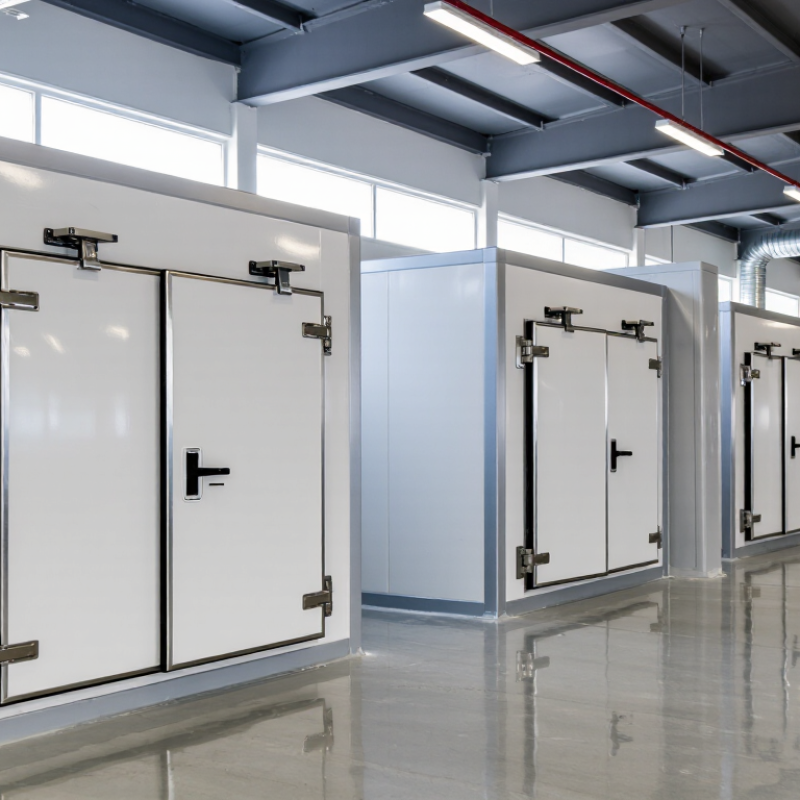
Table of Contents [Hide]
Cold Room Manufacturing in China: Industry Scope and Product Types
China’s cold-room manufacturing industry serves food processing, catering, pharmaceuticals, agriculture, and logistics. Manufacturers may supply insulated panels, refrigeration equipment, doors, controls, and installation support as a complete package or separate components. Product types include modular walk-in chillers, freezer rooms, temperature-controlled storage, and blast-chilling rooms. Each serves a different operating need. A produce room, for example, may need steady humidity control, while a freezer room needs low temperatures and effective door seals.
Capacity and temperature range are only part of the specification. Buyers should also consider room dimensions, daily product turnover, ambient climate, loading patterns, and available power. Panel thickness, floor insulation, drainage, and defrost settings affect daily performance. A well-designed room can still disappoint if forklifts repeatedly damage the door or warm, moist air enters during busy loading periods. Specifications can look tidy on paper; site conditions often do not.
Tips: Share a floor plan, target temperature, product load, and local climate before requesting a quotation. Ask for clear equipment schedules, insulation details, and commissioning procedures. Confirm who handles installation and after-sales support in your region. Keep the answers in writing. Compare complete system scopes, not just headline prices.





