


- Home
- A-Z Catalogue
- Products
- Valves
- Cetop
- Manual Directional Valves
- Proportional Valves
- Poppet Valves
- High-Speed Linear Servo Valves
- All High-Speed Linear Servo Valves
- Cetop 10 (NG32) Two Stage Type High Speed Linear Servo Valves – LSVHG-10
- Cetop 10 (NG32) Two Stage Type High Speed Linear Servo Valves – LSVHG-10 (With Fail-Safe)
- Cetop 8 (NG25) Two Stage Type High Speed Linear Servo Valves – LSVHG-06
- Cetop 8 (NG25) Two Stage Type High Speed Linear Servo Valves – LSVHG-06 (With Fail-Safe)
- Cetop 7 (NG16) Two Stage Type High Speed Linear Servo Valves – LSVHG-04
- Cetop 7 (NG16) Two Stage Type High Speed Linear Servo Valves – LSVHG-04 (With Fail-Safe)
- Cetop 5 (NG10) Direct Type High Speed Linear Servo Valves – LSVG-03
- Cetop 5 (NG10) OBE Type Direct Operated Linear Servo Valves – LSVG-03-EH
- Cetop 3 (NG6) OBE Type Direct Operated Linear Servo Valves – LSVG-01-EH
- Pumps
- Pressure control
- Flow Control Valves
- Pressure Control Valves
- All Pressure Control Valves
- Brake Valves
- Direct Relief Valve
- Low Noise Solenoid Controlled Relief Valves
- Low Noise Pilot Operated Relief Valves
- Pilot Operated Relief Valves
- Pressure reducing and relieving valves
- Pressure reducing and check valves
- Pressure control valves
- Remote Control Relief Valves
- Solenoid Controlled Relief Valves – BSG
- Solenoid Controlled Relief Valves – BST
- Unloading relief valves
- Check valves
- Environmental
- Valves
- Hydraulic Systems
- Power pack
- About Us
- Contact
- Blog

Top Conveyor Belt Beam Cutting Press Factories in China?
Choosing among Conveyor Belt Beam Cutting Press Factories in China requires more than comparing catalog prices. A beam cutting press may process rubber sheets, fabric, foam, or other layered materials used in conveyor belt production. Its cutting capacity, pressure consistency, table size, and safety features can affect daily output. Small details matter.
This guide introduces practical ways to assess manufacturers and shortlist suitable suppliers. It focuses on verifiable information, including machine specifications, customization options, quality-control procedures, service coverage, and spare-part availability. Buyers should ask for clear answers about maximum cutting force, working area, power requirements, and supported materials. Requesting test cuts on a sample material can also reveal edge quality and operating stability.
A polished website is not proof of reliable production. Factory visits, live video inspections, references, and documented test results can help confirm what a supplier can deliver. Still, no single check tells the whole story. Some factories may provide strong equipment but limited after-sales support; others may offer flexible service with less customization. That distinction is easy to miss.
The sections ahead explain what to compare, which questions to ask, and how to evaluate claims without relying on vague promises. Use the information as a starting point, then match each supplier’s capabilities to your material, production volume, and maintenance needs. A careful review takes time. It can prevent an expensive mismatch.
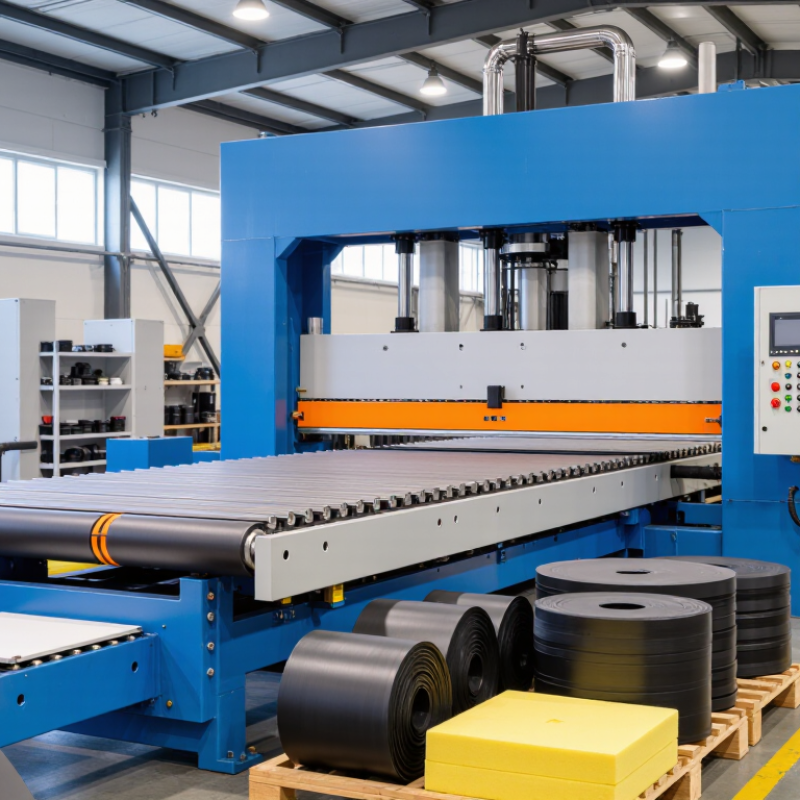
Table of Contents [Hide]
Understanding Conveyor Belt Beam Cutting Presses
A conveyor belt beam cutting press uses a moving belt to bring sheet material beneath a powered cutting head. The operator positions a steel rule die, then the beam applies pressure to cut shapes from rubber, foam, fabric, or other suitable stock. Belt movement can reduce repeated manual handling, especially when parts are produced in batches. Still, the press needs the right combination of cutting force, working area, and feed speed for the material and die. Too little pressure may leave fibers attached; too much can wear the die or mark the belt. Small details matter.
In a factory, operators should check belt tracking, cutting-bed condition, and pressure settings during routine work. A belt that drifts sideways can affect alignment, while debris beneath the material may create uneven cuts. Test cuts help reveal problems before a full run, though they cannot replace careful inspection of the finished parts. The machine’s guarding and stop controls also deserve practical checks, not just a glance at the manual. In practice, production layouts are rarely as tidy as diagrams suggest. That can make loading and access awkward, so installation planning should include real operator movement and maintenance space.





