


- Home
- A-Z Catalogue
- Products
- Valves
- Cetop
- Manual Directional Valves
- Proportional Valves
- Poppet Valves
- High-Speed Linear Servo Valves
- All High-Speed Linear Servo Valves
- Cetop 10 (NG32) Two Stage Type High Speed Linear Servo Valves – LSVHG-10
- Cetop 10 (NG32) Two Stage Type High Speed Linear Servo Valves – LSVHG-10 (With Fail-Safe)
- Cetop 8 (NG25) Two Stage Type High Speed Linear Servo Valves – LSVHG-06
- Cetop 8 (NG25) Two Stage Type High Speed Linear Servo Valves – LSVHG-06 (With Fail-Safe)
- Cetop 7 (NG16) Two Stage Type High Speed Linear Servo Valves – LSVHG-04
- Cetop 7 (NG16) Two Stage Type High Speed Linear Servo Valves – LSVHG-04 (With Fail-Safe)
- Cetop 5 (NG10) Direct Type High Speed Linear Servo Valves – LSVG-03
- Cetop 5 (NG10) OBE Type Direct Operated Linear Servo Valves – LSVG-03-EH
- Cetop 3 (NG6) OBE Type Direct Operated Linear Servo Valves – LSVG-01-EH
- Pumps
- Pressure control
- Flow Control Valves
- Pressure Control Valves
- All Pressure Control Valves
- Brake Valves
- Direct Relief Valve
- Low Noise Solenoid Controlled Relief Valves
- Low Noise Pilot Operated Relief Valves
- Pilot Operated Relief Valves
- Pressure reducing and relieving valves
- Pressure reducing and check valves
- Pressure control valves
- Remote Control Relief Valves
- Solenoid Controlled Relief Valves – BSG
- Solenoid Controlled Relief Valves – BST
- Unloading relief valves
- Check valves
- Environmental
- Valves
- Hydraulic Systems
- Power pack
- About Us
- Contact
- Blog

What Are the Top Can Sealing Machine Types in 2026?
Choosing a Can Sealing Machine in 2026 is not just a matter of speed. Container material, lid design, production volume, and the required seam quality all shape the decision. A small food producer may need a compact semi-automatic seamer, while a beverage line running thousands of cans per hour may require a high-speed rotary system. The right fit depends on the actual line—not the most impressive specification sheet.
Industry data helps explain why this choice matters. The Can Manufacturers Institute’s 2023 aluminum can recycling report puts the U.S. beverage-can recycling rate at 43%, underscoring the importance of dependable packaging and material recovery. PMMI’s packaging-industry research also points to automation and workforce availability as ongoing operational concerns. These reports do not identify one universally superior machine; they highlight pressures that manufacturers must weigh against their own production conditions.
This guide compares the leading machine types expected to matter in 2026, including manual, semi-automatic, automatic inline, and rotary can seamers. It looks at practical differences in throughput, changeover, footprint, and operator involvement. Small details matter. A lid that feeds unevenly or a seam that needs frequent adjustment can slow an otherwise fast line. No machine removes every production headache, and that is worth remembering. The goal is to match equipment capabilities with real operating needs, then verify performance using the intended cans, ends, and product.
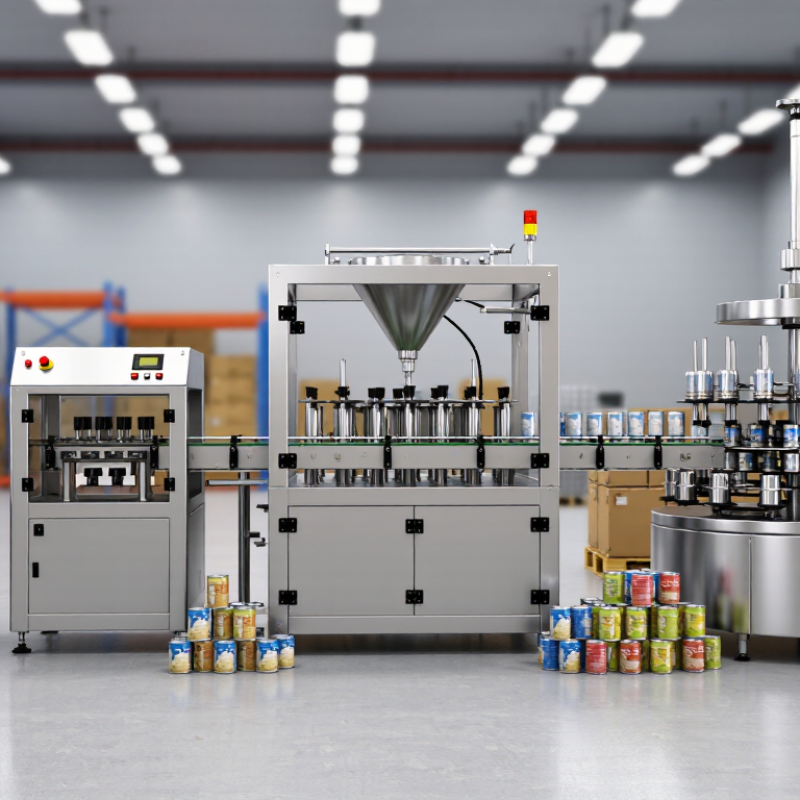
Table of Contents [Hide]
What Is a Can Sealing Machine and How Does It Work?
A can sealing machine joins a lid to a can body to help protect the contents from leaks, air, and contamination. On many metal cans, the machine forms a double seam: the lid’s curled edge and the can’s flange are rolled together in several tight layers. A chuck holds the lid in place while seaming rollers shape the metal. The exact setup depends on the can’s size, material, and intended use.
The process looks simple from outside. It is not always simple. A small change in roller pressure or lid position can affect the seam. Manual machines suit low-volume work and careful adjustments; semi-automatic and automatic models handle more cans with less direct effort.
In practice, operators feed a can and lid, secure them beneath the seaming head, and start the cycle. Then they inspect samples for wrinkles, sharp edges, or uneven seams. A visual check helps, but it cannot confirm every seal. Seam measurements and suitable leak tests provide stronger evidence.
I would not treat one successful test as proof that every can is sound. Machine setup, material variation, and routine wear all deserve attention.





