


- Home
- A-Z Catalogue
- Products
- Valves
- Cetop
- Manual Directional Valves
- Proportional Valves
- Poppet Valves
- High-Speed Linear Servo Valves
- All High-Speed Linear Servo Valves
- Cetop 10 (NG32) Two Stage Type High Speed Linear Servo Valves – LSVHG-10
- Cetop 10 (NG32) Two Stage Type High Speed Linear Servo Valves – LSVHG-10 (With Fail-Safe)
- Cetop 8 (NG25) Two Stage Type High Speed Linear Servo Valves – LSVHG-06
- Cetop 8 (NG25) Two Stage Type High Speed Linear Servo Valves – LSVHG-06 (With Fail-Safe)
- Cetop 7 (NG16) Two Stage Type High Speed Linear Servo Valves – LSVHG-04
- Cetop 7 (NG16) Two Stage Type High Speed Linear Servo Valves – LSVHG-04 (With Fail-Safe)
- Cetop 5 (NG10) Direct Type High Speed Linear Servo Valves – LSVG-03
- Cetop 5 (NG10) OBE Type Direct Operated Linear Servo Valves – LSVG-03-EH
- Cetop 3 (NG6) OBE Type Direct Operated Linear Servo Valves – LSVG-01-EH
- Pumps
- Pressure control
- Flow Control Valves
- Pressure Control Valves
- All Pressure Control Valves
- Brake Valves
- Direct Relief Valve
- Low Noise Solenoid Controlled Relief Valves
- Low Noise Pilot Operated Relief Valves
- Pilot Operated Relief Valves
- Pressure reducing and relieving valves
- Pressure reducing and check valves
- Pressure control valves
- Remote Control Relief Valves
- Solenoid Controlled Relief Valves – BSG
- Solenoid Controlled Relief Valves – BST
- Unloading relief valves
- Check valves
- Environmental
- Valves
- Hydraulic Systems
- Power pack
- About Us
- Contact
- Blog

China Top 10 Can Body Making Machine Manufacturers?
China has become a major manufacturing base for metal packaging equipment. This guide introduces ten notable Chinese Can Body Making Machine manufacturers and explains why they deserve closer evaluation. The selection considers production experience, engineering capability, equipment performance, and service reliability.
A capable supplier should provide more than an attractive machine photograph. Buyers need clear information about can diameter, material thickness, forming speed, tooling life, power requirements, and compatible production lines. Factory audits, technical drawings, test videos, and customer references can reveal practical differences. Installation support also matters. A machine may perform well in a showroom, yet require careful adjustment on a busy factory floor. Spare parts availability and response time can influence long-term production stability.
The ranking should not be treated as an absolute verdict. Public information is sometimes incomplete, and supplier claims require independent checking. A polished brochure is not proof of consistent output. This article therefore encourages readers to compare verified specifications, inspect quality systems, and request sample production before purchasing. Attention is given to manufacturers serving food cans, aerosol cans, paint containers, and other standard metal packaging applications, where precision and repeatability are essential. Some companies may excel in customization, while others may offer stronger automation or after-sales support. That difference matters. The best choice depends on production volume, can design, budget, and technical expectations. A reliable decision combines documented evidence with direct communication, not rankings alone.
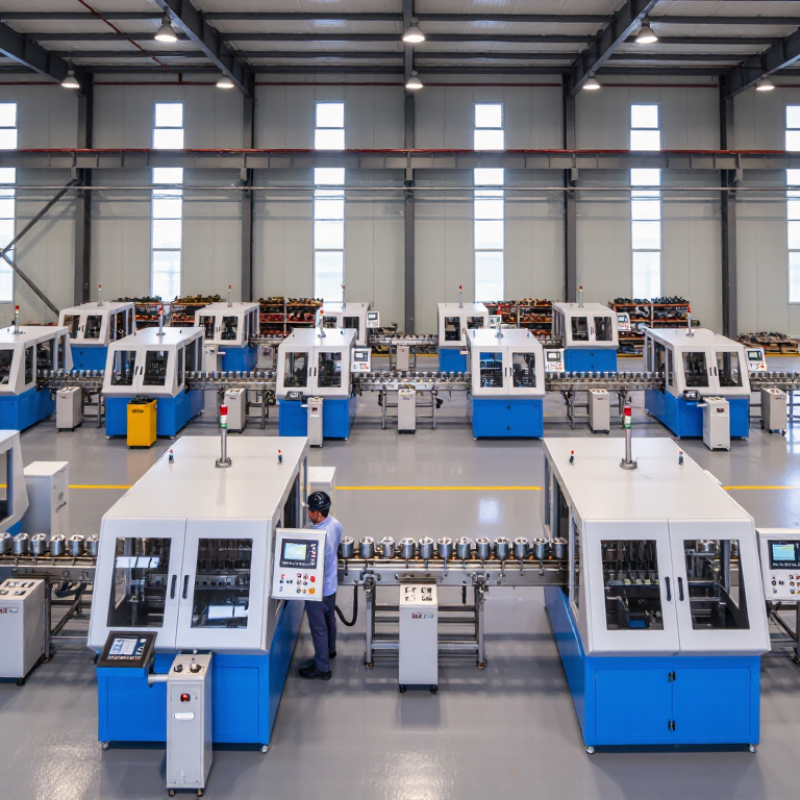
Table of Contents [Hide]
What Is a Can Body Making Machine?
A can body making machine is industrial equipment that converts flat metal sheets into cylindrical can bodies. It is commonly used for food, beverage, paint, and general packaging production. The machine may cut, roll, weld, and shape the sheet with precise timing.
In a three-piece can line, a feeder sends tinplate or steel sheets into a forming section. Rollers curve each sheet, while a side-seam unit joins the edges. The body then passes through coating, curing, flanging, and inspection stations. Sensors check diameter, seam position, and surface defects. Small errors matter. A weak seam can cause leakage during filling or transport.
Two-piece can production uses a different process. A press draws and stretches one metal blank into a seamless body. Selecting equipment requires attention to material thickness, output speed, seam quality, tooling changes, and maintenance access. Operators should also examine guarding, emergency stops, documentation, and replacement-part availability. A clean layout helps reduce metal dust and accidental damage.
From production experience, advertised speed is not the whole story. Stable performance often matters more than a high peak rate. I would inspect sample bodies, measure seam strength, and review maintenance records before comparing manufacturers. The machine may look impressive. Its daily consistency is harder to judge. Some lines also require skilled adjustment after material changes, which buyers may underestimate.





