


- Home
- A-Z Catalogue
- Products
- Valves
- Cetop
- Manual Directional Valves
- Proportional Valves
- Poppet Valves
- High-Speed Linear Servo Valves
- All High-Speed Linear Servo Valves
- Cetop 10 (NG32) Two Stage Type High Speed Linear Servo Valves – LSVHG-10
- Cetop 10 (NG32) Two Stage Type High Speed Linear Servo Valves – LSVHG-10 (With Fail-Safe)
- Cetop 8 (NG25) Two Stage Type High Speed Linear Servo Valves – LSVHG-06
- Cetop 8 (NG25) Two Stage Type High Speed Linear Servo Valves – LSVHG-06 (With Fail-Safe)
- Cetop 7 (NG16) Two Stage Type High Speed Linear Servo Valves – LSVHG-04
- Cetop 7 (NG16) Two Stage Type High Speed Linear Servo Valves – LSVHG-04 (With Fail-Safe)
- Cetop 5 (NG10) Direct Type High Speed Linear Servo Valves – LSVG-03
- Cetop 5 (NG10) OBE Type Direct Operated Linear Servo Valves – LSVG-03-EH
- Cetop 3 (NG6) OBE Type Direct Operated Linear Servo Valves – LSVG-01-EH
- Pumps
- Pressure control
- Flow Control Valves
- Pressure Control Valves
- All Pressure Control Valves
- Brake Valves
- Direct Relief Valve
- Low Noise Solenoid Controlled Relief Valves
- Low Noise Pilot Operated Relief Valves
- Pilot Operated Relief Valves
- Pressure reducing and relieving valves
- Pressure reducing and check valves
- Pressure control valves
- Remote Control Relief Valves
- Solenoid Controlled Relief Valves – BSG
- Solenoid Controlled Relief Valves – BST
- Unloading relief valves
- Check valves
- Environmental
- Valves
- Hydraulic Systems
- Power pack
- About Us
- Contact
- Blog

2026 Top Steel Threaded Lifting Socket Types?
Choosing among the 2026 Top Steel Threaded Lifting Socket Types requires more than comparing load ratings. These components transfer lifting forces through precast concrete, so thread design, anchorage length, steel grade, and installation quality all matter. A Steel Threaded Lifting Socket may look small on site, yet it can carry serious temporary loads during panel rotation or placement.
This guide examines internally threaded sockets, high-capacity threaded anchors, recessed lifting sockets, and corrosion-resistant options. It considers working load limits, safety factors, compatible lifting clutches, and concrete strength at lifting time. Field experience shows that matching the socket to the clutch is essential. Small mismatches can create poor engagement, visible thread damage, or uneven loading. Fit matters.
Reliable selection begins with verified manufacturer data, clear engineering calculations, and inspection records. Product labels alone are not enough. Engineers should confirm the lifting direction, edge distance, reinforcement arrangement, and actual concrete condition. A socket rated for vertical lifting may not suit angled forces without additional design review. That detail is often missed.
No single socket type is best for every project. Coastal exposure, repetitive handling, thin panels, and limited access can change the preferred choice. Some published comparisons also simplify real jobsite conditions. They deserve careful review. This overview combines practical observations with technical selection criteria, while recognizing that final approval belongs to a qualified engineer and the responsible lifting team. Always verify current specifications before use.
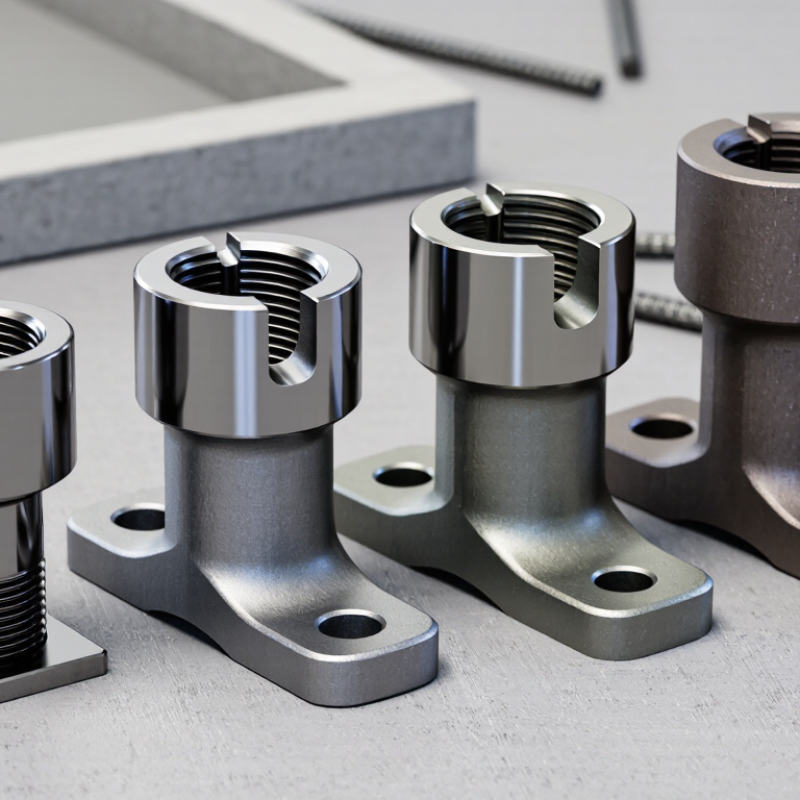
Table of Contents [Hide]
What Is a Steel Threaded Lifting Socket?
2026 Top Steel Threaded Lifting Socket Types?
A steel threaded lifting socket is a load-bearing insert installed inside concrete or another structural material. It provides a strong, reusable connection for threaded lifting hardware. During lifting, the socket transfers force through its steel body, reinforcement, and surrounding concrete. Common types include straight sockets, flared sockets, plate sockets, and long-bar sockets. Each design suits different embedment depths, load directions, and reinforcement layouts. A socket is not simply a metal hole. Its performance depends on thread quality, steel strength, concrete grade, and correct installation.
Field inspections often show small mistakes with serious effects. The socket may sit too close to an edge. Reinforcement may block the intended position. Concrete can also collect inside the thread. These details reduce confidence during a lift. Engineers should check the working load, safety factor, embedment depth, thread condition, and lifting angle. Independent testing and traceable material records add reliability. A larger socket is not automatically safer. Selection must match the complete lifting system.
Tips: Keep the internal thread clean and capped before use. Confirm alignment before concrete placement. Inspect for cracks, deformation, rust, and damaged threads. Use calibrated lifting equipment and follow the socket manufacturer’s technical data. When the design seems uncertain, pause the lift and request an engineering review. Small doubts deserve attention.





