


- Home
- A-Z Catalogue
- Products
- Valves
- Cetop
- Manual Directional Valves
- Proportional Valves
- Poppet Valves
- High-Speed Linear Servo Valves
- All High-Speed Linear Servo Valves
- Cetop 10 (NG32) Two Stage Type High Speed Linear Servo Valves – LSVHG-10
- Cetop 10 (NG32) Two Stage Type High Speed Linear Servo Valves – LSVHG-10 (With Fail-Safe)
- Cetop 8 (NG25) Two Stage Type High Speed Linear Servo Valves – LSVHG-06
- Cetop 8 (NG25) Two Stage Type High Speed Linear Servo Valves – LSVHG-06 (With Fail-Safe)
- Cetop 7 (NG16) Two Stage Type High Speed Linear Servo Valves – LSVHG-04
- Cetop 7 (NG16) Two Stage Type High Speed Linear Servo Valves – LSVHG-04 (With Fail-Safe)
- Cetop 5 (NG10) Direct Type High Speed Linear Servo Valves – LSVG-03
- Cetop 5 (NG10) OBE Type Direct Operated Linear Servo Valves – LSVG-03-EH
- Cetop 3 (NG6) OBE Type Direct Operated Linear Servo Valves – LSVG-01-EH
- Pumps
- Pressure control
- Flow Control Valves
- Pressure Control Valves
- All Pressure Control Valves
- Brake Valves
- Direct Relief Valve
- Low Noise Solenoid Controlled Relief Valves
- Low Noise Pilot Operated Relief Valves
- Pilot Operated Relief Valves
- Pressure reducing and relieving valves
- Pressure reducing and check valves
- Pressure control valves
- Remote Control Relief Valves
- Solenoid Controlled Relief Valves – BSG
- Solenoid Controlled Relief Valves – BST
- Unloading relief valves
- Check valves
- Environmental
- Valves
- Hydraulic Systems
- Power pack
- About Us
- Contact
- Blog

Top 10 Rust Cleaning Agents for Global Buyers?
Choosing the right Rust Cleaning Agent is rarely as simple as picking the strongest formula. Global buyers must compare corrosion risk, surface compatibility, worker safety, packaging, and storage conditions. A product that removes orange rust from a steel bracket may stain polished aluminum or weaken a painted surface. Small details matter. Water quality matters too.
Dr. Alec Groysman, a corrosion scientist and author, expresses a useful principle: “Corrosion is a natural process; the practical goal is to control it.” This idea guides our review of the Top 10 Rust Cleaning Agents for Global Buyers. We examine acid-based removers, chelating solutions, abrasive cleaners, gel formulas, and lower-odor alternatives. Each category has a different working speed and residue profile. Some products perform well in humid workshops. Others suit precision parts, household tools, or large industrial components.
Real-world testing is not always perfect. Contact time can vary by temperature, rust thickness, and surface preparation. Labels may also use different dilution instructions. Buyers should verify technical data, safety documentation, compatibility claims, and regional transport requirements before ordering. No single cleaner fits every market.
This guide focuses on practical selection rather than exaggerated promises. It considers cleaning power, material protection, application control, value, and supplier reliability. The final ranking may change when your surface, climate, or maintenance process changes. That is worth remembering.
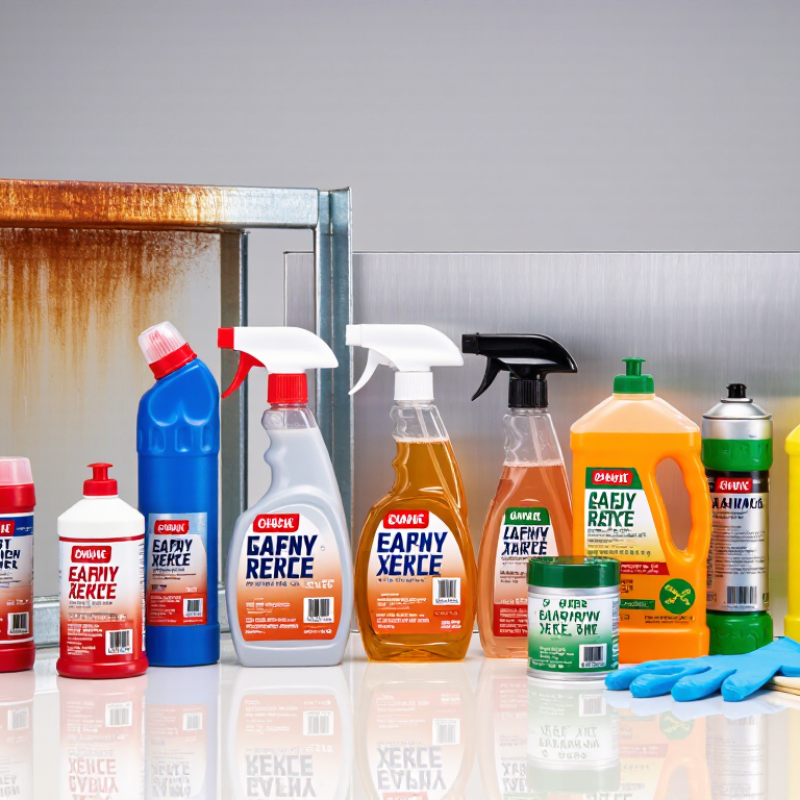
Table of Contents [Hide]
What Are Rust Cleaning Agents and How Do They Work?
Rust cleaning agents are chemical or water-based products designed to remove iron oxide from steel and iron surfaces. Rust forms when moisture and oxygen react with exposed metal. Cleaning agents interrupt this buildup through acids, chelating compounds, or abrasive particles.
Acidic formulas dissolve rust quickly. They often contain organic acids that react with iron oxide and loosen the brown, flaky layer. Chelating agents work more gently. They bind iron ions and lift corrosion without aggressively attacking sound metal. Abrasive cleaners use fine particles to scrub rust away, but they may leave visible scratches on polished surfaces. The right choice depends on the metal, rust depth, and cleaning environment.
In practical use, a buyer should test a small hidden area first. Apply the agent with a plastic brush, wait for the stated contact time, then rinse and dry the surface completely. A damp workshop can cause flash rust within hours. Ventilation, gloves, and eye protection remain important, even with mild formulas. Never mix acidic cleaners with chlorine-based products.
Read the technical data sheet carefully. Check concentration, surface compatibility, storage temperature, and wastewater requirements for the destination market. Some products remove stains but offer little protection afterward. A neutralizing rinse or temporary corrosion inhibitor may be necessary. No agent is perfect. Faster action can mean greater surface risk, while gentler formulas may require repeated treatment.
Top 10 Rust Cleaning Agents for Global Buyers? - What Are Rust Cleaning Agents and How Do They Work?
Rust cleaning agents are acids, chelators, reducing agents, or tannin-based compounds that dissolve, bind, reduce, or chemically convert iron oxides and hydroxides. Performance depends on concentration, temperature, contact time, rust thickness, and the base metal.
| Rank | Rust Cleaning Agent | Chemical Type | How It Works | Typical Working Range | Best-Suited Applications | Metal Compatibility | Key Safety Consideration |
|---|---|---|---|---|---|---|---|
| 1 | Citric Acid | Organic acid and chelating agent | Dissolves iron oxides and binds iron ions, helping detach rust from the metal surface. | About 5–20% in water, depending on rust thickness | Household tools, small parts, stainless-steel cleaning, food-equipment maintenance | Generally suitable for steel and stainless steel; test aluminum, zinc, and polished surfaces first | Use gloves and eye protection; rinse thoroughly to prevent acid residue |
| 2 | Phosphoric Acid | Mineral acid and rust converter | Reacts with iron oxides and can convert remaining rust into a relatively stable iron phosphate layer. | About 5–25% in water for many maintenance applications | Automotive parts, structural steel preparation, paint-preparation work | Effective on carbon steel; may dull or attack aluminum, zinc, and sensitive coatings | Corrosive; use ventilation, chemical-resistant gloves, goggles, and proper dilution procedures |
| 3 | Oxalic Acid | Organic dicarboxylic acid and chelator | Forms soluble complexes with iron and helps remove rust stains and iron deposits. | About 2–10% in water, depending on the substrate and stain level | Rust stains on masonry, wood, stone, tools, and metal components | Works on iron and steel; test stone, aluminum, and decorative finishes before use | Toxic if swallowed and harmful by prolonged exposure; keep away from children and food areas |
| 4 | Sulfamic Acid | Solid mineral acid | Provides controlled acidic action that dissolves iron oxide and mineral scale. | About 5–15% in water for cleaning solutions | Industrial descaling, heat exchangers, equipment maintenance, and metal parts | Often useful on steel; compatibility with copper, brass, aluminum, and coatings must be tested | Acidic and irritating; avoid mixing with chlorine-releasing chemicals |
| 5 | Acetic Acid | Weak organic acid | Slowly dissolves iron oxides and loosens light surface rust through acid–oxide reactions. | About 5–10% for light rust and household cleaning | Lightly rusted tools, screws, household hardware, and small removable parts | Suitable for many steel parts with short contact times; can affect zinc, copper, and some finishes | Do not mix with bleach; rinse and dry metal promptly after treatment |
| 6 | Tannic Acid | Polyphenolic rust converter | Reacts with iron oxides to form dark ferric tannate, reducing loose rust and stabilizing the surface. | About 1–5% in water-based conversion treatments | Maintenance coatings, architectural steel, agricultural equipment, and lightly rusted surfaces | Useful on carbon steel; not a complete substitute for removing thick, flaky rust | The treated surface usually darkens; remove loose rust and follow with a compatible coating |
| 7 | EDTA | Synthetic chelating agent | Binds iron ions into stable soluble complexes, helping lift iron deposits without relying only on strong acidity. | About 1–10%, depending on EDTA form, pH, and application | Precision cleaning, laboratory work, specialty formulations, and sensitive metal components | Can be gentler than mineral acids, but testing is required for copper alloys, coatings, and anodized surfaces | Follow wastewater rules because chelated metals may remain mobile in solution |
| 8 | Sodium Hydrosulfite | Reducing agent | Reduces ferric iron compounds to more soluble ferrous forms, which can help remove rust stains. | About 1–5% in controlled aqueous treatments | Iron-stain removal from textiles, paper, mineral surfaces, and selected industrial cleaning processes | Primarily used for stains rather than heavy scale; test dyed, porous, and coated materials | Decomposes in moist air and may release irritating sulfur-containing odors; use ventilation |
| 9 | Ascorbic Acid | Mild organic acid and reducing agent | Reduces ferric iron and can complex iron ions, making certain rust stains easier to dissolve or rinse away. | About 1–10% in targeted stain-removal solutions | Sensitive-surface stain treatment, laboratory cleaning, and small-scale rust marks | Relatively mild, but test natural stone, painted surfaces, and reactive metals first | Solutions oxidize over time; prepare, store, and use according to the formulation requirements |
| 10 | Formic Acid | Short-chain organic acid | Reacts with and dissolves iron oxides, providing stronger acidic cleaning than weaker household acids at comparable conditions. | About 1–10% in controlled industrial formulations | Industrial descaling, metal treatment, and specialized equipment cleaning | May attack carbon steel, galvanized metals, aluminum, and copper alloys; conduct compatibility testing | Corrosive and irritating; requires suitable ventilation, protective equipment, and controlled handling |
Note: Concentration ranges are general formulation guidelines rather than universal specifications. Always review the safety data sheet, test a small area, control contact time, rinse thoroughly, dry the metal, and apply corrosion protection when appropriate.





