


- Home
- A-Z Catalogue
- Products
- Valves
- Cetop
- Manual Directional Valves
- Proportional Valves
- Poppet Valves
- High-Speed Linear Servo Valves
- All High-Speed Linear Servo Valves
- Cetop 10 (NG32) Two Stage Type High Speed Linear Servo Valves – LSVHG-10
- Cetop 10 (NG32) Two Stage Type High Speed Linear Servo Valves – LSVHG-10 (With Fail-Safe)
- Cetop 8 (NG25) Two Stage Type High Speed Linear Servo Valves – LSVHG-06
- Cetop 8 (NG25) Two Stage Type High Speed Linear Servo Valves – LSVHG-06 (With Fail-Safe)
- Cetop 7 (NG16) Two Stage Type High Speed Linear Servo Valves – LSVHG-04
- Cetop 7 (NG16) Two Stage Type High Speed Linear Servo Valves – LSVHG-04 (With Fail-Safe)
- Cetop 5 (NG10) Direct Type High Speed Linear Servo Valves – LSVG-03
- Cetop 5 (NG10) OBE Type Direct Operated Linear Servo Valves – LSVG-03-EH
- Cetop 3 (NG6) OBE Type Direct Operated Linear Servo Valves – LSVG-01-EH
- Pumps
- Pressure control
- Flow Control Valves
- Pressure Control Valves
- All Pressure Control Valves
- Brake Valves
- Direct Relief Valve
- Low Noise Solenoid Controlled Relief Valves
- Low Noise Pilot Operated Relief Valves
- Pilot Operated Relief Valves
- Pressure reducing and relieving valves
- Pressure reducing and check valves
- Pressure control valves
- Remote Control Relief Valves
- Solenoid Controlled Relief Valves – BSG
- Solenoid Controlled Relief Valves – BST
- Unloading relief valves
- Check valves
- Environmental
- Valves
- Hydraulic Systems
- Power pack
- About Us
- Contact
- Blog

Top 10 Marine Steering Cylinders for Global Buyers?
Choosing the right Marine Steering Cylinders can determine how confidently a vessel answers the helm in rough water. For global buyers, the decision involves more than bore size or purchase price. Cylinder materials, stroke length, working pressure, mounting style, seal quality, and service access all influence long-term performance.
This guide introduces ten Marine Steering Cylinders suited to different vessel types, operating regions, and steering arrangements. The selection considers practical details, including stainless-steel rods, corrosion-resistant bodies, hydraulic compatibility, and replacement-part availability. A cylinder that performs well on a coastal fishing boat may not suit a high-speed commercial craft. That difference matters.
Field experience often reveals problems that product brochures overlook. Tight mounting spaces can complicate installation. Salt spray can damage exposed fittings. Incorrect hose sizing may create slow or uneven steering. Small details become expensive at sea.
Reliability comes first.
The comparison also considers manufacturer reputation, documented specifications, testing practices, warranty support, and feedback from professional users. Buyers should verify current technical data before ordering, because product versions and regional requirements can change. No single cylinder fits every vessel. That is worth admitting.
Some models may offer excellent corrosion resistance but higher initial costs. Others may provide easier maintenance but fewer local service options. The final choice should match the vessel’s rudder load, hydraulic system, climate, operating hours, and maintenance skills. This overview aims to support careful evaluation, not replace engineering advice or onboard inspection. Each recommendation deserves a second look before installation.
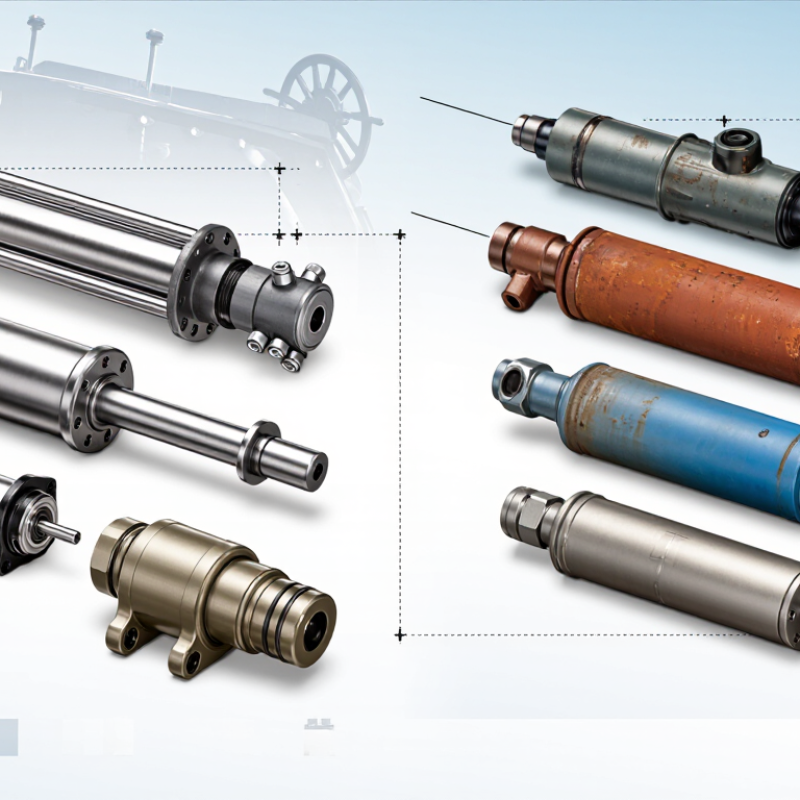
Table of Contents [Hide]
Marine Steering Cylinders: Hydraulic Types, ISO 10592, and 70–100 bar Ratings
Choosing among the top 10 marine steering cylinders requires more than comparing price. Hydraulic cylinder type, pressure rating, sealing quality, and installation space all affect steering control.
Balanced cylinders use rods on both sides and deliver similar movement in each direction. They suit systems requiring even response. Unbalanced cylinders use one rod and may need different fluid volumes during turns. Single-acting designs depend on return force, while double-acting cylinders provide powered movement both ways. Check the helm pump, hose size, fittings, and rudder load together.
Pressure matters at sea. Many marine steering cylinders operate between 70 and 100 bar, but the working pressure must match the complete system. A higher rating does not automatically mean better control. It may increase cost, weight, or stress on older components.
ISO 10592 provides useful guidance for hydraulic steering systems on small craft, including performance and testing considerations. It is not a substitute for checking the supplier’s technical documents.
During inspection, look for polished rod surfaces, protected seals, corrosion-resistant fittings, and smooth movement without binding. I have seen cylinders pass a visual check yet develop slow drift after several hours. That detail is easy to miss. Buyers should request pressure-test records, material information, installation drawings, and replacement seal specifications. Metric and imperial threads can look deceptively similar. A careful measurement prevents an expensive mistake.





