


- Home
- A-Z Catalogue
- Products
- Valves
- Cetop
- Manual Directional Valves
- Proportional Valves
- Poppet Valves
- High-Speed Linear Servo Valves
- All High-Speed Linear Servo Valves
- Cetop 10 (NG32) Two Stage Type High Speed Linear Servo Valves – LSVHG-10
- Cetop 10 (NG32) Two Stage Type High Speed Linear Servo Valves – LSVHG-10 (With Fail-Safe)
- Cetop 8 (NG25) Two Stage Type High Speed Linear Servo Valves – LSVHG-06
- Cetop 8 (NG25) Two Stage Type High Speed Linear Servo Valves – LSVHG-06 (With Fail-Safe)
- Cetop 7 (NG16) Two Stage Type High Speed Linear Servo Valves – LSVHG-04
- Cetop 7 (NG16) Two Stage Type High Speed Linear Servo Valves – LSVHG-04 (With Fail-Safe)
- Cetop 5 (NG10) Direct Type High Speed Linear Servo Valves – LSVG-03
- Cetop 5 (NG10) OBE Type Direct Operated Linear Servo Valves – LSVG-03-EH
- Cetop 3 (NG6) OBE Type Direct Operated Linear Servo Valves – LSVG-01-EH
- Pumps
- Pressure control
- Flow Control Valves
- Pressure Control Valves
- All Pressure Control Valves
- Brake Valves
- Direct Relief Valve
- Low Noise Solenoid Controlled Relief Valves
- Low Noise Pilot Operated Relief Valves
- Pilot Operated Relief Valves
- Pressure reducing and relieving valves
- Pressure reducing and check valves
- Pressure control valves
- Remote Control Relief Valves
- Solenoid Controlled Relief Valves – BSG
- Solenoid Controlled Relief Valves – BST
- Unloading relief valves
- Check valves
- Environmental
- Valves
- Hydraulic Systems
- Power pack
- About Us
- Contact
- Blog

What Are the Top 10 Electronic Power Transformer Types?
An Electronic Power Transformer does more than change voltage. It helps control how electrical energy moves through equipment, from compact control panels to industrial power systems. The right type can reduce losses, provide isolation, or match a source to a load. The wrong choice may bring excess heat, unwanted noise, or an awkward fit inside the enclosure. Small details matter.
The phrase “transformer type” can describe construction, function, or operating frequency, so categories sometimes overlap. A toroidal unit, for example, describes a core shape, while an isolation transformer describes a purpose. That distinction is easy to miss. This guide introduces ten commonly encountered types, including step-up, step-down, autotransformer, isolation, and high-frequency designs. It explains what each one does, where it is commonly used, and which trade-offs deserve attention.
No single transformer suits every project. Engineers typically compare input and output voltage, rated power, frequency, insulation, temperature rise, and installation conditions. A label alone is not enough; specifications and the manufacturer’s documentation should be checked against the actual load. Even then, selection can involve judgment. Real installations may have limited space, fluctuating demand, or cooling constraints that a simple chart cannot capture. The overview that follows offers a practical starting point, not a substitute for detailed design review.
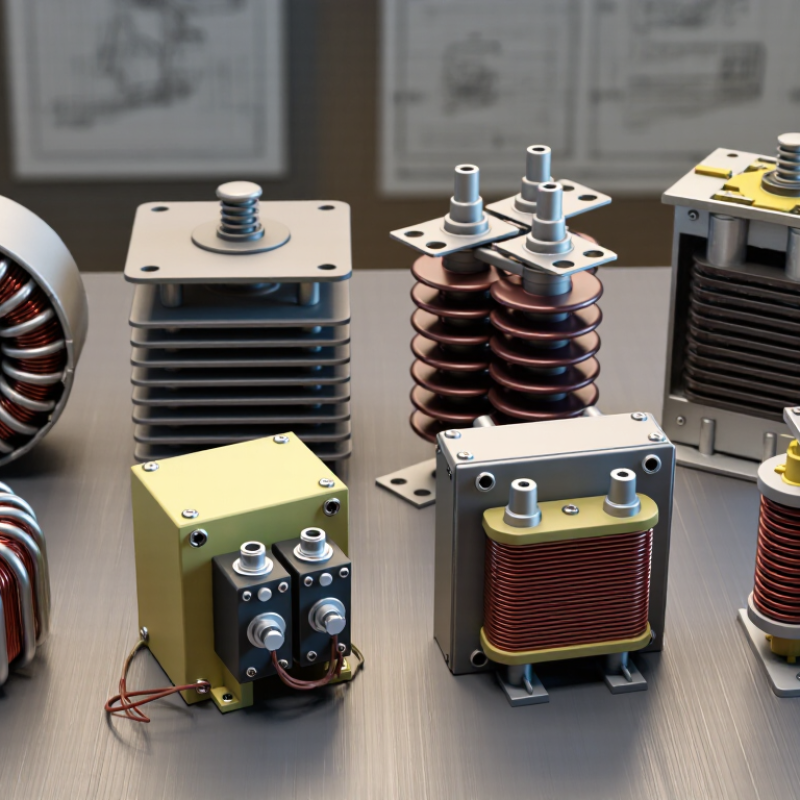
Table of Contents [Hide]
Core Operating Principles and Construction of Electronic Power Transformers
What Are the Top 10 Electronic Power Transformer Types?
Electronic power transformers transfer energy through changing magnetic fields. Their windings sit around a magnetic core, usually with insulation separating primary and secondary conductors. The turns ratio helps set voltage, while switching frequency affects core size and losses. Higher frequency can allow a smaller core, but it also makes winding layout and heat management more demanding.
Ten common forms include laminated EI-core, toroidal, ferrite-core, powdered-iron-core, core-type, and shell-type transformers, plus flyback, forward, push-pull, and half-bridge or full-bridge designs. These labels overlap: core shape describes construction, while flyback and bridge names describe circuit operation. An EI core uses stacked steel laminations; a toroid forms a continuous ring. Ferrite suits many high-frequency designs, while powdered cores can store more magnetic energy. Details matter.
In a flyback design, energy builds in the magnetic field during one switching interval, then transfers to the output. Forward and bridge designs transfer energy through transformer action during switching, using different switch arrangements. Push-pull circuits alternate current through two primary sections. Half- and full-bridge circuits drive the primary with switched voltage; a full bridge uses four switches. Gaps, winding order, and insulation affect performance and safety. A neat schematic does not reveal every practical issue. Even a small winding change can alter leakage inductance, and designers sometimes discover that the “best” core is not the easiest one to assemble.