


- Home
- A-Z Catalogue
- Products
- Valves
- Cetop
- Manual Directional Valves
- Proportional Valves
- Poppet Valves
- High-Speed Linear Servo Valves
- All High-Speed Linear Servo Valves
- Cetop 10 (NG32) Two Stage Type High Speed Linear Servo Valves – LSVHG-10
- Cetop 10 (NG32) Two Stage Type High Speed Linear Servo Valves – LSVHG-10 (With Fail-Safe)
- Cetop 8 (NG25) Two Stage Type High Speed Linear Servo Valves – LSVHG-06
- Cetop 8 (NG25) Two Stage Type High Speed Linear Servo Valves – LSVHG-06 (With Fail-Safe)
- Cetop 7 (NG16) Two Stage Type High Speed Linear Servo Valves – LSVHG-04
- Cetop 7 (NG16) Two Stage Type High Speed Linear Servo Valves – LSVHG-04 (With Fail-Safe)
- Cetop 5 (NG10) Direct Type High Speed Linear Servo Valves – LSVG-03
- Cetop 5 (NG10) OBE Type Direct Operated Linear Servo Valves – LSVG-03-EH
- Cetop 3 (NG6) OBE Type Direct Operated Linear Servo Valves – LSVG-01-EH
- Pumps
- Pressure control
- Flow Control Valves
- Pressure Control Valves
- All Pressure Control Valves
- Brake Valves
- Direct Relief Valve
- Low Noise Solenoid Controlled Relief Valves
- Low Noise Pilot Operated Relief Valves
- Pilot Operated Relief Valves
- Pressure reducing and relieving valves
- Pressure reducing and check valves
- Pressure control valves
- Remote Control Relief Valves
- Solenoid Controlled Relief Valves – BSG
- Solenoid Controlled Relief Valves – BST
- Unloading relief valves
- Check valves
- Environmental
- Valves
- Hydraulic Systems
- Power pack
- About Us
- Contact
- Blog

China Top 10 Cold Rolled Coil Manufacturers
China’s cold rolled steel sector combines large-scale production with increasingly demanding quality requirements. This guide to China Top 10 Cold Rolled Coil Manufacturers examines companies that supply automotive panels, electrical enclosures, appliances, furniture, and precision components. Cold Rolled Coil is processed at room temperature, creating a smoother surface, tighter thickness control, and improved dimensional accuracy than conventional hot rolled material.
The comparison will consider more than production volume. It will review product grades, width and thickness ranges, surface finishes, coil weight, packaging, export experience, inspection systems, and delivery reliability. A bright appliance panel, a deep-drawing automotive sheet, and a galvanized-line input require different technical decisions. That detail matters.
John Ferriola, former chairman and chief executive of Nucor, has said, “Steel is the most recycled material in the world.” His observation highlights steel’s long-term value, but recycling alone does not prove supplier quality. Mill capability, chemical consistency, annealing control, and customer support still require careful verification.
This overview is designed for importers, service centers, engineers, and purchasing teams. It does not treat a ranking as permanent. Market conditions change. Product data can also vary between batches, websites, and inspection documents. Buyers should confirm current certifications, test reports, tolerances, payment terms, and production capacity directly with each manufacturer.
Some suppliers may look similar on paper. They are not always equal in practice. The final choice should match the application, not merely the lowest quotation.
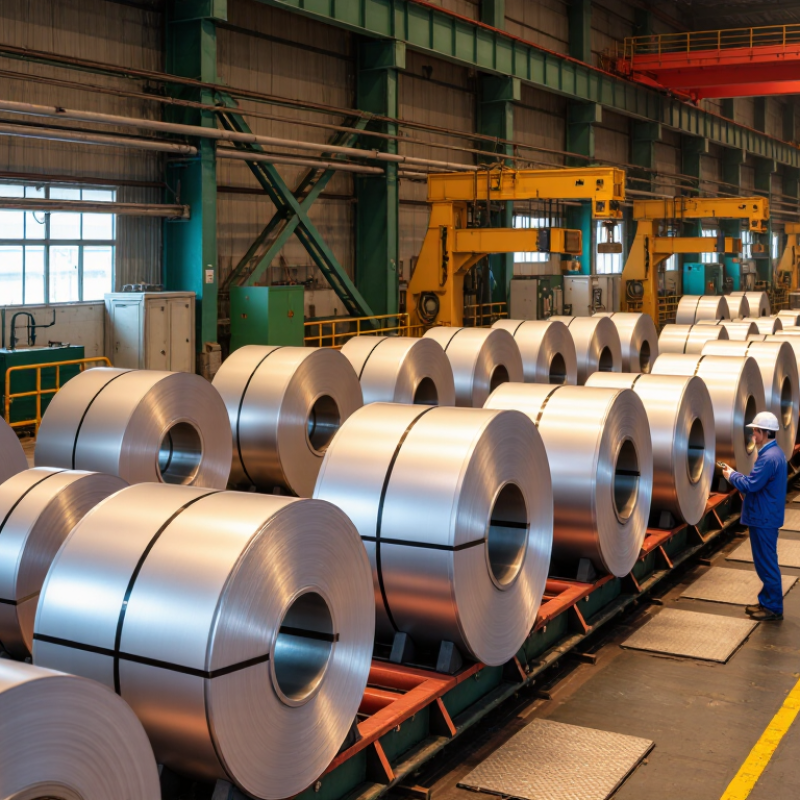
Table of Contents [Hide]
Cold Rolled Coil: Definition, Grades, and Main Applications
Cold Rolled Coil: Definition, Grades, and Main Applications
Cold rolled coil is steel reduced through rollers at room temperature. This process improves thickness accuracy, surface finish, and dimensional consistency. The coil is often annealed, then lightly skin-passed for a smoother surface. Common grades include commercial quality, drawing quality, and high-strength low-alloy steel. Each grade serves a different forming requirement. Drawing quality suits deep-formed panels, while high-strength grades support lighter structures.
Its main applications include automobile panels, appliance shells, furniture parts, electrical cabinets, and precision tubes. In daily sourcing, buyers should check thickness tolerance, width, yield strength, tensile strength, and elongation. Surface condition also matters. Small scratches can become visible after painting. Chinese manufacturers commonly supply various coil sizes, but availability and performance depend on production controls, not location alone. A bright surface is useful, yet it does not prove consistent internal quality. I have seen attractive samples fail during stamping. That is why independent testing remains worthwhile.
Tips: Request the mill test certificate and a retained sample. Compare the stated grade with the forming process. Confirm oiling, edge condition, coil weight, and packaging details. Ask for inspection photos before shipment. Do not judge quality from appearance only. Temperature, storage time, and handling can also affect rust protection. Some specifications look complete but omit tolerance limits. That omission deserves a question.