


- Home
- A-Z Catalogue
- Products
- Valves
- Cetop
- Manual Directional Valves
- Proportional Valves
- Poppet Valves
- High-Speed Linear Servo Valves
- All High-Speed Linear Servo Valves
- Cetop 10 (NG32) Two Stage Type High Speed Linear Servo Valves – LSVHG-10
- Cetop 10 (NG32) Two Stage Type High Speed Linear Servo Valves – LSVHG-10 (With Fail-Safe)
- Cetop 8 (NG25) Two Stage Type High Speed Linear Servo Valves – LSVHG-06
- Cetop 8 (NG25) Two Stage Type High Speed Linear Servo Valves – LSVHG-06 (With Fail-Safe)
- Cetop 7 (NG16) Two Stage Type High Speed Linear Servo Valves – LSVHG-04
- Cetop 7 (NG16) Two Stage Type High Speed Linear Servo Valves – LSVHG-04 (With Fail-Safe)
- Cetop 5 (NG10) Direct Type High Speed Linear Servo Valves – LSVG-03
- Cetop 5 (NG10) OBE Type Direct Operated Linear Servo Valves – LSVG-03-EH
- Cetop 3 (NG6) OBE Type Direct Operated Linear Servo Valves – LSVG-01-EH
- Pumps
- Pressure control
- Flow Control Valves
- Pressure Control Valves
- All Pressure Control Valves
- Brake Valves
- Direct Relief Valve
- Low Noise Solenoid Controlled Relief Valves
- Low Noise Pilot Operated Relief Valves
- Pilot Operated Relief Valves
- Pressure reducing and relieving valves
- Pressure reducing and check valves
- Pressure control valves
- Remote Control Relief Valves
- Solenoid Controlled Relief Valves – BSG
- Solenoid Controlled Relief Valves – BST
- Unloading relief valves
- Check valves
- Environmental
- Valves
- Hydraulic Systems
- Power pack
- About Us
- Contact
- Blog

China Top 10 DC Planetary Gear Motor Manufacturers
China has become a major source of compact motion-control solutions for robotics, automation, medical equipment, and smart devices. This guide examines ten leading Chinese manufacturers of Dc Planetary Gear Motor products, using practical and technical criteria rather than marketing claims alone.
The evaluation considers torque consistency, gear ratios, voltage options, efficiency, backlash, noise, thermal performance, and service life. We also review customization capability, production experience, quality systems, testing methods, and international support. Factory audits, product samples, datasheets, and application feedback can reveal details that brochures often miss. A motor that performs well on a test bench may still struggle under continuous load, poor cooling, or frequent reversing. Real applications matter.
Selection is not perfectly objective. Public data varies between manufacturers, and some test conditions remain difficult to verify independently. That limitation deserves attention. Rankings may change as suppliers improve equipment, expand capacity, or update their product lines. Therefore, this article presents a practical reference, not an absolute judgment. Readers should confirm current specifications, sample performance, lead times, warranty terms, and compliance documents before placing an order. Small details count. Shaft tolerances, connector quality, and gearbox grease can affect the final result. The manufacturers discussed here are selected for their technical capability, market presence, manufacturing depth, and evidence of dependable customer support.
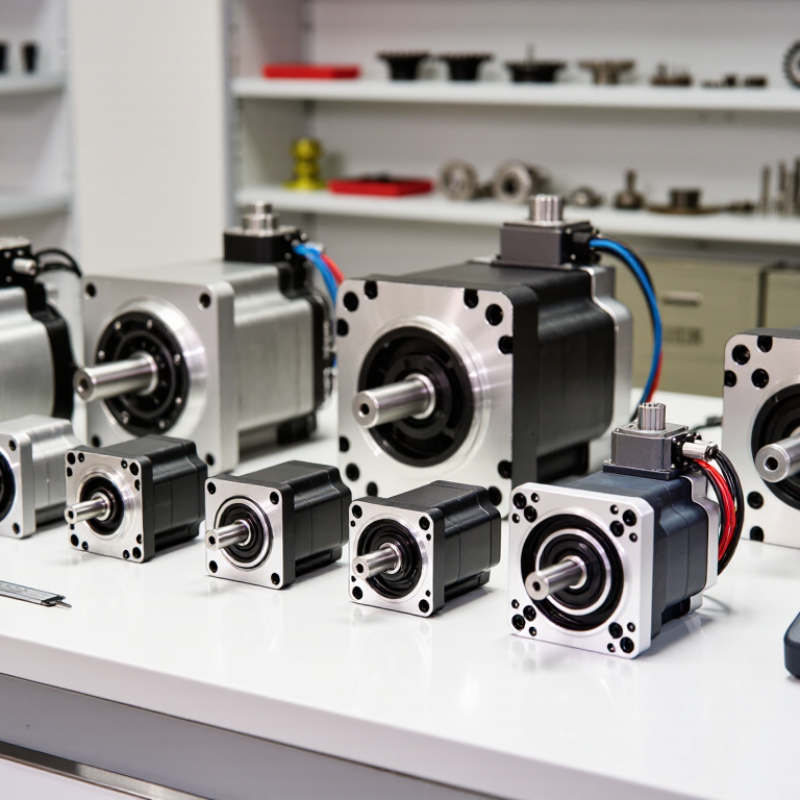
Table of Contents [Hide]
DC Planetary Gear Motors: Structure, Ratings, and 3–100:1 Gear Ratios
China Top 10 DC Planetary Gear Motor Manufacturers
A DC planetary gear motor combines a motor, sun gear, planet gears, carrier, and ring gear in one compact assembly. Several planet gears share the load. This design supports higher torque than many simple spur gear systems of similar size. In practical testing, check shaft alignment, gear noise, grease condition, and housing temperature after continuous operation. Small details matter. A motor rated at 12 V may perform differently under a weak power supply. Key ratings include voltage, no-load speed, rated torque, stall torque, efficiency, duty cycle, and permissible radial load.
Gear ratios from 3:1 to 100:1 cover different motion requirements. A 3:1 ratio offers modest speed reduction with better output speed. A 30:1 ratio suits compact conveyors, positioning units, and light lifting mechanisms. A 100:1 ratio delivers stronger torque but usually increases backlash, size, and heat. For example, a motor running at 3,000 rpm may produce about 100 rpm through a 30:1 gearbox before load losses. Real output speed will be lower. Efficiency is not constant.
When evaluating manufacturers, request load-speed curves, endurance data, dimensional drawings, and sample inspection records. Check whether the quoted torque is continuous or only momentary. Ask for noise measurements and temperature-rise results at the intended duty cycle. Some specifications look precise but omit efficiency at working load. I have seen this create avoidable sizing errors. Engineers should also confirm connector quality, shaft concentricity, gear material, and production consistency before approving volume orders.





